
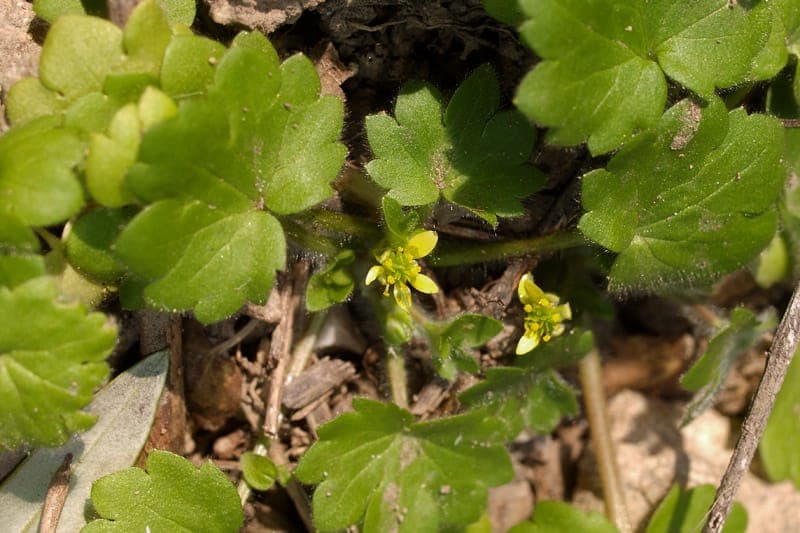
Terbofast / CC BY-SA 4.0, via Wikimedia Commons
Chios buttercup: complete guide
Ranunculus chius
Want to see Chios buttercup: complete guide in your garden?
1 minute, no credit card
Overview
Ranunculus chius, commonly known as the Chios buttercup, is a slender annual herb belonging to the family Ranunculaceae. It was formally described in 1817 by the Swiss botanist Augustin Pyramus de Candolle and takes its name from the Greek island of Chios. Its native range spans a wide arc from the Mediterranean basin to Iran, encompassing Greece, Turkey, Italy, Bulgaria, Cyprus, Crete, Sardinia, Sicily, the Caucasus region, Lebanon, Syria, Palestine and Iran. Despite its relatively obscure status in horticulture, this buttercup offers genuine charm for gardeners drawn to authentic wild plants and naturalistic planting styles. If you are planning a Mediterranean-inspired front garden, gardenworld.app can help you visualise a cohesive design and identify suitable plant companions.
Appearance and bloom cycle
Ranunculus chius is a delicate, upright plant that rarely exceeds 20 to 35 cm in height under garden conditions. Its stems are slender and lightly hairy, giving the plant a soft, almost silvery texture in bright sunlight. The leaves are deeply divided into lobes, with the lower leaves carried on longer petioles than the upper ones, which become progressively narrower toward the top of the plant.
The flowers are typically buttercup in form: five glossy, bright yellow petals surround a central disc packed with numerous stamens and pistils. The sepals are reflexed and noticeably smaller than the petals. Individual flowers measure only 5 to 10 mm across, making this a modest plant that rewards close observation rather than delivering a bold mass display. Flowering takes place from April through to June, peaking in May in most temperate garden settings. After the petals fall, small nutlets cluster together in a rounded fruiting head - a characteristic that taxonomists use to distinguish Ranunculus species from one another. The flower colour is consistently clear yellow, with no purple or white forms recorded for this species.
Ideal location
In its native Mediterranean habitat, Ranunculus chius grows on open, sun-baked terrain: roadsides, rocky hillsides, olive groves and calcareous grassland near the coast. It requires full sun or very light dappled shade, tolerating no deep or prolonged shade. In a North European garden, choose the warmest, most south-facing spot available, ideally sheltered from cold northerly winds by a wall, fence or evergreen hedge.
Gravel gardens, raised beds, rock gardens and dry Mediterranean borders are ideal settings. The plant pairs well with other xeriscape subjects in a cohesive naturalistic scheme. Since the individual plant is small, position it within 50 cm of a path or viewing line so that its fine flowers can be appreciated at close range. The light value recorded in the Trefle database is 9 out of 10, confirming that near-maximum sunlight exposure is essential for healthy growth and reliable flowering.
Soil
Ranunculus chius thrives in well-drained soils with a pH of 6.5 to 7. In the wild it colonises calcareous, relatively nutrient-poor ground. A rich, heavily amended garden soil actually works against it: excess nitrogen promotes lush vegetative growth at the expense of flowering and increases susceptibility to fungal disease.
On heavy clay, incorporate coarse grit or fine gravel into the top 20 cm of soil to improve drainage. A 3 to 5 cm surface mulch of gravel or pea shingle around the base keeps the soil warm and dry, which this Mediterranean species particularly appreciates. Avoid poorly drained, waterlogged spots: standing water in winter is fatal to the roots. The soil can safely dry out completely during summer without any harm to established plants.
Watering
Once established, the Chios buttercup demands very little supplementary water. Its drought tolerance is one of its most useful traits in the garden, a direct result of evolutionary adaptation to the dry Mediterranean summer. Seedlings and young plants need consistent moisture during the first few weeks after germination to establish a root system, but adult plants can endure extended dry spells without showing stress.
In an average Northern European summer, supplementary watering is rarely necessary. During extreme heat above 30 degrees Celsius sustained over multiple weeks, a single, moderate watering once per week may be beneficial, but allow the soil to dry out completely between sessions. Waterlogging during the cool, wet winter is the greatest risk; always ensure that the planting site has free drainage, particularly on heavy ground.
Free design
Want to see Chios buttercup: complete guide in your garden? Make a free design now.
Pruning
Ranunculus chius is an annual or short-lived biennial that regenerates naturally from seed. Formal pruning in the horticultural sense is therefore not applicable. If you want the plant to self-seed and return the following year, avoid deadheading spent flowers prematurely: the nutlets need time to ripen on the plant before the seeds disperse.
Once the above-ground parts die back in early summer, you can leave the dry stems in place to protect the soil surface and provide micro-habitat for beneficial insects, or remove them for a tidier appearance. Autumn seedlings do not need transplanting; they will over-winter as a low rosette and flower the following spring. Take care when weeding around established plants: the roots are thin and easily disturbed.
Maintenance calendar
March: check for seedlings that germinated in autumn; remove competing weeds around young plants without disturbing their roots. April: flowering begins; this is the optimal time to enjoy the plant. Apply a gravel mulch if not already in place. May: peak flowering; leave ripening fruiting heads undisturbed to allow natural seed dispersal. June: the plant begins to die back after flowering; leave fruiting heads until seeds are fully ripe. July and August: above-ground parts are dry and dead; the planting area may be left undisturbed or lightly prepared for other subjects. September and October: new seedlings may appear if conditions are suitable; protect against slugs. November through February: dormant period; no maintenance required.
Winter hardiness
Ranunculus chius originates from regions with a Mediterranean climate where winters are mild and frost is only occasional. In North-Western Europe it is not reliably hardy as a mature plant, but seeds survive in the soil through winter without difficulty. In areas with moderate winters corresponding to USDA hardiness zone 7 and above, the plant can over-winter as a rosette and behave as a biennial.
In colder zones (USDA 5 and 6), it is safest to treat the plant as an annual and sow fresh each year. Sow indoors at 15 degrees Celsius from February onwards and move seedlings outside after the last frost date. In autumn, young rosettes can be protected against temperatures below minus 5 degrees Celsius with a light covering of dry straw or horticultural fleece. For more ideas on creating a resilient, drought-tolerant front garden, visit gardenworld.app where you can generate a customised planting plan with plant lists tailored to your specific garden conditions.
Companion plants
The restrained beauty of Ranunculus chius works best alongside plants that share its preference for dry, sunny conditions. Common thyme (Thymus vulgaris), oregano (Origanum vulgare) and lavender (Lavandula angustifolia) are classic Mediterranean companions that match the buttercup in scale and texture. For contrast in height and form, combine the fine-leaved buttercup with taller drought-tolerant subjects such as Allium hollandicum or ornamental onions, which flower in complementary tones of purple and white.
Other Ranunculus relatives, including Ranunculus nodiflorus from wet habitats in south-western Europe, illustrate the breadth of the genus without sharing the same dry-garden requirements. Low-growing Sedum species make excellent living ground cover in the same border, with similar water needs. Avoid moisture-loving, broad-leaved plants such as hostas in the immediate vicinity - they require a fundamentally different watering regime and will crowd out the delicate buttercup over time.
Closing
Ranunculus chius is a modest but genuinely distinctive plant for gardeners who appreciate wild, Mediterranean-origin flora. Its small yellow flowers, strong drought tolerance and low-maintenance character make it a valuable addition to rock gardens, dry borders and naturalistic planting schemes. The plant is undemanding and rewards those who provide the right position with spontaneous, season-defining colour. Seek out seeds or young plants through specialist nurseries or online retailers that stock Mediterranean wildflowers. With the right placement, this buttercup will return year after year through self-seeding, gradually naturalising into the fabric of your garden.
Want to see Chios buttercup: complete guide in your garden? Make a free design now.
Upload a photo, pick a style, and get a photorealistic design with plant list in under a minute.
10,000+ gardens designed already
No credit card required


Similar plants
Knotted buttercup: complete guide
Ranunculus nodiflorus
Everything about Ranunculus nodiflorus, the rare Western European buttercup of wet habitats. Origin, care and garden value.
Winged sumac: complete guide
Rhus copallinum
Everything about Rhus copallinum, the winged sumac with spectacular autumn colour. Location, pruning and garden value in full detail.