
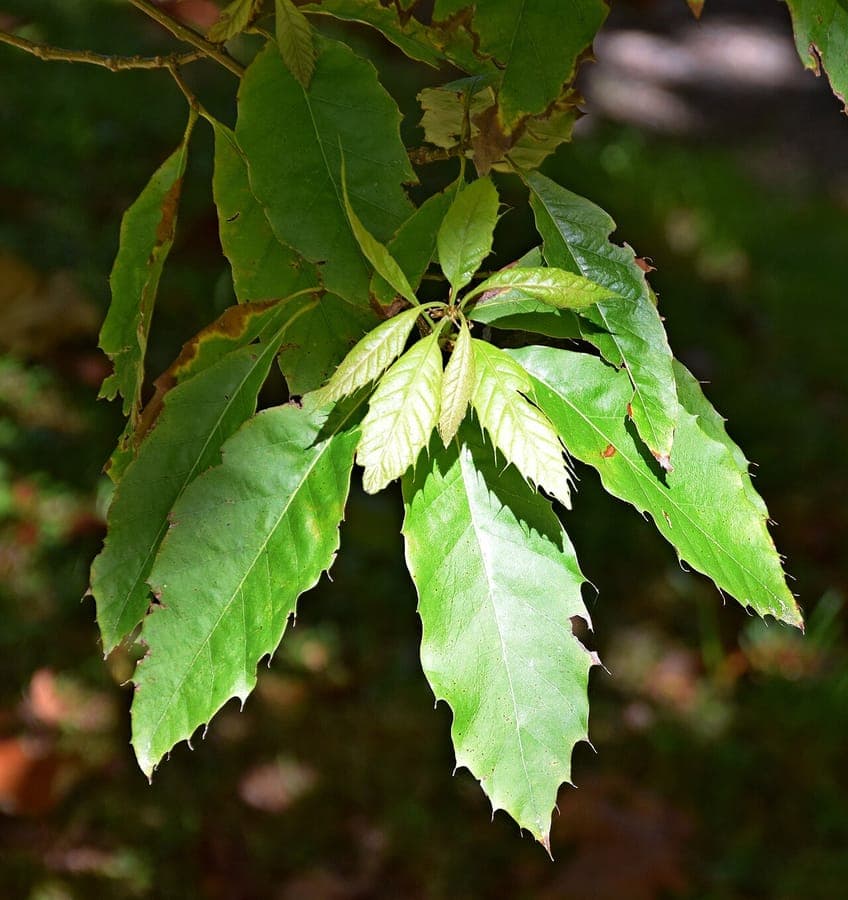
Krzysztof Golik / CC BY-SA 4.0, via Wikimedia Commons
Quercus xalapensis: complete guide
Quercus xalapensis
Want to see Quercus xalapensis: complete guide in your garden?
1 minute, no credit card
Overview
Quercus xalapensis, better known as the Xalapa oak, is a beautiful tree found in the mountainous regions of Mexico, from the center to the south. This oak is renowned for its attractive foliage and vigorous growth, making it a fantastic choice for gardens seeking character and scale. With the right conditions, this tree will transform your front yard into a green retreat.
Appearance and character
Quercus xalapensis is a medium to large tree with deeply lobed leaves that give the foliage a fine texture. The leaves are dark green and have sharp teeth along the edges, almost like a saw edge. In spring, small yellow flowers appear as catkins, and in autumn, the acorns display themselves in their characteristic cups. The bark is gray and becomes increasingly interesting as the tree ages.
Ideal location
Choose a spot in your front yard with full sun to partial shade. Quercus xalapensis grows best in locations with at least six hours of direct sunlight per day. This tree can grow substantially, so ensure you have adequate space. It feels most at home on elevated terrain where water does not accumulate. A central, visible position in your front yard would be ideal.
Soil requirements
The Xalapa oak grows well in various soil types, from sandy to clay soils, as long as drainage is good. Optimal is a slightly acidic to neutral pH range of 5.5 to 7.5. Add organic material when planting to improve water-holding capacity without causing waterlogging. The tree is quite adaptable and will adjust to most soils.
Watering
After planting, Quercus xalapensis should receive regular water until it is well-established, approximately two to three years. Ensure the root system does not dry out in the first growing season. Less water is better than too much. Once established, the tree is quite drought-tolerant and needs little supplemental water except during extreme drought.
Free design
Want to see Quercus xalapensis: complete guide in your garden? Make a free design now.
Pruning
Minimal pruning is needed for Quercus xalapensis if given space to grow naturally. Remove only dead, damaged, or diseased branches. Prune in winter when the tree is dormant. Do not twist branches or damage the bark, as this can provide entry points for pathogens. Allow the tree to maintain its natural form.
Maintenance calendar
Here is a practical maintenance schedule for the entire year:
January-February: Check for winter damage and diseases.
March-May: Begin regular watering as growth starts.
June-August: Continue watering during dry periods.
September-October: Reduce watering as the season wanes.
November-December: Winter rest; check drainage around the root zone.
Winter hardiness
Quercus xalapensis is sensitive to very cold winters and is most suitable for regions where temperatures do not drop below -10 degrees Celsius. In harsher winter climates, you can protect the tree with extra mulch around the base and possible protective measures during extreme cold. In the UK, it is better suited to southern regions.
Companion plants
This tree combines beautifully with:
Low shrubs: Ilex or Buxus under the tree Ornamental grasses: Miscanthus or Festuca add texture Day-lilies: Liriope or Ophiopogon as underplanting Hedera helix: For elegant climbing plants against young trunks
Together, these companions create a layered, interesting garden.
Closing
Quercus xalapensis is a magnificent choice for those seeking an impressive, long-lived tree. With its fine leaves and vigorous growth, it immediately brings scale and character to your front yard. Want a complete garden transformation? Visit gardenworld.app to receive full design support. Take your front yard to the next level with professional guidance on gardenworld.app!
Want to see Quercus xalapensis: complete guide in your garden? Make a free design now.
Upload a photo, pick a style, and get a photorealistic design with plant list in under a minute.
No credit card required


Similar plants
Lucombe oak: complete guide
Quercus crenata
Lucombe oak (Quercus crenata): a majestic semi-evergreen giant with corky bark, perfect for large gardens, parks, and country estates.
Blue oak: complete guide
Quercus douglasii
Discover the blue oak, a drought-tolerant Californian shade tree with striking blue-green foliage, ideal for large, climate-resilient gardens.
Quercus montana: complete guide
Quercus montana
Quercus montana, the chestnut oak, is a rugged American shade tree with deeply furrowed bark and large acorns, well suited to dry, rocky, spacious gardens.