
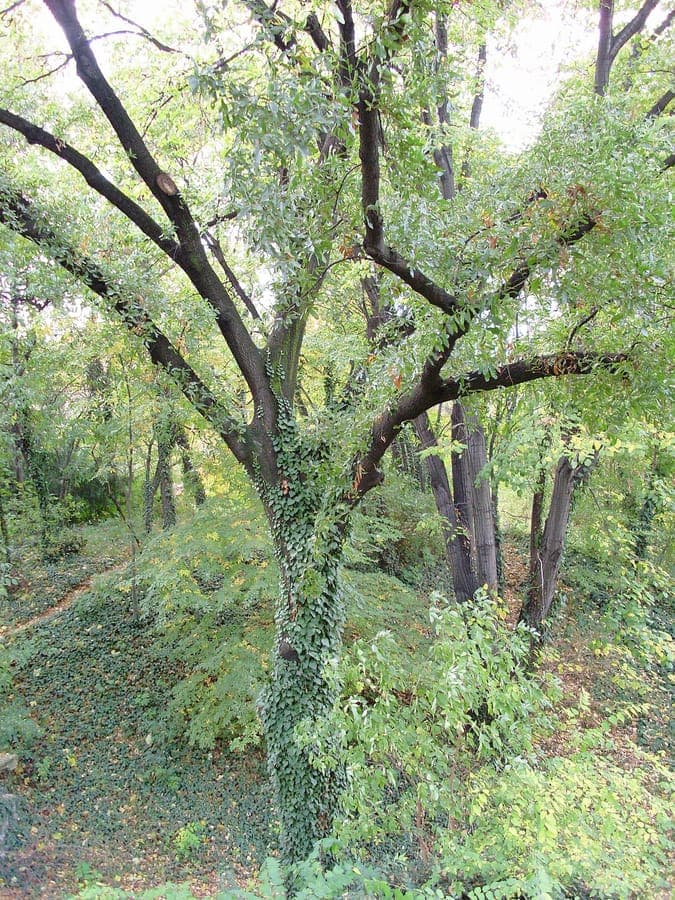
Orjen / CC BY-SA 3.0, via Wikimedia Commons
Macedonian oak: complete guide
Quercus trojana
Want to see Macedonian oak: complete guide in your garden?
1 minute, no credit card
Overview
Quercus trojana, commonly known as the Macedonian oak, is a stately deciduous tree native to southeastern Europe, including Albania, Greece, Italy, Turkey, and the Balkans. It's a slow but steady grower, reaching heights of 15 to 20 meters, occasionally up to 30 meters in optimal settings. The crown spreads broadly, often achieving a diameter of 12 to 15 meters at maturity. This makes it ideal for large gardens, parks, or naturalistic landscapes where space isn't an issue. In the UK and northern Europe, it's gaining popularity among gardeners looking for drought-resilient hardwoods.
One of the key strengths of this oak is its ability to thrive in dry conditions once established. It's particularly useful in regions with hot, dry summers or where water restrictions apply. If you're designing a long-term garden plan, consider using gardenworld.app to visualise how this tree will shape your space over decades, including canopy spread and shade patterns.
Appearance & bloom cycle
The Macedonian oak features deeply lobed leaves, 10–18 cm long, with a glossy dark green upper surface and a paler, sometimes slightly downy underside. In autumn, the foliage turns a rich bronze to russet brown, providing excellent seasonal interest. Unlike many oaks, Quercus trojana often retains some of its leaves through winter, offering structure and texture during the dormant months.
Flowering occurs in spring, typically from April to early May. The flowers are wind-pollinated and inconspicuous: male catkins hang in clusters, while female flowers are tiny and nestled near leaf axils. After pollination, acorns develop and mature in the second year, reaching 2–3 cm in length. These are valuable food sources for birds, squirrels, and other wildlife.
Ideal location
This tree needs plenty of room. Plant it at least 8 meters from buildings or other large trees to avoid root competition and shading. Full sun is essential-aim for 6+ hours of direct sunlight daily. While partial shade is tolerated, it slows growth and results in a sparser canopy. Good air circulation helps prevent fungal issues, so avoid narrow, enclosed spaces or wind tunnels that might damage young branches.
In garden design, the Macedonian oak works well as a specimen tree on a lawn or at the edge of woodland areas. It fits naturally into estate-style or heritage gardens. Use gardenworld.app to simulate how its shade and spread will evolve over time, helping you plan surrounding planting zones effectively.
Free design
Want to see Macedonian oak: complete guide in your garden? Make a free design now.
Soil requirements
Quercus trojana is adaptable to various soil types, including sandy, loamy, or slightly clay soils, as long as drainage is good. It prefers a pH range of 5.5 to 7.5. Avoid heavy, waterlogged clays-these can lead to root rot, especially in winter. Don't add fertiliser at planting; oaks thrive in low-nutrient soils, and excess nutrients can harm root development.
Watering
During the first growing season, water deeply once or twice a week, especially during dry spells. Apply 20–30 litres per tree using a slow-release method like a tree spike or soaker hose. After 2–3 years, the tree should be self-sufficient unless facing extreme drought. Mature trees rarely need supplemental watering.
Pruning
This oak requires minimal pruning. Its natural form is strong and well-balanced. If needed, prune only dead, damaged, or crossing branches. Do this in late summer to early autumn (August–September), never in late winter or spring when sap rise can cause excessive bleeding. Avoid heavy pruning-oaks recover slowly from wounds.
Maintenance calendar
- January: Check for storm damage and structural issues
- February: Inspect for signs of disease or pests
- March: Assess soil compaction around the trunk
- April: Growth resumes; no feeding required
- May: Monitor for aphids or powdery mildew in humid weather
- June: Evaluate soil moisture during dry periods
- July: No extra watering unless drought persists
- August: Light pruning window opens
- September: Allow fallen leaves to act as natural mulch
- October: Check acorn production and signs of fungal spots
- November: Prevent leaf buildup around the trunk to avoid rot
- December: Final inspection before winter dormancy
Winter hardiness
Hardy to USDA zone 6 (-23°C to -17°C), the Macedonian oak withstands most UK and northern European winters. Young trees benefit from mulching around the base to protect roots from freeze-thaw cycles. In exposed sites, staking may help prevent wind rock. Some leaf browning may occur in harsh winters, but recovery is usually swift in spring.
Companion plants
Keep the area within 1.5 meters of the trunk clear to reduce competition. Underplant with shade-tolerant, drought-resistant species like Anemone nemorosa, Geranium macrorrhizum, Euphorbia amygdaloides, or Helleborus orientalis. Avoid invasive groundcovers such as ivy or periwinkle, which can choke young roots.
Closing
The Macedonian oak is a long-term commitment, not a quick-fix tree. But for those with space, it offers unmatched grandeur and ecological value. It's still relatively uncommon in garden centres, but you may find young specimens at specialist nurseries or larger outlets. When planting, choose a 100–150 cm sapling for best results. Plan ahead using gardenworld.app to see how this tree will transform your garden over the next 20 years.
Want to see Macedonian oak: complete guide in your garden? Make a free design now.
Upload a photo, pick a style, and get a photorealistic design with plant list in under a minute.
No credit card required


Similar plants
Lucombe oak: complete guide
Quercus crenata
Lucombe oak (Quercus crenata): a majestic semi-evergreen giant with corky bark, perfect for large gardens, parks, and country estates.
Blue oak: complete guide
Quercus douglasii
Discover the blue oak, a drought-tolerant Californian shade tree with striking blue-green foliage, ideal for large, climate-resilient gardens.
Quercus montana: complete guide
Quercus montana
Quercus montana, the chestnut oak, is a rugged American shade tree with deeply furrowed bark and large acorns, well suited to dry, rocky, spacious gardens.