
Krzysztof Ziarnek, Kenraiz / CC BY-SA 4.0, via Wikimedia Commons
Texas red oak: complete guide
Quercus texana
Want to see Texas red oak: complete guide in your garden?
1 minute, no credit card
Overview
The Texas red oak (Quercus texana, also known as Nuttall oak) is a majestic deciduous tree native to the southern and southeastern United States. This oak grows naturally across Texas, Louisiana, Arkansas, and other southern states, and is beloved in gardens for its rapid growth, strong structure, and spectacular fall foliage. With its distinctive reddish bark and deep green leaves, this tree makes an impressive focal point in any landscape.
The tree can reach 20-30 meters in height and provides ample shade for large gardens and parks. It is renowned for its tolerance of various soil types and climates, making it a reliable choice for gardeners seeking a long-lived specimen.
Appearance and bloom
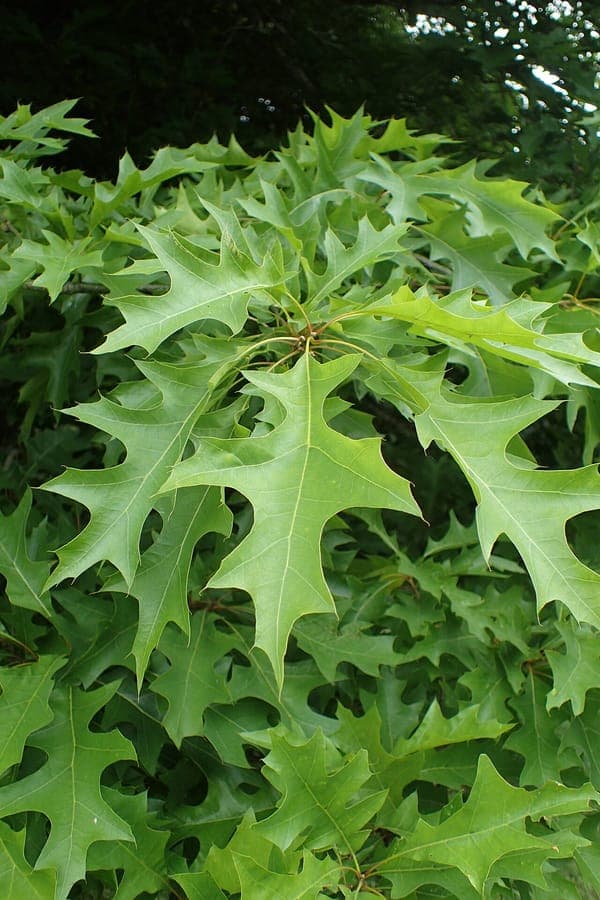
The Texas red oak features large, deeply lobed leaves with characteristic red veins that are especially striking in spring. The leaves are typically 10-15 centimeters long with deep sinuses and a slightly rough texture. In autumn, these leaves transform into gorgeous shades of red and brown before dropping.
Flowers appear in spring as small, inconspicuous catkins, but the fruit (acorn) is far more interesting. These acorns are relatively large and provide food for local wildlife, making the tree valuable for the ecosystem. The bark deepens in color with age, developing a distinctive reddish-brown hue that is highly decorative.
Ideal location
The Texas red oak thrives best in a sunny location where it receives at least 6-8 hours of direct sunlight daily. It can grow in partial shade but will grow slower with less full branching. Avoid planting directly in the shade of other trees.
This tree requires substantial space to reach its natural form. Plant it away from buildings, as its roots can be extensive. A minimum distance of 10 meters from buildings and sewer lines is recommended. In landscape designs, it works well as a specimen tree or grouped with other deciduous species.
Soil
The Texas red oak grows in diverse soil types, from sandy to clay, provided the soil drains well. Ideally, it prefers slightly acidic to neutral soil with a pH between 4.3 and 7.3. In heavy clay soils, amend with organic material when planting to improve drainage.
While this tree is drought-tolerant, it grows better in moderately moist soil. Add compost or peat when planting to improve water retention. Make the planting hole twice as wide as the tree's root ball and equally deep. After planting, firm the soil well and water thoroughly.
Free design
Want to see Texas red oak: complete guide in your garden? Make a free design now.
Watering
After planting, water regularly until the tree is established (usually 1-2 seasons). Provide at least weekly watering if there is no rain. Mature trees are quite drought-tolerant but grow better with consistent moisture.
During dry periods, water when the top 5 centimeters of soil feels dry. Avoid waterlogging, which can cause root rot. Mulching around the tree (not against the trunk) helps retain moisture and regulates soil temperature.
Pruning
The Texas red oak requires minimal pruning, though it is good to check its form during the first and second year after planting. Remove dead, damaged, or diseased branches as needed. Prune best in late autumn or early winter when the tree is dormant.
Avoid aggressive pruning, as it can create large wounds that heal slowly. When removing major branches, make clean cuts near the branch collar. The tree naturally forms an attractive, rounded crown without much intervention.
Maintenance calendar
Spring: check for disease and insect damage, prune dead branches. Summer: water during dry spells, monitor for pests. Autumn: enjoy the spectacular fall colors, remove fallen leaves to keep garden beds clean. Winter: minimal maintenance needed, inspect tree structure.
Annually: check for dead or weak branches, provide consistent watering, apply a thin mulch layer. First year: provide extra water, no fertilizer needed.
Winter hardiness
The Texas red oak is highly winter-hardy in the Netherlands and Belgium and can tolerate temperatures down to -20 degrees Celsius. It grows well in temperate climates and is suitable for all Dutch and Belgian gardens. No special winter protection is needed.
In extreme winters, young trees may suffer minor frost damage to thin branches, but this typically recovers. The tree becomes stronger as it matures.
Companion plants
Many shade-loving plants grow well beneath a Texas red oak. Try underplanting with hostas, astilbe, or shade-tolerant asters. Evergreen shrubs such as holly and yew create nice contrast with the oak's fall colors.
Around the tree, spring bulbs (crocus, daffodil) can provide extra color. Avoid planting too close to the trunk, as this can inhibit surface root development.
Closing
The Texas red oak is an excellent choice for those wanting a large deciduous tree that will last for decades while delivering beauty throughout the seasons. With easy maintenance, proven winter hardiness, and stunning seasonal changes, this American oak deserves a place in more Dutch and Belgian gardens. Plant one now and enjoy it for generations! Purchase your Texas red oak from reputable nurseries such as Intratuin or Gamma, where knowledgeable staff can advise you. Gardenworld.app helps you find the perfect spot in your garden with photo-based garden design.
Want to see Texas red oak: complete guide in your garden? Make a free design now.
Upload a photo, pick a style, and get a photorealistic design with plant list in under a minute.
No credit card required


Similar plants
Lucombe oak: complete guide
Quercus crenata
Lucombe oak (Quercus crenata): a majestic semi-evergreen giant with corky bark, perfect for large gardens, parks, and country estates.
Blue oak: complete guide
Quercus douglasii
Discover the blue oak, a drought-tolerant Californian shade tree with striking blue-green foliage, ideal for large, climate-resilient gardens.
Quercus montana: complete guide
Quercus montana
Quercus montana, the chestnut oak, is a rugged American shade tree with deeply furrowed bark and large acorns, well suited to dry, rocky, spacious gardens.