
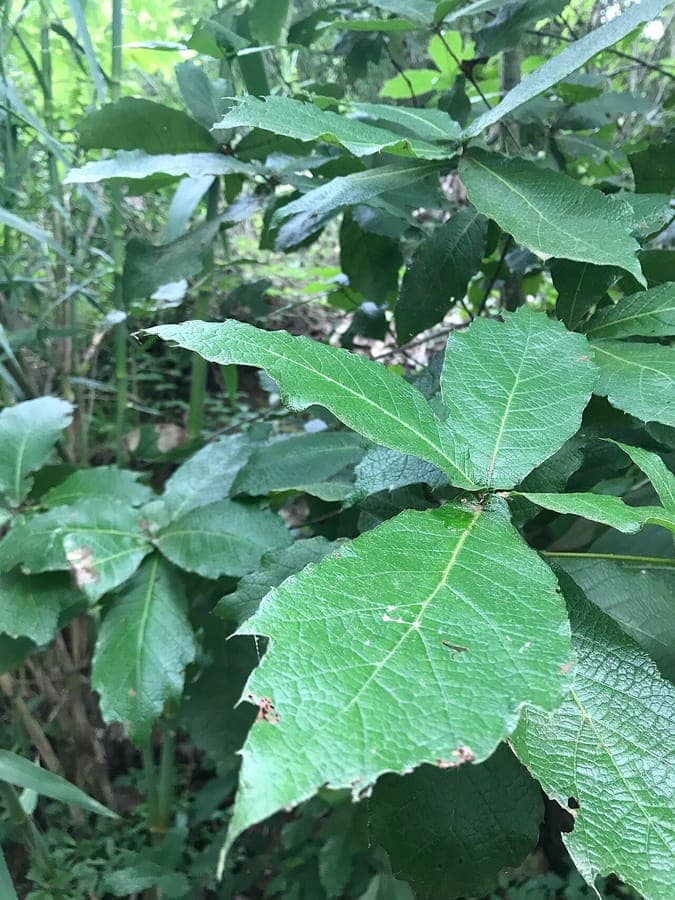
Adriana Nelly Correa Sandoval / CC BY 4.0, via Wikimedia Commons
Quercus rysophylla: complete guide
Quercus rysophylla
Want to see Quercus rysophylla: complete guide in your garden?
1 minute, no credit card
Overview
Quercus rysophylla, also known as Encino de asta, is an impressive oak native to Northern Mexico, primarily the Veracruz region. This powerful tree is renowned for its vigorous growth and beautiful foliage. If you seek a spectacular structure plant for your front yard that adds value for years to come, Quercus rysophylla is an excellent choice.
Appearance and character
Quercus rysophylla is a robust tree that grows to considerable proportions. The leaves are elongated and possess a characteristic shape that makes this oak visually striking. In spring, flowers appear as small, inconspicuous catkins, but the real highlight is the beautiful foliage that turns yellow to brown in autumn. The bark is dark brown to gray, giving the tree an imposing appearance.
Ideal location
Place Quercus rysophylla in a spot with full sun to partial shade. The tree requires at least six hours of direct sunlight daily for optimal growth. It is essential to provide sufficient space, as this tree can become quite large. Position it where it will not be shaded by other buildings or trees. A central position in the front yard works excellently.
Soil requirements
Quercus rysophylla thrives best in well-draining, fertile soil. The tree tolerates various soil types, from sand to clay, as long as drainage is good. Avoid waterlogged conditions that can lead to disease. A pH between 5.5 and 7.5 is acceptable. Add organic material when planting to support growth in the first year.
Watering
After planting, water the tree regularly until it is well-established, usually for about two to three years. Ensure the soil remains moist without becoming waterlogged. During dry periods in the growing season, provide supplemental water. Once established, this oak is quite drought-tolerant and requires less frequent irrigation.
Free design
Want to see Quercus rysophylla: complete guide in your garden? Make a free design now.
Pruning
Quercus rysophylla requires minimal pruning if you plant it in an open location where it can grow freely. Remove only dead, damaged, or diseased branches. The best time for pruning is during the dormant winter season. Excessive pruning can disrupt the tree's natural form and harm it more than help.
Maintenance calendar
Here is a practical maintenance schedule:
January-February: Check for diseases and pests; prune if needed.
March-April: Begin regular watering as spring growth starts.
May-August: Continue watering during dry periods.
September-October: Reduce watering as the season progresses.
November-December: Winter preparation; prepare for dormancy.
Winter hardiness
Quercus rysophylla is suitable for temperate climates but may be sensitive to very severe winters below -10 degrees Celsius. In regions with colder winters, it is wise to plant this tree in a somewhat protected spot or provide extra protection for young specimens. In the UK, this tree grows better in southern regions.
Companion plants
Quercus rysophylla combines beautifully with:
Underplanting with Hedera helix: Adds ground-covering structure Street tree pairing: Plant low-growing shrub cultivars underneath Ornamental grasses: Panicum or Miscanthus bring movement Winter-flowering plants: Provides seasonal interest
Closing
Quercus rysophylla is an exceptional choice for those seeking an imposing, long-lived tree. With its vigorous growth and beautiful appearance, it forms a valuable addition to any garden landscape. Want to transform your front yard with such spectacular trees? Visit gardenworld.app to receive professional design assistance and completely redesign your garden. Discover all possibilities on gardenworld.app today!
Want to see Quercus rysophylla: complete guide in your garden? Make a free design now.
Upload a photo, pick a style, and get a photorealistic design with plant list in under a minute.
No credit card required


Similar plants
Lucombe oak: complete guide
Quercus crenata
Lucombe oak (Quercus crenata): a majestic semi-evergreen giant with corky bark, perfect for large gardens, parks, and country estates.
Blue oak: complete guide
Quercus douglasii
Discover the blue oak, a drought-tolerant Californian shade tree with striking blue-green foliage, ideal for large, climate-resilient gardens.
Quercus montana: complete guide
Quercus montana
Quercus montana, the chestnut oak, is a rugged American shade tree with deeply furrowed bark and large acorns, well suited to dry, rocky, spacious gardens.