
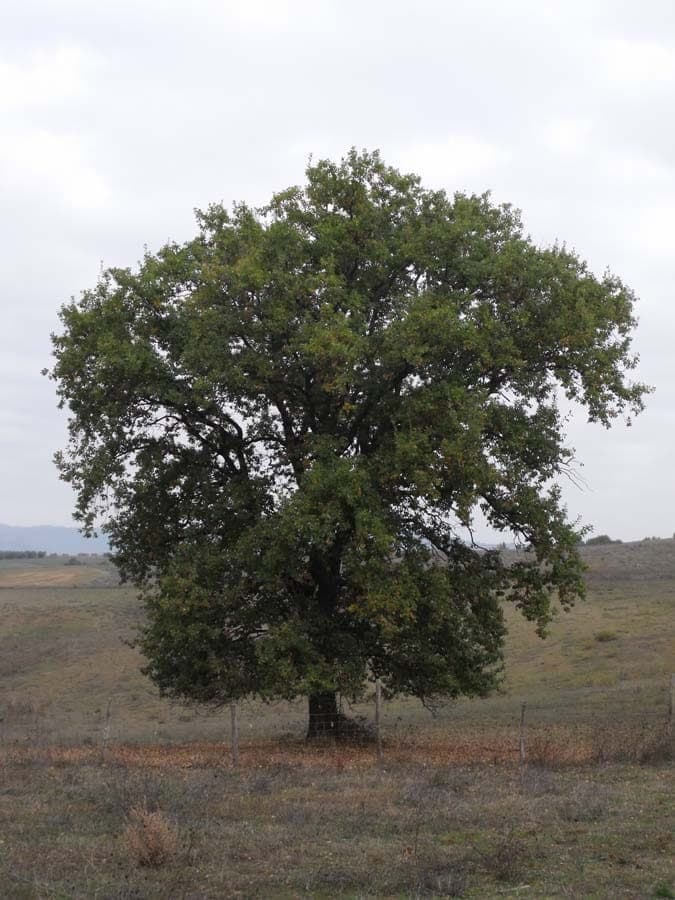
Etrusko25 / CC BY-SA 3.0, via Wikimedia Commons
Downy oak: complete guide
Quercus pubescens
Want to see Downy oak: complete guide in your garden?
1 minute, no credit card
Overview
The downy oak (Quercus pubescens) is a graceful, medium-sized tree that thrives in open gardens, parks, and rural landscapes. Native to southern and southeastern Europe, it's adapted to dry, sunny sites and performs well in temperate climates across the UK and northern Europe. Unlike the English oak, it's more slender, with a looser crown and soft, downy leaves that give it its name. It grows slowly but steadily, reaching 15 to 20 meters in height and spreading 10 to 12 meters wide over time.
This isn't a tree for tiny urban yards. Think long-term: it needs space, light, and patience. On gardenworld.app, you can create a garden plan that accounts for its mature size, shade spread, and root zone-helping you avoid costly mistakes later. Plant it as a focal point in a large lawn or at the edge of a woodland garden.
Appearance & bloom cycle
The downy oak stands out with its pale grey bark and young twigs covered in fine, soft hairs. The leaves are deeply lobed, usually with 3 to 5 pairs of rounded lobes, and have a silvery underside due to the dense pubescence. This fuzziness fades slightly with age but remains visible on new growth.
In April and May, the tree produces pale yellow catkins-drooping male flowers that release pollen. The smaller female flowers are less noticeable, tucked near new shoots. By autumn, acorns form: 1.5 to 2 cm long, half-encased in a scaly, hairy cup. They ripen in a single season and are a valuable food source for birds, squirrels, and insects.
Unlike some oaks, it doesn't retain dead leaves through winter. The foliage turns yellow-brown in October and drops cleanly, leaving the branching structure visible in winter.
Ideal location
This oak needs full sun-rate it an 8 out of 10 for light. Aim for at least 6 hours of direct sunlight daily. South- or southwest-facing spots are ideal. It struggles in shade and will grow spindly if light is insufficient.
Plant it at least 5 meters from buildings, driveways, or underground pipes. Its root system is deep and spreading, so avoid compacted or paved areas. Give it room to develop a broad, open crown. If you're planting in a garden with existing trees, ensure it won't be shaded out as it matures. On gardenworld.app, use the shade simulation tool to predict how light patterns will change over the years.
Soil requirements
The downy oak is adaptable but prefers well-drained, calcareous soils with a pH between 7 and 7.5. It tolerates sandy, loamy, and even heavy clay soils-as long as water doesn't pool. Avoid waterlogged or acidic sites; it's drought-tolerant but not flood-tolerant.
Don't enrich the planting hole with compost or fertilizer. Oaks thrive in lean conditions. Overfeeding leads to weak growth and increased disease risk. A light mulch of leaf litter or wood chips helps retain moisture and suppresses weeds without smothering roots.
Free design
Want to see Downy oak: complete guide in your garden? Make a free design now.
Watering
Water regularly in the first year, especially during dry spells. Give 10 to 15 liters per week, focusing on the root ball. Use a tree gator or gator bag for efficient delivery. After the first 12 months, the tree usually becomes self-sufficient, drawing moisture from deep soil layers.
Established trees rarely need watering, even in summer. Only intervene during prolonged droughts or if young trees show signs of stress-wilting, yellowing, or premature leaf drop. Overwatering promotes root rot and fungal issues.
Pruning
Pruning is rarely needed. The downy oak naturally forms a balanced, elegant crown. Only remove dead, damaged, or crossing branches, and do so in late winter (January to February) when the tree is dormant. Avoid pruning in spring or early summer to prevent excessive sap flow and vulnerability to pests.
Never top or heavily cut back an oak. They don't recover well from severe pruning. If shaping a young tree, select a single leader and gradually remove lower branches up to 2.5 meters to create clearance. Use clean, sharp tools and disinfect between cuts.
Maintenance calendar
- January – February: Inspect for damage; prune if needed
- March: Clear grass and mulch from base to prevent rodent damage
- April – May: Bloom period; watch for aphids or powdery mildew (rare)
- June – July: Water young trees in drought; monitor for stress
- August: No feeding; check for leaf scorch in extreme heat
- September – October: Acorns ripen; leaves turn and fall from late October
- November – December: No action; fallen leaves can be left as natural mulch
Winter hardiness
Hardy in USDA zones 6 to 9, the downy oak tolerates temperatures down to -20°C. In colder regions, young trees may benefit from a fleece wrap around the trunk to prevent frost cracking. Mature trees are resilient, but avoid exposed, windy sites for saplings-use a stake for the first 2–3 years.
It's less tolerant of urban pollution than other oaks, so plant it in rural or suburban settings where air quality is better.
Companion plants
Choose drought-tolerant, sun-loving plants that thrive in dry shade. Good companions include:
- Stipa tenuissima – adds movement and texture
- Cistus × corbariensis – evergreen shrub with white flowers
- Euphorbia characias – architectural, blue-green foliage
- Carex flacca – grass-like, handles light shade
- Allium moly – bright yellow flowers in spring
Avoid invasive groundcovers like ivy, which can climb the trunk and trap moisture. Also skip moisture-hungry perennials-this is a dry-root zone.
Closing
The downy oak is a dignified, low-maintenance tree that rewards patience. It supports wildlife, changes with the seasons, and becomes a lasting feature in your landscape. Plant it right, give it space, and it will thrive for generations.
You can find young downy oaks at garden centres across the UK. Look for container-grown specimens 80–120 cm tall for best results. On gardenworld.app, explore design ideas for oak-centered gardens, including companion planting schemes and shade-tolerant groundcovers.
Want to see Downy oak: complete guide in your garden? Make a free design now.
Upload a photo, pick a style, and get a photorealistic design with plant list in under a minute.
No credit card required


Similar plants
Lucombe oak: complete guide
Quercus crenata
Lucombe oak (Quercus crenata): a majestic semi-evergreen giant with corky bark, perfect for large gardens, parks, and country estates.
Blue oak: complete guide
Quercus douglasii
Discover the blue oak, a drought-tolerant Californian shade tree with striking blue-green foliage, ideal for large, climate-resilient gardens.
Quercus montana: complete guide
Quercus montana
Quercus montana, the chestnut oak, is a rugged American shade tree with deeply furrowed bark and large acorns, well suited to dry, rocky, spacious gardens.