
Willow / CC BY 2.5, via Wikimedia Commons
Sessile oak: complete guide
Quercus petraea
Want to see Sessile oak: complete guide in your garden?
1 minute, no credit card
Overview
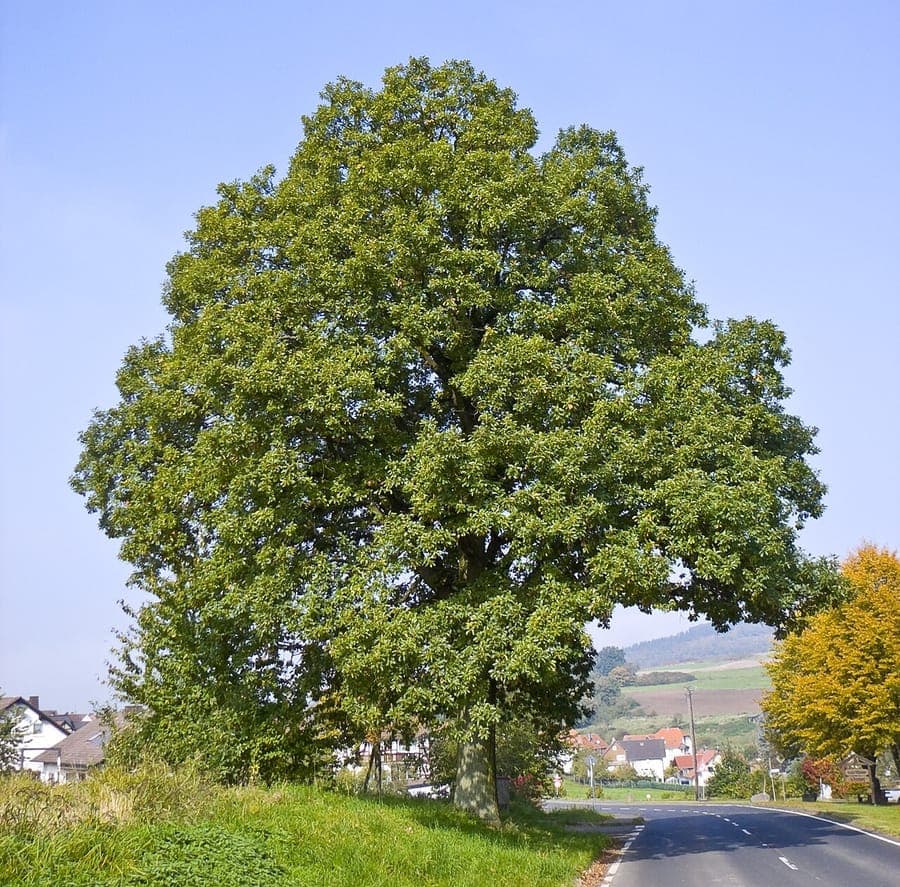
The sessile oak (Quercus petraea) is a stately deciduous tree native to woodlands across central and western Europe. Unlike the pedunculate oak, its acorns sit directly on the twigs without stalks - hence the name 'sessile'. It's a long-lived species, often reaching 200–300 years, with a mature height of 25–40 meters. In the UK and Ireland, it's commonly found in upland woods and ancient forests, but it's also a strong candidate for large gardens and parkland settings.
This oak isn't just a visual anchor; it's an ecological powerhouse. Over 280 insect species rely on it, along with birds like nuthatches and woodpeckers that feed on its acorns. If you're designing a wildlife-friendly garden, the sessile oak should be on your shortlist. On gardenworld.app, you can create a digital layout that accounts for its eventual spread and seasonal shading, ensuring it fits seamlessly into your long-term plan.
Appearance & bloom cycle
The sessile oak has deeply fissured, dark grey bark and a broad, spreading crown. Its leaves are deeply lobed, up to 12 cm long, with pointed tips and a slightly downy underside. They emerge in May - later than many trees - and turn golden to russet in autumn, sometimes holding onto the branches well into winter.
Flowering occurs in April and May. The flowers are yellow-green catkins: male ones hang down, up to 6 cm long, while the female flowers are smaller and upright. Wind pollination leads to acorn development, which ripens by September–October. The acorns are 2–3 cm long, slender, and sit in scaly cups without stalks - a key ID feature.
Ideal location
This is a tree for space. Never plant it within 10 meters of buildings, drains, or paved areas - its root system spreads widely and deeply. Choose a sunny spot (light level 8/10), preferably on a gentle slope with good air circulation. It tolerates light shade when young but thrives in full sun.
Avoid coastal sites with salt spray and urban areas with heavy pollution. In smaller gardens, it's best used as a boundary tree or as part of a woodland edge. On gardenworld.app, you can simulate its growth over decades, helping you visualise root spread and canopy shadow - critical for smart garden planning.
Soil requirements
Sessile oak prefers well-drained, acidic to slightly acidic soils (pH 5.5–6.5). It grows well on sandy loam or clay loam but struggles in waterlogged clay or chalky soils. Good drainage is non-negotiable - prolonged wet feet can lead to root rot.
It's more tolerant of dry conditions than many oaks, thanks to its deep taproot. If your soil is alkaline, avoid planting this species; instead, consider Quercus robur, which handles higher pH better. A soil test before planting is wise, especially if you're unsure of your garden's chemistry.
Free design
Want to see Sessile oak: complete guide in your garden? Make a free design now.
Watering
Young trees need consistent watering for the first 2–3 years, especially during dry summers. Give 20–30 litres per week during droughts. Once established, the sessile oak is highly drought-tolerant and rarely needs supplemental watering.
Water at the drip line, not against the trunk, to encourage outward root growth. Use a slow soaker hose or watering spike for deep penetration. Avoid wetting the trunk, which can encourage fungal issues.
Pruning
Minimal pruning is required. Only remove dead, damaged, or crossing branches, and do so in late summer (August–September) to reduce the risk of oak wilt or sap bleeding.
If shaping is needed, start early - within the first five years. Select a strong central leader and remove competing stems. Avoid topping or heavy crown reduction; this compromises structure and invites disease. Use sharp, sterilised tools, and never paint wounds - let them seal naturally.
Maintenance calendar
- January: Check for storm damage. No routine care.
- February: Inspect for loose branches. Remove if hazardous.
- March: Prepare soil if planting. No other tasks.
- April: Flowers emerge. Avoid pruning.
- May: Leaves unfurl. Watch for oak processionary moth or powdery mildew.
- June: Established trees need no care. Water young ones in drought.
- July: Monitor for drought stress. Deep water if needed.
- August: Light pruning of damaged wood only.
- September: Acorns ripen. Apply leaf mould or compost around the base.
- October: Leaves fall. Leave as mulch, but keep clear of the trunk.
- November: No action. Let leaf litter support soil life.
- December: Protect young trunks from deer or rabbits with guards.
Winter hardiness
The sessile oak is fully hardy to -25°C and thrives in USDA zones 5–8. It's well adapted to cold winters, though late frosts can damage new spring growth. Mature trees show little winter damage, and some juvenile leaves may persist through mild winters.
In exposed areas, young trees benefit from winter protection - a hessian wrap can shield buds from wind scorch.
Companion plants
Underplant with shade-tolerant, native species: wood anemone (Anemone nemorosa), bluebell (Hyacinthoides non-scripta), and wood sorrel (Oxalis acetosella). For structure, consider dog's mercury (Mercurialis perennis) or wood millet (Milium effusum).
Avoid invasive groundcovers like ivy or periwinkle. Keep the root zone clear to prevent competition. Bilberry (Vaccinium myrtillus) often grows naturally beneath sessile oaks in upland woods - a sign of shared soil preferences.
Closing
The sessile oak isn't a quick win. It's a legacy tree - slow to establish, but enduring. It rewards patience with centuries of shade, autumn drama, and ecological value. Plant it with foresight, give it room, and it will outlive you by many generations.
You'll find sessile oaks at garden centres like Wyevale or Dobbies, but always check the label. Misidentification with pedunculate oak is common. Buy from a reputable nursery, and consider container-grown specimens for better root integrity. On gardenworld.app, explore design templates featuring native woodlands where the sessile oak plays a starring role.
Want to see Sessile oak: complete guide in your garden? Make a free design now.
Upload a photo, pick a style, and get a photorealistic design with plant list in under a minute.
No credit card required


Similar plants
Lucombe oak: complete guide
Quercus crenata
Lucombe oak (Quercus crenata): a majestic semi-evergreen giant with corky bark, perfect for large gardens, parks, and country estates.
Blue oak: complete guide
Quercus douglasii
Discover the blue oak, a drought-tolerant Californian shade tree with striking blue-green foliage, ideal for large, climate-resilient gardens.
Quercus montana: complete guide
Quercus montana
Quercus montana, the chestnut oak, is a rugged American shade tree with deeply furrowed bark and large acorns, well suited to dry, rocky, spacious gardens.