
Wikimedia Commons / CC BY-SA 3.0, via Wikimedia Commons
Turkey oak: complete guide
Quercus cerris
Want to see Turkey oak: complete guide in your garden?
1 minute, no credit card
Overview
Quercus cerris, commonly known as the Turkey oak, is a stately deciduous tree native to southern Europe, including Italy, Greece, and parts of Central Europe. While not as commonly planted in suburban gardens as other oaks, it's a fantastic choice for parks, large estates, or rural landscapes where space isn't an issue. Mature trees reach 20–25 meters in height with a spread of 12–15 meters, forming a broad, open canopy. This isn't a tree for small city backyards - it needs room to stretch. But if you've got the space, the Turkey oak offers excellent structure, longevity, and wildlife value. On gardenworld.app, you can design a garden layout that accounts for its future spread, root zone, and seasonal shade patterns.
Appearance & bloom cycle
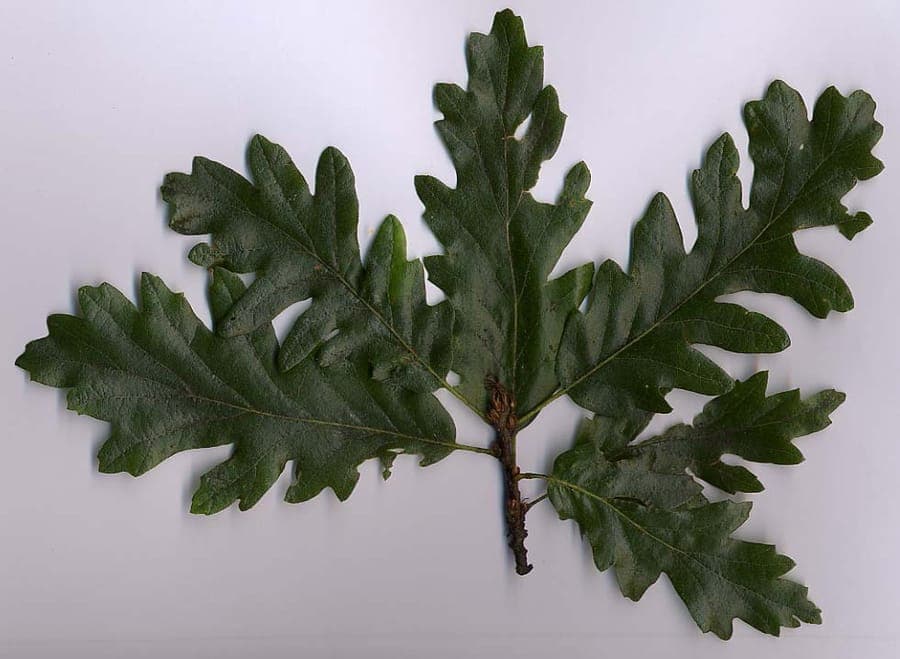
The Turkey oak is easily identified by its young twigs, which are covered in soft, downy hairs - a trait that gives it the French name 'chêne chevelu'. The bark starts smooth but develops deep, irregular fissures with age, adding rugged character. Leaves are 8–12 cm long, deeply lobed with 6–10 pairs of rounded lobes, and have a distinctive pale grey, hairy underside. In spring (April to May), the tree produces dangling male catkins and small female flowers. After pollination, these develop into acorns partially enclosed in a striking, fringed cup - one of the most unique features of this species. Fall color is modest: yellow to brown, not particularly vibrant, but still effective in naturalistic plantings.
Ideal location
Plant in full sun - at least 6 hours of direct light daily. The Turkey oak tolerates partial shade when young but thrives best in open conditions. Choose a site at least 8 meters from buildings, driveways, or underground utilities, as roots can extend widely. Avoid planting under power lines or near septic systems. It's a good choice for woodland edges, large lawns, or as a solitary specimen. In urban areas, it handles pollution reasonably well, though young trees benefit from wind protection during the first few winters.
Soil requirements
This oak is adaptable but demands well-drained soil. It grows well in sandy loam, clay loam, or even rocky substrates, as long as water doesn't pool. Ideal pH ranges from 5.5 to 7.5. Avoid heavy, waterlogged clays - they lead to root rot. If your soil is compacted, consider planting on a slight berm or in a raised bed. Don't amend the planting hole with rich compost or fertilizer; oaks prefer low-nutrient, natural conditions. Leaf litter left in place decomposes slowly and feeds the tree over time.
Free design
Want to see Turkey oak: complete guide in your garden? Make a free design now.
Watering
Young trees (first 1–3 years) need regular watering during dry spells. Apply 10–15 liters per week in summer if rainfall is below 2.5 cm. Use a soaker hose or drip system to deliver water slowly to the root zone. Once established, the Turkey oak is highly drought-tolerant and relies on natural rainfall. Overwatering is a bigger risk than underwatering - soggy soil invites fungal diseases.
Pruning
Minimal pruning is required. The tree naturally forms a strong central leader and open crown. Only remove dead, damaged, or crossing branches, and do so in late winter (January–February). Use clean, sharp tools and avoid cutting large limbs unnecessarily - oaks are sensitive to pruning wounds, which can attract pests like oak borers. Never top the tree - it ruins its form and weakens structure.
Maintenance calendar
- Jan–Feb: Inspect for deadwood, prune if needed
- Mar: Check young trees for stability, stake if loose
- Apr–May: Catkins emerge, no maintenance required
- Jun–Aug: Monitor for oak mildew or aphids; treat only if severe
- Sep: Allow fallen leaves to remain - they enrich soil and suppress weeds
- Oct–Dec: Observe fall color and acorn drop; check for soil compaction under canopy
Winter hardiness
Hardy in USDA zones 7–9, meaning it tolerates temperatures down to -17°C. In the UK and most of the US South and West, it survives winter without protection. Young trees may benefit from burlap wrapping in zone 7 during extreme cold snaps. In colder zones, winter dieback can occur, but mature trees usually recover.
Companion plants
Under the dense shade of a mature Turkey oak, choose shade-tolerant, slow-spreading plants. Good options include native wood anemones (Anemone nemorosa, 8–15 cm), hellebores (Helleborus orientalis, 45–60 cm), or Carex vulpinoidea (30–50 cm). Avoid aggressive groundcovers like English ivy. Plant companions at least 2 meters from the trunk to avoid root competition. Ferns such as Dryopteris erythrosora also thrive in the cool, shaded microclimate.
Closing
The Turkey oak isn't a fast grower - expect 30–50 years to reach full size - but it's a long-term investment. It supports biodiversity, casts deep summer shade, and adds architectural interest with its textured bark and distinctive acorns. Buy young specimens from reputable garden centres; look for straight trunks and healthy root balls. On gardenworld.app, you can simulate how this tree will shape your garden over decades, helping you plan companion planting and future maintenance zones.
Want to see Turkey oak: complete guide in your garden? Make a free design now.
Upload a photo, pick a style, and get a photorealistic design with plant list in under a minute.
No credit card required


Similar plants
Lucombe oak: complete guide
Quercus crenata
Lucombe oak (Quercus crenata): a majestic semi-evergreen giant with corky bark, perfect for large gardens, parks, and country estates.
Blue oak: complete guide
Quercus douglasii
Discover the blue oak, a drought-tolerant Californian shade tree with striking blue-green foliage, ideal for large, climate-resilient gardens.
Quercus montana: complete guide
Quercus montana
Quercus montana, the chestnut oak, is a rugged American shade tree with deeply furrowed bark and large acorns, well suited to dry, rocky, spacious gardens.