
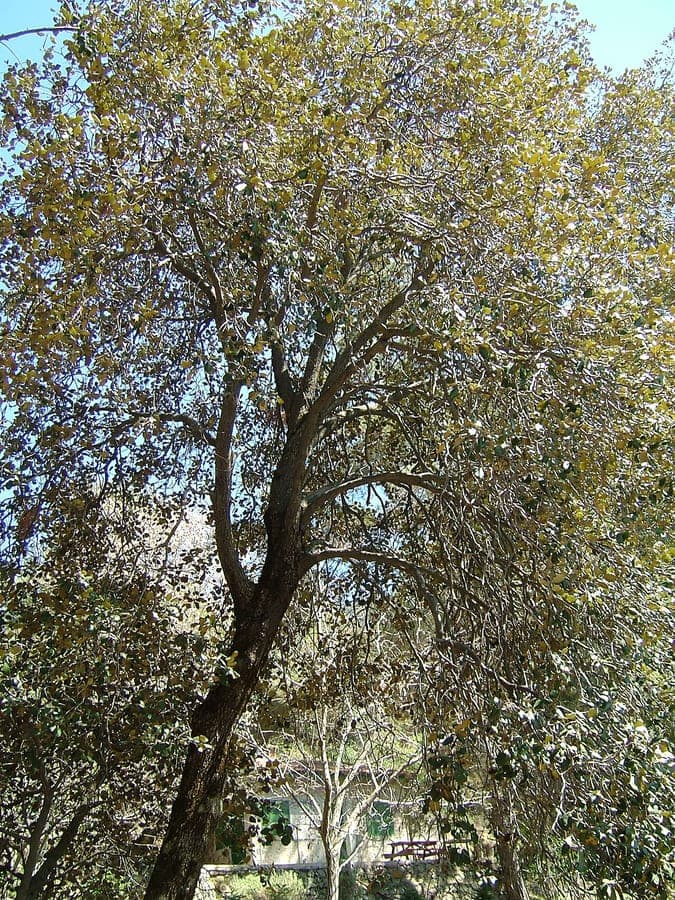
Chneophytou / CC BY-SA 4.0, via Wikimedia Commons
Golden oak: complete guide
Quercus alnifolia
Want to see Golden oak: complete guide in your garden?
1 minute, no credit card
Overview
Quercus alnifolia, commonly known as the Golden oak, is a rare evergreen shrub or small tree native to the Troodos Mountains of Cyprus. Unlike many oaks that grow tall and dominant, this species often forms a dense, bushy shrub reaching 3 to 6 metres in height. In the UK and northern Europe, it typically stays smaller - around 2.5 to 4 metres - making it ideal for smaller gardens or container planting. Its common name comes from the golden-yellow undersides of its leaves, which shimmer in the wind and give the plant a luminous quality.
This oak is not widely seen in British gardens, but it's gaining attention among gardeners looking for something unique yet resilient. It's especially suited to Mediterranean-style or wildlife-friendly gardens. On gardenworld.app, you can design a layout that highlights this oak's reflective foliage and compact form, integrating it with stone paths and drought-friendly planting.
Appearance & bloom cycle
The Golden oak has leathery, oval leaves about 5–8 cm long, with serrated margins and a glossy green upper surface. The underside is densely covered in fine, golden tomentum - a soft, felt-like fuzz that gives the plant its signature glow. When the wind blows, the leaves twist to reveal their golden undersides, creating a dynamic visual effect.
It produces inconspicuous greenish catkins in late spring (May to early June). These are followed by small, pointed acorns, roughly 2 cm in length, which mature in autumn. In cooler climates like the UK, acorns rarely develop fully, but the plant still offers year-round interest with its evergreen foliage and textured bark.
Ideal location
Plant Quercus alnifolia in full sun to light shade. At least 6 hours of direct sunlight daily is best for enhancing the golden leaf colour. South- or west-facing positions work well, especially in cooler regions. Avoid exposed, windy spots, particularly in coastal areas where salt-laden winds can damage the leaves.
This oak thrives in rocky, well-drained settings. It's excellent for gravel gardens, slopes, or against dry stone walls. If you're designing a low-maintenance Mediterranean theme, this plant is a standout. Use gardenworld.app to visualise how it fits into a garden scheme with olive trees, santolina, and thyme.
Soil requirements
The Golden oak is adaptable but demands excellent drainage. It prefers sandy or loamy soils with a pH between 5.5 and 7.5. Heavy clay soils are unsuitable unless heavily amended with grit or sand. Poor soils are tolerated, but avoid rich, compost-heavy mixes that retain too much moisture.
For container growing, use a mix of 2 parts loam-based compost, 1 part horticultural grit, and 1 part perlite. Ensure pots have generous drainage holes. Repot every 3–4 years to refresh the soil.
Free design
Want to see Golden oak: complete guide in your garden? Make a free design now.
Watering
Water regularly during the first two growing seasons - about 10–15 litres per week from April to September. Once established, it becomes highly drought-tolerant and only needs supplemental watering during prolonged dry spells (3+ weeks without rain).
Overwatering is a major risk. Always check soil moisture at 10 cm depth before watering. If it's damp, wait. In winter, reduce watering significantly, especially in containers.
Pruning
Pruning is rarely needed. The plant naturally maintains a dense, rounded shape. If required, light formative pruning can be done in late winter (February) to remove dead wood or control size. Avoid heavy cutting - recovery is slow. Use sharp, clean tools and wear gloves, as the sap may irritate sensitive skin.
Never prune in autumn, as this can encourage new growth vulnerable to frost.
Maintenance calendar
- January: inspect for frost damage
- February: minimal pruning, check root collar for rot
- March: apply a thin layer of mulch if needed
- April: resume watering if spring is dry
- May: catkins appear, monitor for aphids
- June–August: low maintenance, water only in extreme drought
- September: reduce watering as growth slows
- October: check for fungal spots, remove fallen debris
- November: protect young plants with fleece if hard frost is forecast
- December: dormant period - no action required
Winter hardiness
Quercus alnifolia is hardy to USDA zone 8 (–12°C). In the UK (zones 8–9), it can survive outdoors with protection in colder areas. Young plants under 1.5 metres should be wrapped in horticultural fleece during prolonged cold. Mature specimens are more resilient but still vulnerable to wet, cold winters.
Avoid planting in frost pockets or areas with standing water. Use raised beds or containers in marginal climates.
Companion plants
Pair with other drought-tolerant, sun-loving plants: Cistus, Lavandula, Rosmarinus, and Euphorbia myrsinites. These share similar needs and create a cohesive, low-water garden. Low-growing perennials like Sedum or Thymus serpyllum work well as ground cover.
Avoid moisture-loving plants such as ferns or hostas, which conflict with the oak's dry preferences.
Closing
Quercus alnifolia is a striking, resilient addition to any garden seeking year-round texture and subtle brilliance. Its shimmering foliage, compact growth, and minimal care needs make it perfect for urban courtyards, gravel gardens, or sheltered patios. While not common in standard garden centres, it can be found at specialist nurseries and retailers like garden centres across the UK. With the right start - sun, drainage, and protection in youth - this oak can thrive for decades. Plan its placement wisely using gardenworld.app to ensure it complements your garden's light, scale, and style.
Want to see Golden oak: complete guide in your garden? Make a free design now.
Upload a photo, pick a style, and get a photorealistic design with plant list in under a minute.
No credit card required


Similar plants
Lucombe oak: complete guide
Quercus crenata
Lucombe oak (Quercus crenata): a majestic semi-evergreen giant with corky bark, perfect for large gardens, parks, and country estates.
Blue oak: complete guide
Quercus douglasii
Discover the blue oak, a drought-tolerant Californian shade tree with striking blue-green foliage, ideal for large, climate-resilient gardens.
Quercus montana: complete guide
Quercus montana
Quercus montana, the chestnut oak, is a rugged American shade tree with deeply furrowed bark and large acorns, well suited to dry, rocky, spacious gardens.