
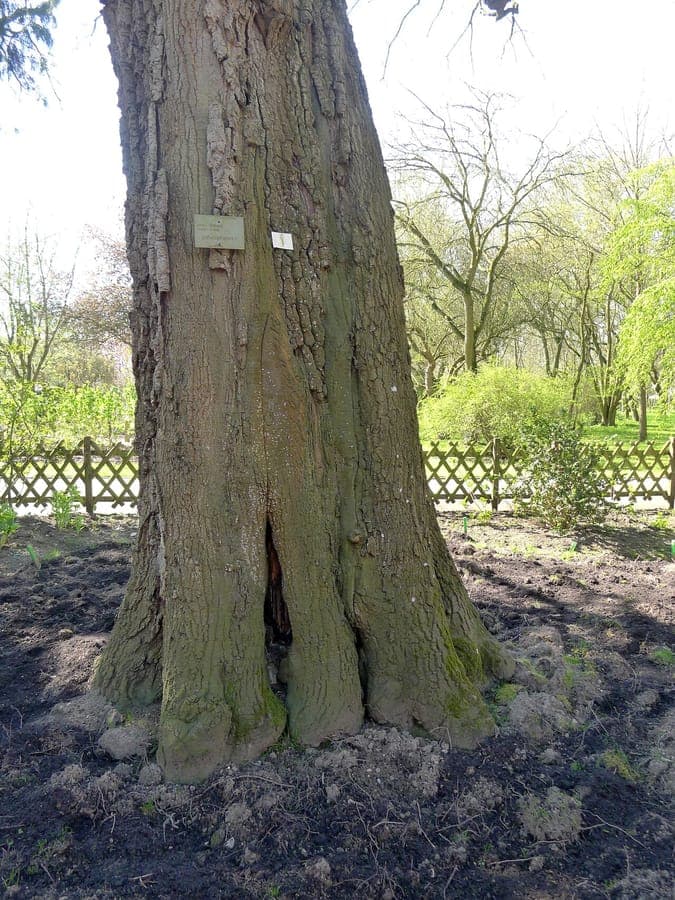
Mbzt / CC BY-SA 4.0, via Wikimedia Commons
Quercus afares: complete guide
Quercus afares
Want to see Quercus afares: complete guide in your garden?
1 minute, no credit card
Overview
Quercus afares, commonly known as the African oak, is a fascinating tree species native to Algeria and Tunisia in North Africa. Its hardiness and resilience make it a distinctive choice for gardens in climates with limited rainfall and intense sunshine. The species is renowned for its adaptation to arid environments and robust growth pattern throughout its life.
The North African oak belongs to the Fagaceae family, the same family as all other oaks. This means it shares the same characteristic features that make oaks so valuable for landscape design and environmental purposes. The plant grows into a substantial tree with a strong root structure that ensures its stability in windy and dry conditions.
Appearance and bloom
The leaves of Quercus afares are striking and form an important identification feature. They have a leathery texture and vary in shape, from slightly lobed to nearly entire; this variability is characteristic of the species and adds to its botanical interest.
The leaves grow alternately along the branches and form a dense, attractive canopy. This dense foliage makes the tree suitable for providing shade and protection against wind. The bark is rough and dark gray, appearing characterful, especially on mature specimens that have developed character over decades.
Flowering and fruiting follow the typical oak pattern. Male flowers appear as hanging catkins in spring, while female flowers are located at the bases of young twigs. After wind-pollination, distinctive acorns develop with a cup (cupule) that envelops the nut.
Ideal location
For optimal growth, Quercus afares should be planted in a location with full sun. At least six to eight hours of direct sunlight daily is needed to develop a healthy, strong tree. This is especially important in temperate climates where sunlight is precious.
The tree performs well in windy locations, thanks to its strong wood texture and low center of gravity. This makes it suitable for gardens in coastal areas or open terrains where strong winds occur. The deeply penetrating roots of the tree ensure that it is not easily uprooted in storms.
Avoid wet, damp places where water accumulates. This plant is adapted to dry conditions and can suffer under persistent moisture. Open spaces without water contamination are ideal.
Soil
Quercus afares is not particularly fussy about soil type but grows best in well-draining soil. Heavy clay soils that retain water can hinder its growth. Sandy or light, porous soils are preferred by the tree.
The pH value of the soil can vary, but the plant thrives in neutral to slightly acidic soils. This aligns with many temperate tree species. If your soil is very alkaline, add organic material to improve it somewhat.
Addition of compost or other processed organic matter when planting improves drainage and provides nutrients for growth. This is especially important in poor soils. Mulching around the base with 5-10 cm of organic material helps soil moisture retention and temperature regulation.
Free design
Want to see Quercus afares: complete guide in your garden? Make a free design now.
Watering
Once established, Quercus afares is very drought-tolerant and requires little supplemental water. This is a major advantage in regions with limited water availability or where water conservation is a priority.
During the first season after planting, the tree should receive regular water to help establish its root systems. Water deeply and infrequently, allowing the soil to become moist to at least 30 cm depth. This encourages deep root growth.
Once established (after 1-2 years), the tree requires little supplemental water except during periods of extreme drought. In temperate climates, rainfall and natural moisture usually suffice for healthy growth.
Pruning
Pruning of Quercus afares should be minimal. The tree usually requires no aggressive pruning and does not respond well to heavy cutting. This is important to keep in mind when planning landscapes.
Limit pruning to removing dead, diseased, or damaged branches. This can be done throughout the year. Larger prunings are best done in late winter or early spring when the tree is dormant and better able to heal.
Formative pruning should be very limited. If the tree grows large and requires much space, consider choosing a different species. Once planted, minimize the need for pruning.
Maintenance calendar
May-June: Check for new growth and ensure young trees water regularly. Monitor leaves for abnormalities.
July-August: In warm periods, supplemental watering may be needed, especially for newly planted specimens. Watch for insect damage.
September-October: Fall color may occur. No special treatment needed. This is a natural process.
November-March: Winter period. The tree is dominant. This is the best time for major pruning work if needed.
Yearlong: Inspect for diseases, pests, and physical damage. Quick intervention helps prevent major problems.
Winter hardiness
Quercus afares is moderately winter hardy. In temperate to warm temperate zones (USDA 8-10), specimens grow well. In very cold regions (below USDA zone 7), serious winter damage can occur, especially for young trees.
Heavy spring night frosts can damage young shoots. Protect young trees in the first year with frost blankets if night temperatures drop below -5 degrees Celsius.
Once established, the tree tolerates brief frost periods without damage. However, prolonged freezing or repeated frost-thaw cycles can be problematic in very cold climates.
Companion planting
Quercus afares combines well with other Mediterranean garden plants that have similar water and light requirements. Robust-growing species like lavender, rosemary, and cistus thrive in the shade of this oak.
Sowing ground covers beneath the tree helps moisture retention and erosion control. Ensure these do not grow directly against the trunk, as this can cause fungal problems.
Avoid planting competing large trees nearby. The deep roots of Quercus afares can draw water and nutrients from the surroundings, so maintain at least 3-4 meters distance from other trees.
Closing
Quercus afares is an impressive choice for gardens where Mediterranean character is desired and drought is a factor. Its robust growth, interesting architecture, and low maintenance needs make it a valuable part of thoughtful landscape design. For those willing to experiment with specialized botanical treasures, this North African oak is certainly worth considering. Always check local availability through gardenworld.app before planting.
Want to see Quercus afares: complete guide in your garden? Make a free design now.
Upload a photo, pick a style, and get a photorealistic design with plant list in under a minute.
No credit card required


Similar plants
Lucombe oak: complete guide
Quercus crenata
Lucombe oak (Quercus crenata): a majestic semi-evergreen giant with corky bark, perfect for large gardens, parks, and country estates.
Blue oak: complete guide
Quercus douglasii
Discover the blue oak, a drought-tolerant Californian shade tree with striking blue-green foliage, ideal for large, climate-resilient gardens.
Quercus montana: complete guide
Quercus montana
Quercus montana, the chestnut oak, is a rugged American shade tree with deeply furrowed bark and large acorns, well suited to dry, rocky, spacious gardens.