
Daderot / Public domain, via Wikimedia Commons
Sawthorn oak: complete guide
Quercus acutissima
Want to see Sawthorn oak: complete guide in your garden?
1 minute, no credit card
Overview
The sawthorn oak (Quercus acutissima) is a fast-growing, hardy deciduous tree native to East Asia but thriving in temperate climates across Europe and North America. Reaching heights of 50 to 65 feet (15–20 m) with a spread of 30 to 40 feet (9–12 m), it's best suited for spacious gardens, parks, or woodland edges. It grows at a rate of 16–24 inches (40–60 cm) per year under optimal conditions and is hardy in USDA zones 6a to 9b.
This tree stands out for its deeply serrated, lance-shaped leaves and upright, spreading crown. It's not just ornamental - it supports local wildlife, particularly birds and small mammals that feed on its acorns. On gardenworld.app, you can design a landscape plan that accounts for its mature size and seasonal changes, ensuring harmony with surrounding plants and structures.
Appearance & bloom cycle
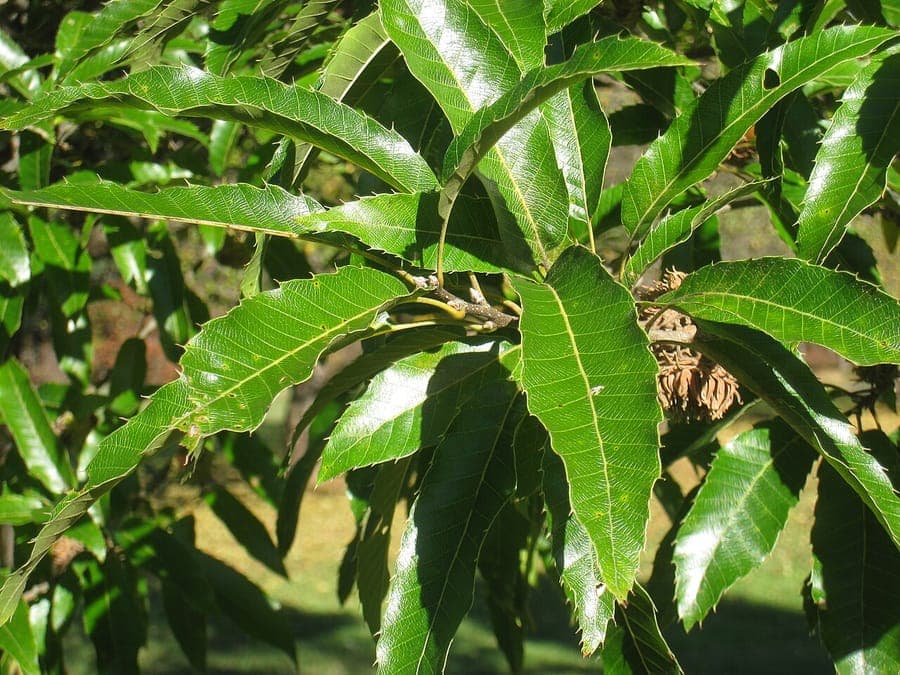
The foliage is the star: dark green, 4–7 inches (10–18 cm) long, with sharply toothed margins resembling a saw blade - hence the name. The undersides are paler and slightly pubescent. In autumn, leaves turn variable shades of yellow, russet, and brown, often persisting well into winter (marcescence), which adds visual interest during the dormant season.
Flowering occurs in May, with inconspicuous green catkins. Male flowers dangle in long, slender clusters, while female flowers are tiny and nestled in leaf axils. By late autumn, 0.6–1 inch (1.5–2.5 cm) acorns develop, covered by a distinctive fringed cap. These mature acorns are a valuable food source for squirrels, jays, and woodpeckers.
Ideal location
Plant your sawthorn oak in full sun - at least 6 hours of direct sunlight daily - to encourage dense, even crown development. While it tolerates partial shade, growth becomes leggy and the canopy less full. Avoid planting near foundations, driveways, or underground utilities; its root system spreads widely and can disrupt hardscapes over time.
Young trees benefit from wind protection during the first three years. Choose a sheltered site or install a tree stake to prevent rocking and root damage. Use gardenworld.app to simulate sun exposure and root spread, helping you pick the perfect spot without future regrets.
Soil requirements
Quercus acutissima is adaptable to various soil types - sandy, loamy, or clay - as long as drainage is adequate. It prefers a slightly acidic to neutral pH (4.9–7.0). Avoid waterlogged soils, which promote root rot, especially in young specimens.
When planting, don't add fertilizer to the planting hole. Instead, apply a 2–3 inch (5–8 cm) layer of organic mulch - such as wood chips or compost - around the base, keeping it 5 inches (12 cm) clear of the trunk. This conserves moisture and suppresses weeds without encouraging rot.
Free design
Want to see Sawthorn oak: complete guide in your garden? Make a free design now.
Watering
Water deeply and regularly during the first growing season, especially in dry spells. Provide 5–10 gallons (20–40 litres) per week, soaking the root zone to a depth of at least 12 inches (30 cm). After three years, the tree typically becomes drought-tolerant, though occasional deep watering during prolonged dry periods is beneficial.
Use soaker hoses or drip irrigation to deliver water slowly and evenly. Avoid frequent shallow watering, which leads to weak, surface-rooted growth.
Pruning
Minimal pruning is required. Remove only dead, broken, or crossing branches, ideally in late summer to early autumn (August–September). Avoid pruning in spring when sap flow is high - this can cause excessive bleeding and stress the tree.
For young trees, you may selectively remove lower branches to raise the canopy and create a clear trunk, but do so gradually over several years. Never remove more than 20% of the canopy at once.
Maintenance calendar
- January: Inspect for storm damage. Mark branches for removal.
- February: No active care needed. Prepare tools.
- March: Check for pests like oak weevils. Top up mulch.
- April: Loosen soil around the base (avoid root disturbance). Watch for new growth.
- May: Catkins appear. No feeding required.
- June: Monitor for powdery mildew or aphids in humid conditions.
- July: Water during dry spells. Avoid foliar feeding.
- August: Light corrective pruning allowed.
- September: Stop pruning by mid-month.
- October: Leaf drop begins. Leave fallen leaves as natural mulch.
- November: Remove debris piling against the trunk to prevent rot.
- December: Final inspection. No fertilizing or pruning.
Winter hardiness
Hardy down to -23°C (-10°F), the sawthorn oak handles UK and northern US winters with ease. In colder zones (6a–7a), young trees may benefit from trunk wrapping to prevent frost cracking. The retained brown leaves offer some protection against browsing animals.
Avoid piling snow against the trunk and ensure good air circulation to prevent fungal issues.
Companion plants
Underplant with shade-tolerant perennials like epimedium, hostas, or barrenworts. Avoid aggressive groundcovers like ivy that compete for resources. Native ferns and sedge species (Carex) work well in naturalistic designs.
To support wildlife, pair with nectar-rich plants like coneflowers or goldenrod. Avoid planting shallow-rooted shrubs directly beneath, as root competition can stress the oak.
Closing
The sawthorn oak is a resilient, attractive tree that brings long-term structure and ecological value to larger landscapes. It demands space and patience, but rewards with decades of shade, seasonal drama, and wildlife support. Once established, it's largely self-sufficient.
Young trees are available at major garden centres across the UK and US. Look for specimens 3–4 feet tall with a straight trunk and healthy root ball. With proper planting and early care, your sawthorn oak will become a defining feature of your garden for generations.
Want to see Sawthorn oak: complete guide in your garden? Make a free design now.
Upload a photo, pick a style, and get a photorealistic design with plant list in under a minute.
No credit card required


Similar plants
Lucombe oak: complete guide
Quercus crenata
Lucombe oak (Quercus crenata): a majestic semi-evergreen giant with corky bark, perfect for large gardens, parks, and country estates.
Blue oak: complete guide
Quercus douglasii
Discover the blue oak, a drought-tolerant Californian shade tree with striking blue-green foliage, ideal for large, climate-resilient gardens.
Quercus montana: complete guide
Quercus montana
Quercus montana, the chestnut oak, is a rugged American shade tree with deeply furrowed bark and large acorns, well suited to dry, rocky, spacious gardens.