
noebse / CC BY-SA 2.5, via Wikimedia Commons
Firethorn: complete guide
Pyracantha coccinea
Want to see Firethorn: complete guide in your garden?
1 minute, no credit card
Overview
Pyracantha coccinea, commonly known as Firethorn, is a tough, evergreen shrub that earns its place in UK and North American gardens for both beauty and utility. Native to southern Europe and parts of western Asia, it's adapted to hot, dry summers and mild winters, yet performs reliably in USDA zones 7 to 9. Growing up to 2.5 metres tall and wide, it forms a dense, bushy thicket perfect for hedging, screening, or training against walls. The sharp thorns make it a natural deterrent, while the vibrant berries add months of seasonal interest. On gardenworld.app, you can map out a planting scheme that integrates Firethorn into hedges, mixed borders, or espalier designs with ease.
Appearance & bloom cycle
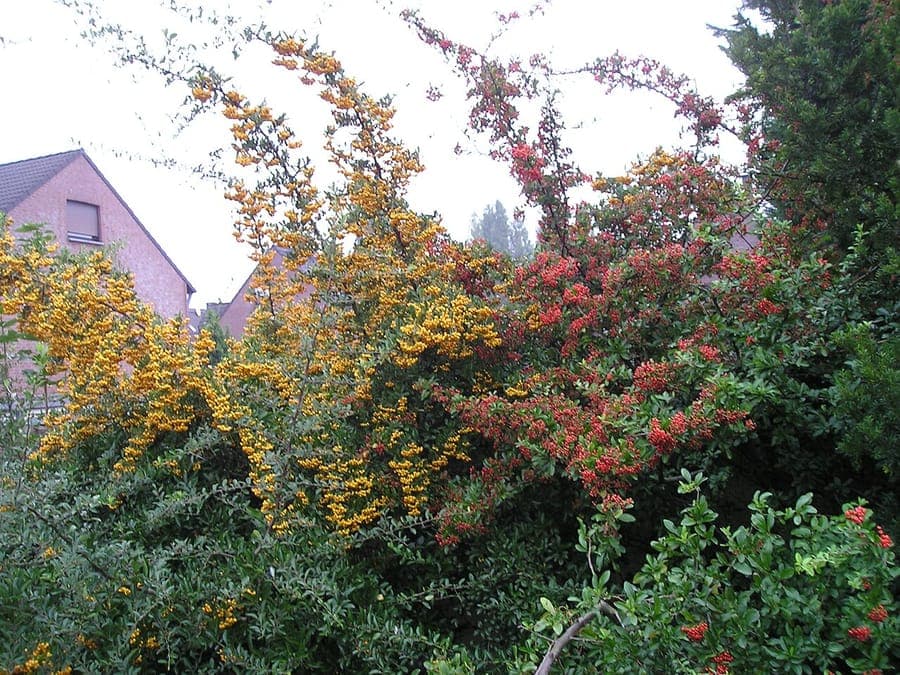
Firethorn features glossy, dark green foliage that stays intact year-round, giving structure even in winter. In May, clusters of small, white, mildly fragrant flowers appear, buzzing with bees and other pollinators. By late summer, green berries begin forming, ripening to a brilliant scarlet red by autumn. These persist well into winter, often lasting until February, providing food for birds like thrushes and waxwings. The plant's rugged look balances softness in the garden - just be mindful of the thorns when pruning or planting near paths. Mature specimens can live over 20 years with minimal care.
Ideal location
Plant Firethorn in full sun to light shade - aim for at least 6 to 8 hours of direct light daily (light level 8). A south- or west-facing wall is ideal, especially if you're training it as an espalier. It thrives in urban gardens, tolerating pollution and compacted soil. Avoid deep shade, as this reduces flowering and berry production. When planting as a hedge, space specimens 60 to 90 cm apart. Keep it away from high-traffic areas due to the sharp thorns. Use gardenworld.app to visualise your garden layout and see how Firethorn fits with existing structures and plants.
Soil requirements
Firethorn isn't fussy about soil type, as long as drainage is good. It tolerates pH from 5.8 to 8, meaning it grows well in acidic, neutral, and alkaline conditions. It adapts to clay, loam, or sandy soils, but standing water leads to root rot. When planting, mix in a bucket of compost to help establish roots, but avoid high-nitrogen fertilisers that promote leafy growth over flowering.
Watering
Water deeply once a week during the first growing season, giving 10–15 litres per plant. After establishment, it's drought tolerant and rarely needs supplemental watering except during prolonged dry spells. Overwatering is more dangerous than underwatering - soggy roots invite fungal diseases. Mulch lightly with gravel or compost in spring to retain moisture and suppress weeds.
Free design
Want to see Firethorn: complete guide in your garden? Make a free design now.
Pruning
Prune after flowering in late spring or early summer, never in early spring, as you'll remove the current year's flower buds. Use sharp, clean secateurs and wear thick gloves. Cut back flowering laterals to 10–15 cm to encourage fruiting spurs. For wall-trained specimens, tie in new shoots and trim side branches to maintain a flat profile. Avoid heavy pruning in autumn, as this can stimulate soft growth vulnerable to frost.
Maintenance calendar
- Jan: Check for lingering berries; inspect for bird activity
- Feb: Minimal care; prepare tools for spring
- Mar: Monitor new growth; avoid pruning
- Apr: Increase watering if dry; watch for pests
- May: Peak bloom; support pollinators
- Jun: Prune after flowering; shape hedges
- Jul: Watch for aphids or powdery mildew
- Aug: Berries begin to colour; reduce feeding
- Sep: Water during dry periods; no fertiliser
- Oct: Berries fully red; attract birds
- Nov: Protect young plants in zone 7 if frost is severe
- Dec: Winter structure visible; enjoy seasonal appeal
Winter hardiness
Hardy to -15°C (USDA zone 7), Firethorn handles cold well but may suffer in exposed, windy sites. In colder zones, young plants benefit from fleece or burlap wraps for the first two winters. Established shrubs rarely need protection. The berries often remain through winter, adding colour and supporting wildlife.
Companion plants
Pair Firethorn with other evergreens like holly or choisya for year-round structure. Great companions include winter jasmine (Jasminum nudiflorum), which blooms in January, or Hebe 'Autumn Glory' for contrasting foliage. Avoid planting close to shallow-rooted perennials that compete for moisture. Climbing roses on the same wall create a beautiful summer display, while Firethorn takes over in autumn and winter.
Closing
Firethorn is a workhorse shrub - tough, attractive, and wildlife-friendly. Once established, it asks for little and gives back in spades: flowers, fruit, shelter, and security. Available at garden centres across the UK and North America, including larger retailers with online stock. Look for container-grown plants around 120–180 cm tall for instant impact. Whether you're building a secure boundary or adding winter interest, Firethorn delivers. Plan your layout wisely - tools like gardenworld.app make it easy to design around its thorny nature and long-term growth.
Want to see Firethorn: complete guide in your garden? Make a free design now.
Upload a photo, pick a style, and get a photorealistic design with plant list in under a minute.
No credit card required


Similar plants
Siberian crab apple: complete guide
Malus x robusta
Complete guide to the Siberian crab apple (Malus x robusta): location, soil, pruning, winter hardiness and the best companion plants for your garden.
Chinese flowering crabapple (Malus x spectabilis): complete guide
Malus x spectabilis
Meet the Chinese flowering crabapple (Malus x spectabilis): a classic spring bloomer with carmine buds and pink blossom.
Potentilla crassinervia: complete guide
Potentilla crassinervia
Potentilla crassinervia, the Corsican cinquefoil, grows wild on Corsica and Sardinia's peaks. Discover how to grow this hardy alpine rock garden gem.