
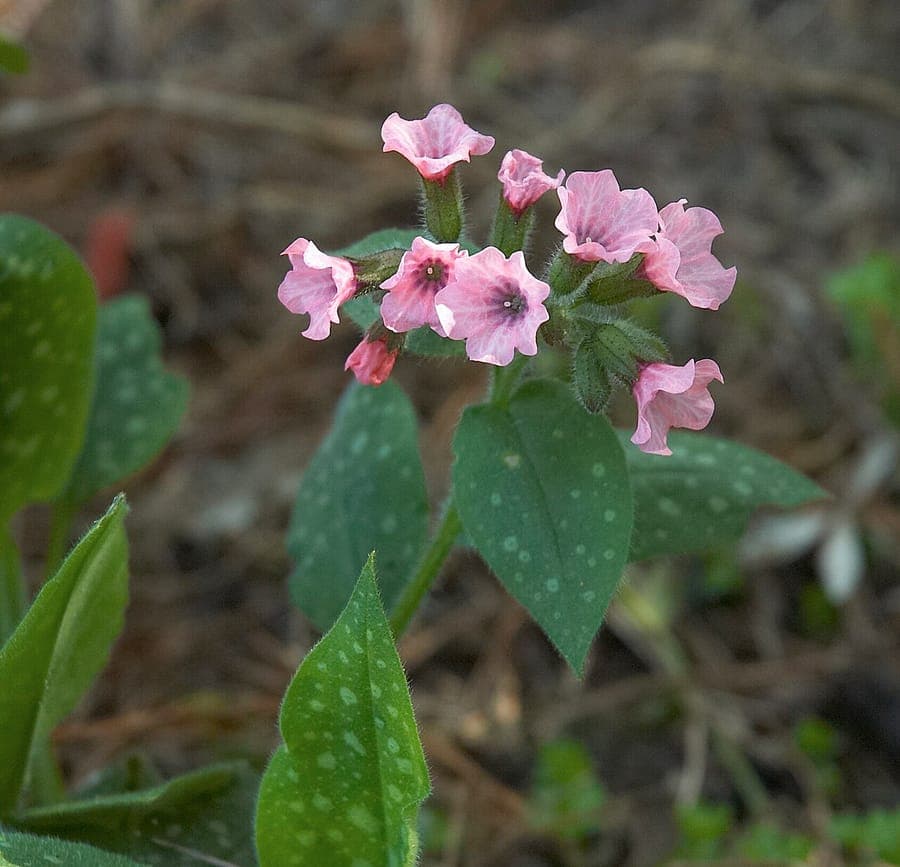
Wouter Hagens / Public domain, via Wikimedia Commons
Bethlehem lungwort: complete guide
Pulmonaria saccharata
Want to see Bethlehem lungwort: complete guide in your garden?
1 minute, no credit card
Overview
Pulmonaria saccharata, commonly known as Bethlehem lungwort, is a charming herbaceous perennial that brings early-season interest to shaded garden areas. Native to forests in France, this member of the Boraginaceae family thrives in cool, moist conditions and is prized for its strikingly mottled foliage and two-tone spring blooms. Reaching a mature height of 30–40 cm and spreading 40–50 cm wide, it's perfect for borders, underplanting shrubs, or naturalising in woodland-style gardens.
In the UK and North America, it's become a go-to choice for gardeners dealing with dry shade beneath trees, where few plants flourish. Its resilience and ornamental value make it a staple in cottage gardens and wildlife-friendly landscapes. On gardenworld.app, you can design a shade garden layout that highlights lungwort's seasonal rhythm and maximises its visual impact.
Appearance & bloom cycle
The leaves of Pulmonaria saccharata are broad, oval, and covered in silvery-white spots that resemble powdered sugar-hence the species name saccharata. These markings are most vivid in spring and provide visual interest even when the plant isn't in bloom. The foliage emerges in late winter to early spring and remains attractive through early summer, although it may decline in hot, dry conditions.
Flowering occurs from April to May, depending on climate. The tubular flowers start as pink or reddish buds and mature to shades of blue or purple, creating a bicolor effect on the same plant. This colour shift, driven by pH changes in the flower cells, adds a dynamic quality that few perennials offer. Each flower cluster rises on hairy stems to about 35 cm, attracting early pollinators like bumblebees and hoverflies.
Ideal location
Bethlehem lungwort performs best in partial to full shade, scoring a 6 on the light scale (where 10 is full sun). It tolerates morning sun in cooler climates but should be shielded from intense afternoon rays, which scorch leaves and stress the plant. Ideal spots include north- or east-facing borders, beneath deciduous trees, or along the edge of a shaded pathway.
Avoid exposed, windy areas. The plant prefers sheltered microclimates where humidity stays moderate and soil moisture remains consistent. In hotter USDA zones (7–8), deeper shade is recommended. In cooler zones (4–6), it can handle slightly brighter conditions if the soil stays reliably damp.
Soil requirements
Lungwort thrives in humus-rich, moisture-retentive yet well-drained soil. A pH between 6.5 and 7.0 is optimal. Heavy clay soils work well as long as they don't become waterlogged. Sandy soils need amending with compost, leaf mould, or well-rotted manure to improve water retention and fertility.
Before planting, dig in generous amounts of organic matter-aim for a 5–10 cm layer mixed into the top 20–25 cm of soil. This boosts microbial activity and root development. Avoid compacted or chalky soils, which dry out too quickly and may cause chlorosis in sensitive cultivars.
Free design
Want to see Bethlehem lungwort: complete guide in your garden? Make a free design now.
Watering
Consistent moisture is crucial, especially during the first growing season. Water weekly during dry spells, applying around 2–3 litres per plant. Once established, Pulmonaria saccharata is moderately drought-tolerant but will drop leaves prematurely if stressed. Mulch annually with leaf litter or composted bark to reduce evaporation and suppress weeds.
Use rainwater when possible, as tap water high in lime can affect soil pH over time. Avoid wetting the foliage directly to minimise the risk of powdery mildew, particularly in humid summers.
Pruning
Pruning isn't mandatory, but selective trimming improves plant health. After flowering, remove spent flower stalks to prevent self-seeding (though this species is not aggressive). If leaves become tattered or show signs of mildew in summer, cut the entire plant back to ground level. A fresh flush of foliage often follows, especially with adequate moisture.
Never prune in late autumn or winter-leave old leaves in place to insulate the crown and provide habitat for beneficial insects.
Maintenance calendar
- February–March: Clear away damaged or diseased leaves. Loosen mulch to allow new shoots to emerge.
- April–May: Peak bloom period. Monitor for slugs and apply organic deterrents if needed.
- June–July: Deadhead and trim back tired foliage. Water during dry weeks. Replenish mulch.
- August–September: Watch for leaf decline. If severe, cut back and water deeply to encourage regrowth.
- October–January: No active care needed. Leaves may persist through winter in milder zones.
Winter hardiness
Pulmonaria saccharata is hardy in USDA zones 4–8. It remains semi-evergreen in milder regions, with leaves often lasting through winter. In colder zones, foliage may die back but the plant reliably returns in spring. No winter protection is usually required, though a light mulch of leaves or straw helps in exposed sites.
Avoid winter wetness-ensure good drainage to prevent crown rot. Container-grown plants need extra care: elevate pots and wrap with insulation to protect roots from freeze-thaw cycles.
Companion plants
Pair lungwort with other shade-loving perennials like Hosta, Heuchera, and Brunnera for layered foliage effects. It also complements spring bulbs-plant near daffodils or snowdrops to hide fading bulb foliage as lungwort expands.
Combine with ferns, epimedium, or carex for texture contrast. Avoid aggressive spreaders that might overwhelm its modest growth. On gardenworld.app, use the companion planting tool to visualise how Pulmonaria saccharata fits into your existing garden scheme.
Closing
Bethlehem lungwort is a dependable, beautiful addition to any shaded garden. With its early blooms, spotted leaves, and pollinator appeal, it bridges the gap between winter dormancy and full spring growth. Provide rich soil, consistent moisture, and light shade, and it will return year after year with minimal fuss. Available at garden centres across the UK and North America, it's an easy win for beginner and experienced gardeners alike.
Want to see Bethlehem lungwort: complete guide in your garden? Make a free design now.
Upload a photo, pick a style, and get a photorealistic design with plant list in under a minute.
No credit card required


Similar plants
Western waterleaf: complete guide
Hydrophyllum occidentale
Full growing guide for western waterleaf (Hydrophyllum occidentale): shade tolerance, soil needs, watering, winter hardiness and naturalistic garden use.
Limestone phacelia (Phacelia affinis): complete guide
Phacelia affinis
Full guide to Phacelia affinis, the limestone phacelia: sowing tips, purple-blue bee flowers, drought tolerance and uses in dry or wildlife gardens.
Pyrenean viper's bugloss: complete guide
Echium asperrimum
Echium asperrimum is a striking biennial from the western Mediterranean with rough bristly stems and vivid blue flowers. A magnet for bees and a bold border plant.