
Wikimedia Commons / CC BY-SA 3.0, via Wikimedia Commons
Jerusalem cowslip: complete guide
Pulmonaria officinalis
Want to see Jerusalem cowslip: complete guide in your garden?
1 minute, no credit card
Overview
Pulmonaria officinalis, commonly known as Jerusalem cowslip, is a reliable and attractive herbaceous perennial that brings early-season colour to shaded corners of the garden. Native to forested regions across central and southern Europe-from Germany to Bulgaria-it thrives in cool, moist environments. Reaching a height of 20–30 cm, this plant spreads slowly by rhizomes, forming dense clumps that act as excellent ground cover. It's semi-evergreen in mild climates, meaning the leaves often persist through winter, especially in USDA zones 4–8.
On gardenworld.app, you can design a shade garden layout that highlights the subtle beauty of Jerusalem cowslip, pairing it with other early bloomers for a naturalistic woodland effect. Its botanical name comes from its traditional medicinal use for lung ailments-'pulmo' meaning lung in Latin-due to the lung-like mottling on the leaves. While we don't use it medicinally today, its ornamental value is undeniable.
Appearance & bloom cycle
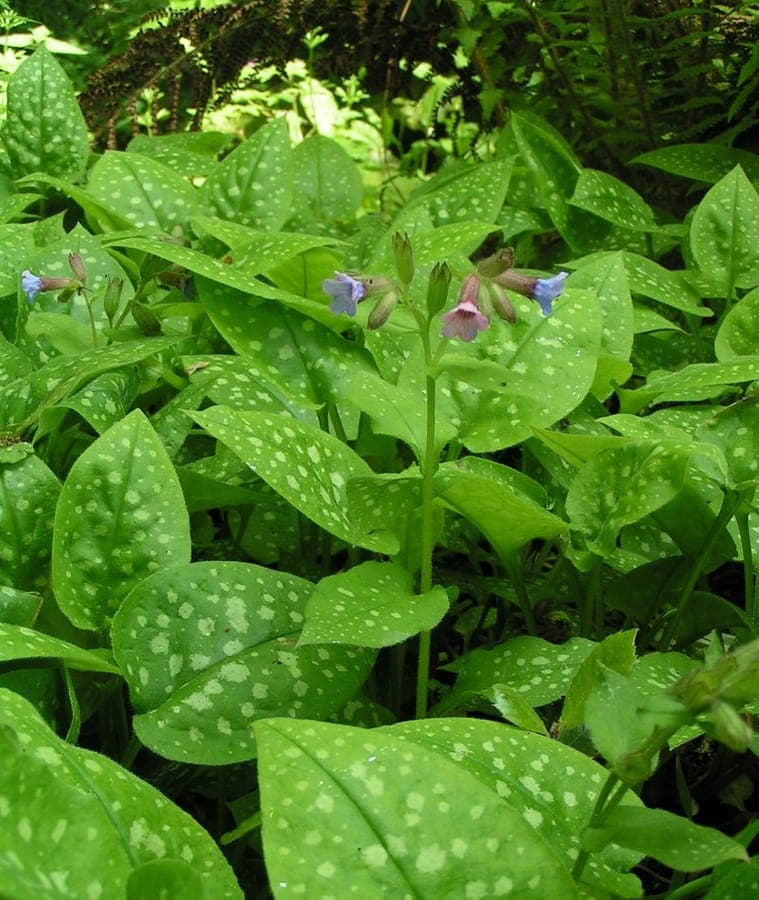
The foliage is one of its standout features: broad, ovate leaves covered in irregular silver-white spots. The leaves are softly hairy when young, becoming tougher with age. In spring, from April to June, tubular flowers emerge in clusters above the foliage. They start deep pink or purple, then often shift to soft blue as they mature-a phenomenon called dichogamy that increases pollination chances.
This colour transformation creates a two-tone effect on the same plant, adding visual interest. The flowers are a valuable early nectar source for bees, hoverflies, and early butterflies. Plants typically reach full bloom in April, with some lingering into early June in cooler microclimates. Each clump spreads to about 30 cm wide, maintaining a neat, compact habit.
Ideal location
Jerusalem cowslip prefers dappled or partial shade-rated about a 5 out of 10 on the light scale (where 1 is full shade, 10 is full sun). It performs best under deciduous trees, on the north side of fences, or in woodland-style borders. Full sun, especially in the afternoon, leads to scorched leaves and rapid soil drying. Deep, heavy shade results in leggy growth and fewer flowers.
For gardeners in urban or small spaces, consider planting it in shaded containers with other shade-tolerant perennials. On gardenworld.app, you can test different planting scenarios using the virtual garden planner, adjusting for light levels and companion plants before you buy.
Soil requirements
This plant thrives in rich, moisture-retentive loam or clay-loam soils with a neutral to slightly alkaline pH of 7.0–7.5. Avoid sandy soils unless amended with generous amounts of compost or leaf mould. The soil should stay consistently moist but never waterlogged-good drainage is essential to prevent root rot.
When planting, mix in well-rotted compost or composted manure to improve fertility and water retention. A 5 cm mulch of leaf litter or shredded bark in spring helps suppress weeds and retain moisture. Pulmonaria officinalis struggles in drought-stressed soils, so soil preparation is key to long-term success.
Free design
Want to see Jerusalem cowslip: complete guide in your garden? Make a free design now.
Watering
Water regularly during dry spells in spring and early summer, especially in the first two growing seasons. Once established, it's moderately drought-tolerant but will look its best with consistent moisture. Always water at the base to keep foliage dry and reduce the risk of powdery mildew.
Rainwater is preferred over tap water, as it's free of chlorine and lime. If using tap water, let it sit for 24 hours to allow chemicals to dissipate. Mulching helps reduce watering frequency-aim to keep the top 5 cm of soil moist but not soggy.
Pruning
Pruning isn't mandatory, but it improves appearance and plant health. In late spring, after flowering, cut back spent flower stalks to the base. If the leaves become tattered or develop mildew by mid-summer, cut the entire foliage back to encourage fresh growth.
Avoid heavy pruning in winter, as the semi-evergreen leaves provide some winter interest and protect the crown. Dead leaves can be gently removed in early spring before new growth emerges.
Maintenance calendar
- Jan: Check for slug damage; remove any badly damaged leaves.
- Feb: Apply a thin layer of compost around the base.
- Mar: Watch for emerging shoots; protect from slugs.
- Apr: Peak bloom; water if dry; inspect for mildew.
- May: Deadhead spent flowers; divide large clumps if needed.
- Jun: Cut back tired foliage if necessary; maintain moisture.
- Jul-Aug: Dormant period; no feeding.
- Sep: Divide or transplant; add compost.
- Oct: Leave fallen leaves as natural mulch.
- Nov: No action required.
- Dec: Minimal care; ensure soil isn't waterlogged.
Winter hardiness
Jerusalem cowslip is hardy in USDA zones 4–8. It tolerates temperatures down to -30°C when established. In colder zones, a light mulch of leaves can help insulate the roots. The plant usually retains its foliage through winter, though it may look tattered after harsh weather. New growth emerges from the crown in early spring.
Avoid winter wetness in heavy clay soils-consider planting on a slight slope or raised bed to improve drainage.
Companion plants
Pair Pulmonaria officinalis with other shade lovers: Helleborus, Brunnera, Epimedium, or ferns like Dryopteris. It also works well with spring bulbs such as Narcissus or Muscari, which bloom at the same time. Avoid aggressive spreaders like mint or ground elder.
Try combining it with variegated hostas or carex for contrast in texture. On gardenworld.app, you can preview these combinations in 3D and adjust spacing-plant Jerusalem cowslip 25–30 cm apart for full coverage in 2–3 years.
Closing
Jerusalem cowslip is a low-maintenance, beautiful perennial that earns its place in any shade garden. With its spotted foliage, changing flowers, and early bloom time, it adds interest when few other plants are active. Plant it in rich, moist soil with partial shade, and it will return reliably year after year. Look for it at garden centres in spring, including major retailers like B&Q, Wyevale, or local independents. Once established, it asks for little and gives much-a quiet workhorse of the spring border.
Want to see Jerusalem cowslip: complete guide in your garden? Make a free design now.
Upload a photo, pick a style, and get a photorealistic design with plant list in under a minute.
No credit card required


Similar plants
Western waterleaf: complete guide
Hydrophyllum occidentale
Full growing guide for western waterleaf (Hydrophyllum occidentale): shade tolerance, soil needs, watering, winter hardiness and naturalistic garden use.
Limestone phacelia (Phacelia affinis): complete guide
Phacelia affinis
Full guide to Phacelia affinis, the limestone phacelia: sowing tips, purple-blue bee flowers, drought tolerance and uses in dry or wildlife gardens.
Pyrenean viper's bugloss: complete guide
Echium asperrimum
Echium asperrimum is a striking biennial from the western Mediterranean with rough bristly stems and vivid blue flowers. A magnet for bees and a bold border plant.