
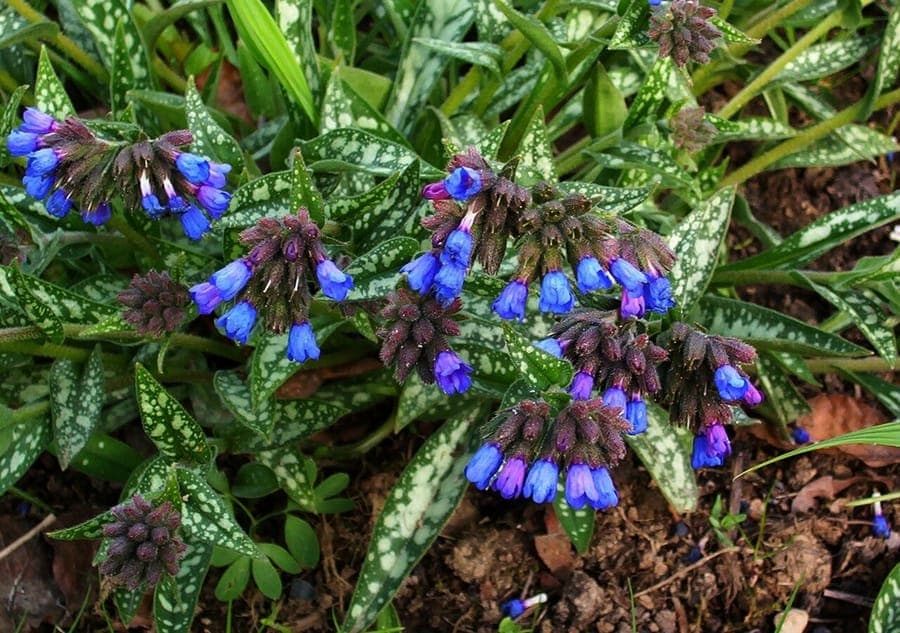
peganum / CC BY-SA 2.0, via Wikimedia Commons
Narrow-leaf lungwort: complete guide
Pulmonaria longifolia
Want to see Narrow-leaf lungwort: complete guide in your garden?
1 minute, no credit card
Overview
Pulmonaria longifolia, commonly known as narrow-leaf lungwort, is a hardy perennial that brings life to shady corners when little else is in bloom. Native to France, Great Britain, Portugal, and Spain, it thrives in woodland environments and is a reliable returner each spring. As a member of the Boraginaceae family, it shares traits with forget-me-nots and comfrey, but stands out for its slender foliage and early flowering habit.
On gardenworld.app, you can design a shade garden layout that highlights the subtle charm of narrow-leaf lungwort, especially in naturalistic planting schemes. Its modest presence works well beneath deciduous trees or along the edge of a woodland border.
Appearance & bloom cycle
This plant reaches a height of 20–30 cm and spreads slowly via rhizomes to about 30–40 cm wide. The leaves are long, narrow, and slightly hairy, with a subtle silvery mottling-less pronounced than in other Pulmonaria species. Flowering begins as early as February and continues through April, depending on the region and winter severity.
The flowers start as pink or reddish buds and gradually shift to shades of blue or purple as they mature-a fascinating process driven by pH changes in the cell sap. This colour transformation adds visual interest over several weeks. The blooms are held in loose clusters above the foliage and are highly attractive to early pollinators like bumblebees and hoverflies.
Ideal location
Narrow-leaf lungwort performs best in partial to full shade (light level 6 out of 10). While it can tolerate morning sun, especially in cooler climates, intense afternoon sun will scorch the leaves and stress the plant. Ideal spots include north- or east-facing slopes, under shrubs, or in the dappled shade of light-canopy trees like birch or alder.
It's an excellent choice for naturalised areas, rock gardens with shade, or underplanting beneath larger perennials. For inspiration on how to incorporate it into your garden design, check gardenworld.app's curated shade planting combinations.
Soil requirements
The plant prefers moist, well-drained soil rich in organic matter. A slightly acidic pH between 5.0 and 5.5 is optimal. Alkaline soils can cause chlorosis, visible as yellowing between the leaf veins. When planting, amend the soil with leaf mould, compost, or well-rotted manure to improve structure and nutrient content.
On heavy clay soils, mix in coarse grit or composted bark to enhance drainage. Sandy soils benefit from added humus to increase moisture retention. Avoid waterlogged conditions, which can lead to root rot.
Free design
Want to see Narrow-leaf lungwort: complete guide in your garden? Make a free design now.
Watering
Once established, narrow-leaf lungwort is moderately drought-tolerant, but it thrives with consistent moisture, especially during its spring growth and flowering period. During dry spells in early spring, supplemental watering is beneficial. Use rainwater when possible, as tap water with high lime content can gradually raise soil pH.
Apply a 5–7 cm layer of organic mulch-such as leaf litter or composted wood chips-to help retain moisture, suppress weeds, and protect roots from temperature fluctuations.
Pruning
Pruning is minimal. Remove any damaged, tattered, or diseased foliage in early spring before new growth emerges. If the leaves become ragged or faded in late spring or early summer, cut them back close to the ground. This can encourage a fresh flush of growth, particularly in cooler summers.
Avoid cutting back healthy leaves in winter or early spring, as they provide insulation and slowly release nutrients back into the soil as they decompose.
Maintenance calendar
- January: Check for emerging flower buds; protect with a light leaf mulch if hard frosts are forecast.
- February: Flowers begin to open; watch for aphids in mild, damp weather.
- March: Peak growth phase; apply a light top-dressing of organic fertiliser if needed.
- April: Bloom peak; deadhead spent flowers to maintain tidiness.
- May: Flowering ends; trim back any spent stems.
- June: Old foliage may deteriorate; cut back if unsightly.
- July–August: Dormant period; reduce watering but avoid complete dry-out.
- September: New leaves may appear; enrich soil with compost.
- October–December: Foliage remains evergreen in mild climates; leave in place for winter protection.
Winter hardiness
Pulmonaria longifolia is hardy in USDA zones 4–8. It retains its foliage through winter in most regions, providing green interest during the bleakest months. In zone 4, foliage may show some frost damage, but the plant recovers quickly in spring. No special winter protection is required, though in areas with persistent wet soil, ensure good drainage to prevent root rot.
Companion plants
Pair narrow-leaf lungwort with other spring ephemerals like Helleborus, Erythronium, and Anemone nemorosa. It combines beautifully with ferns, hostas, and epimediums in shaded borders. For naturalistic planting, group in drifts of 5–7 plants for visual impact.
It also works well with grasses like Carex or Hakonechloa for textural contrast. Combine with spring bulbs such as Chionodoxa or Scilla for a burst of early colour.
Closing
Narrow-leaf lungwort isn't a flashy plant, but it's a workhorse in the shade garden-offering early blooms, wildlife value, and year-round foliage. It asks for little: partial shade, moist soil, and occasional tidying. Once settled, it forms dense clumps that suppress weeds and enrich the soil.
Plant it under trees or in a shaded border, and you'll enjoy its quiet beauty for years. Find healthy stock at local garden centres or online retailers, and use gardenworld.app to visualise how it fits into your garden plan.
Want to see Narrow-leaf lungwort: complete guide in your garden? Make a free design now.
Upload a photo, pick a style, and get a photorealistic design with plant list in under a minute.
No credit card required


Similar plants
Western waterleaf: complete guide
Hydrophyllum occidentale
Full growing guide for western waterleaf (Hydrophyllum occidentale): shade tolerance, soil needs, watering, winter hardiness and naturalistic garden use.
Limestone phacelia (Phacelia affinis): complete guide
Phacelia affinis
Full guide to Phacelia affinis, the limestone phacelia: sowing tips, purple-blue bee flowers, drought tolerance and uses in dry or wildlife gardens.
Pyrenean viper's bugloss: complete guide
Echium asperrimum
Echium asperrimum is a striking biennial from the western Mediterranean with rough bristly stems and vivid blue flowers. A magnet for bees and a bold border plant.