
Wikimedia Commons / CC BY-SA 3.0, via Wikimedia Commons
Blue cowslip: complete guide
Pulmonaria angustifolia
Want to see Blue cowslip: complete guide in your garden?
1 minute, no credit card
Overview
Pulmonaria angustifolia, commonly known as blue cowslip, is a dependable perennial that brings early-season charm to shaded garden corners. Native to central and eastern Europe-from Austria to the Baltic States-it thrives in USDA hardiness zones 3 through 8. This compact plant reaches 15–30 cm in height and spreads slowly via underground rhizomes, forming neat clumps without becoming invasive. It's evergreen in milder climates, holding its foliage through winter and offering subtle structure when little else is growing.
On gardenworld.app you can design a woodland-style border that highlights blue cowslip's quiet elegance, pairing it with other early risers for a seamless spring display.
Appearance & bloom cycle
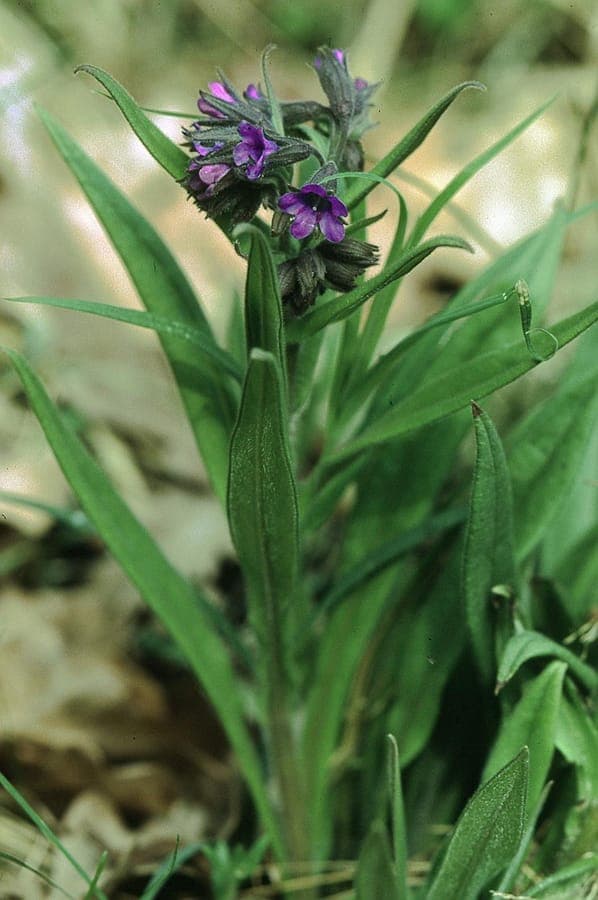
Blue cowslip blooms from April through June, depending on local conditions. The flower buds emerge pink and gradually shift to soft blue or deep violet, creating a two-tone effect in the same cluster. The tubular, bell-shaped flowers sit in loose whorls atop stiff, upright stems, making them highly attractive to early pollinators like bumblebees and hoverflies.
The foliage is narrow and lance-shaped-true to its species name angustifolia-and lacks the white spotting common in other lungworts. The leaves are a deep green with a slightly rough texture, staying tidy and upright throughout the growing season. This clean, refined look makes it a favorite among gardeners who prefer understated elegance over bold foliage patterns.
Ideal location
Plant blue cowslip in light to partial shade; a light level of 5/10 is ideal. Full sun, especially in the afternoon, will scorch the leaves and cause premature dieback. Deep, dense shade, on the other hand, leads to leggy growth and sparse flowering. The perfect spot is beneath open-canopy trees like birch, hazel, or young beech, where dappled sunlight filters through.
It's excellent for naturalising in woodland gardens, under shrubs, or as a ground cover in shaded borders. On gardenworld.app, you can preview how blue cowslip integrates into layered planting schemes, helping you visualise seasonal transitions and plant density.
Soil requirements
Blue cowslip prefers moist, well-drained soil rich in organic matter. A pH between 6.5 and 7.0 is optimal. Heavy clay soils should be amended with compost or leaf mould to improve structure and drainage. Sandy soils need organic enrichment to retain moisture.
Avoid waterlogged conditions-while the plant likes consistent moisture, it won't tolerate sitting in soggy soil. A spring mulch of compost or shredded leaves helps maintain moisture, suppress weeds, and gradually feeds the plant.
Free design
Want to see Blue cowslip: complete guide in your garden? Make a free design now.
Watering
Keep the soil evenly moist, especially during dry spells in spring. Once established, blue cowslip is somewhat drought-tolerant but performs best with regular watering. Use rainwater when possible, as this species can be sensitive to alkaline tap water, which may cause leaf tip burn.
Water at the base to keep foliage dry and reduce the risk of powdery mildew. Drip irrigation or hand-watering works best-avoid overhead sprinklers, particularly in humid conditions.
Pruning
Pruning is minimal. Remove any damaged or tired-looking leaves in early spring before new growth emerges. After flowering, cut back spent flower stalks to tidy the plant and prevent self-seeding, though this species rarely spreads aggressively by seed.
If foliage deteriorates in summer heat, cut the entire plant back to the ground. It often regenerates with fresh leaves in autumn when temperatures cool.
Maintenance calendar
- January–February: Check for evergreen foliage; remove any frost-damaged leaves.
- March: Apply a thin layer of compost or well-rotted manure.
- April–June: Peak bloom period; monitor moisture and watch for slugs.
- July–August: Reduce watering; cut back foliage if scorched or mildewed.
- September–October: Divide and transplant if clumps become overcrowded.
- November–December: Leave undisturbed; the plant remains semi-evergreen and adds winter interest.
Winter hardiness
Blue cowslip is fully winter-hardy in zones 3–8. In colder zones, foliage may show some winter burn but typically rebounds strongly in spring. No winter protection is needed, though a light mulch can help insulate roots in areas with fluctuating freeze-thaw cycles.
Companion plants
Pair blue cowslip with other shade-loving perennials such as epimedium, hellebores, or tiarella. It also works well with spring bulbs like Chionodoxa or Scilla siberica. For textural contrast, combine with ferns or fine-leaved hostas.
Avoid pairing with aggressive spreaders that might overwhelm it. In the wild, it grows alongside wood anemones and deadnettle-combinations that translate beautifully to cultivated gardens.
Closing
Blue cowslip is a quiet achiever-low-maintenance, long-lived, and full of subtle charm. It fills a critical gap in the garden: early colour in shady spots where few plants thrive. Its clean foliage and extended bloom period make it a reliable anchor in any shade border.
You'll find it at garden centres across the UK and North America, often in 1-litre pots. For best effect, plant in groups of three or more. And when planning your layout, remember that gardenworld.app lets you build a custom garden design that integrates blue cowslip seamlessly into your space, season by season.
Want to see Blue cowslip: complete guide in your garden? Make a free design now.
Upload a photo, pick a style, and get a photorealistic design with plant list in under a minute.
No credit card required


Similar plants
Western waterleaf: complete guide
Hydrophyllum occidentale
Full growing guide for western waterleaf (Hydrophyllum occidentale): shade tolerance, soil needs, watering, winter hardiness and naturalistic garden use.
Limestone phacelia (Phacelia affinis): complete guide
Phacelia affinis
Full guide to Phacelia affinis, the limestone phacelia: sowing tips, purple-blue bee flowers, drought tolerance and uses in dry or wildlife gardens.
Pyrenean viper's bugloss: complete guide
Echium asperrimum
Echium asperrimum is a striking biennial from the western Mediterranean with rough bristly stems and vivid blue flowers. A magnet for bees and a bold border plant.