
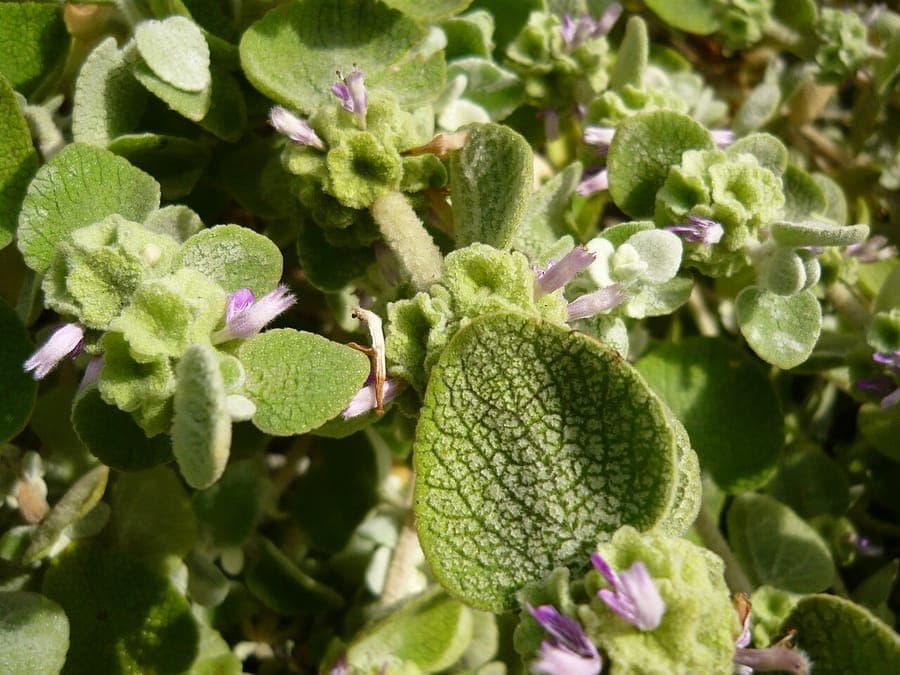
Cillas / CC BY-SA 4.0, via Wikimedia Commons
Pseudodictamnus acetabulosus: complete guide
Pseudodictamnus acetabulosus
Want to see Pseudodictamnus acetabulosus: complete guide in your garden?
1 minute, no credit card
Overview
Pseudodictamnus acetabulosus, also known as Napf-Schwarznessel or False Dittany, is a beautiful, medicinal plant from southern Europe, particularly Greece, Crete, and Turkey. This compact shrub is celebrated for its aromatic, silvery-gray foliage and subtle purple to pink flowers. It's an excellent choice for Mediterranean gardens, dry borders, and rock gardens. The plant has strong aromatic and potentially medicinal properties.
Appearance & Bloom
False dittany is a compact, low-growing shrub reaching approximately 30-50 cm in height. The leaves are small, rough, silvery-green with a matte texture and highly fragrant. The plant produces many small flowers in shades of purple, pink, or white that appear in flower clusters from April to July. The flowers are two-lipped and characteristic of the Lamiaceae family. The scent of the foliage is a defining feature; upon touch, it releases a strong herbal aroma.
Ideal Location
False dittany grows best in full sun, receiving at least 6-8 hours of direct sunlight daily. The plant can also grow in light partial shade, although flowers will be less abundant. The plant is highly drought-tolerant and wind-resistant, making it suitable for windy coastal sites and dry locations. Ensure good air circulation to prevent fungal infections, especially in higher humidity.
Soil
False dittany grows best in very well-draining, mineral, sandy soils. The plant can grow in poor soils with minimal nutrients. Heavy clay soils should be avoided; add coarse sand or perlite if your soil is too dense. The plant can tolerate slightly alkaline soils. Good drainage is essential, especially in winter periods. A pH of 6.5 to 8.0 is suitable.
Free design
Want to see Pseudodictamnus acetabulosus: complete guide in your garden? Make a free design now.
Watering
Once established, false dittany is highly drought-tolerant and requires minimal water. During the first growing period, water regularly to establish the plant well. After establishment, you can drastically reduce watering. Summer irrigation is only needed in extreme drought. Avoid overwatering; the plant thrives in drier conditions. Water in the early morning, not in the evening.
Pruning
False dittany requires minimal pruning. Remove dead or damaged branches in early spring. After flowering, you can lightly prune the plant to maintain compactness and encourage secondary flowering. Remove spent flowers regularly for an extended bloom period. Excessive pruning can negatively affect the plant's natural form.
Maintenance Calendar
Spring: Remove winter damage, add gravel for drainage. Summer: Water only in extreme drought, collect dried flowers. Autumn: Leave seed heads for birds. Winter: Minimal maintenance, protect from wet soil.
Winter Hardiness
False dittany is moderately hardy, suitable for USDA zones 8-10 (temperatures down to about -10 degrees Celsius). In temperate frost-free climates, the plant can remain outdoors, but young plants should be protected. In very wet winters, above-ground damage may occur, but the plant will usually regrow from the root.
Companion Plants
False dittany combines beautifully with other drought-tolerant, medicinal plants such as oregano, thyme, and lavender. Combine with silver-foliaged plants for attractive contrasts. Find more plant combinations on gardenworld.app. Other Lamiaceae such as Salvia are also good companion plants.
Closing
False dittany is a beautiful, hardy shrub ideal for Mediterranean and dry gardens. With minimal maintenance and aromatic benefits, this European beauty blooms for years. Available at major garden centers. Discover more plant guides on gardenworld.app.
Want to see Pseudodictamnus acetabulosus: complete guide in your garden? Make a free design now.
Upload a photo, pick a style, and get a photorealistic design with plant list in under a minute.
No credit card required


Similar plants
Apple mint (Mentha x villosa): complete guide
Mentha x villosa
Meet apple mint (Mentha x villosa): a fruity-scented kitchen herb with woolly leaves, perfect for tea and mojitos.
Salvia peyronii: complete guide
Salvia peyronii
Discover Salvia peyronii, a rare Lebanese mountain sage. Growing tips, hardiness, and companion planting for a Mediterranean gravel garden.
Bigleaf mint (Mentha x rotundifolia): complete guide
Mentha x rotundifolia
Discover bigleaf mint: cultivation, care tips, and garden uses. Learn how to grow this aromatic herb with soft, hairy leaves.