
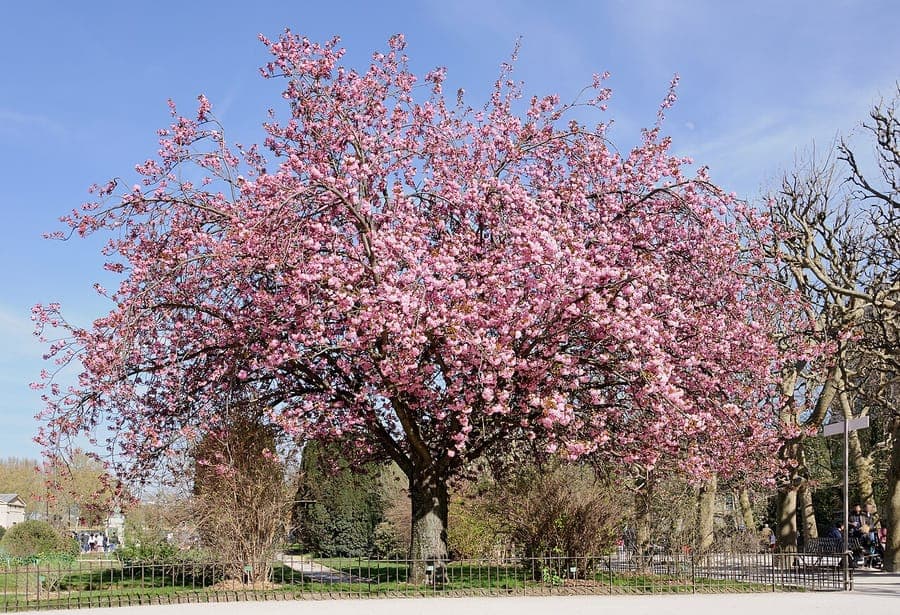
Myrabella / CC BY-SA 3.0, via Wikimedia Commons
Japanese cherry: complete guide
Prunus serrulata
Want to see Japanese cherry: complete guide in your garden?
1 minute, no credit card
Overview
Prunus serrulata, commonly known as the Japanese cherry, is a standout in any garden landscape. Native to Japan, Korea, and parts of China, this ornamental tree is celebrated not for fruit, but for its breathtaking spring blossoms. In the UK and much of North America, it's a staple in public parks and private gardens alike, especially during April when its branches burst with clusters of pink to pale purple flowers.
What many gardeners don't realize is that Prunus serrulata isn't a single variety-it's actually an entire group of cultivated forms, with over 200 named cultivars. Popular ones include 'Kanzan', 'Amanogawa', and 'Shirofugen'. Each has distinct growth habits, flower forms, and foliage colours. At gardenworld.app, you can design a planting plan that accounts for height, spread, and bloom timing, ensuring your tree fits seamlessly into your garden's ecosystem.
Typically reaching 5 to 8 meters in height with a spread of 4 to 6 meters, this tree works well in medium to large gardens. It grows slowly-around 20 to 30 cm per year-making it manageable and long-lived with proper care.
Appearance & bloom cycle
The Japanese cherry puts on its main show in early spring, usually from late March to mid-May, depending on climate. The bloom lasts about 10 to 14 days, sometimes longer in cooler weather. Flowers appear in dense clusters, often double-petaled, ranging from soft pink to deep rosy purple. After blooming, small, inconspicuous black fruits may form, but they're not edible.
Foliage emerges after flowering. New leaves often start bronze or coppery, maturing to dark green in summer. In autumn, some cultivars turn golden or reddish, though this varies. The bark is smooth, reddish-brown with horizontal lenticels, adding winter interest.
Ideal location
Plant in full sun for best flowering-aim for at least 6 hours of direct sunlight daily. Light shade is tolerated but may reduce bloom count and encourage leggy growth. Allow at least 3 meters clearance from buildings or other trees to ensure good air circulation and prevent fungal issues.
Avoid exposed, windy sites and frost pockets. An east- or northeast-facing spot can protect delicate blossoms from late frosts. Use gardenworld.app to map sun exposure in your yard and pinpoint the ideal planting spot.
Soil requirements
This tree thrives in moist, well-drained, humus-rich loam or clay-loam with a pH between 6.0 and 7.0. Heavy clay is acceptable if drainage is improved. Waterlogged soil leads to root rot, a common killer of young specimens. Amend the planting hole with compost or well-rotted manure to boost organic content.
Avoid poor, sandy soils unless enriched with organic matter. In extreme cases, add a gravel layer at the bottom of the planting hole for drainage.
Free design
Want to see Japanese cherry: complete guide in your garden? Make a free design now.
Watering
Water deeply and regularly in the first growing season-about 20 litres per week, especially during dry spells. After year one, the tree becomes more drought-tolerant but still needs supplemental watering during prolonged dry periods (over 3 weeks without rain). Apply a 5 cm mulch of wood chips or bark to retain moisture and suppress weeds.
Pruning
Prune only when necessary, ideally right after flowering in May. Avoid pruning in autumn or winter, as this increases the risk of diseases like silver leaf or bacterial canker. Remove dead, crossing, or inward-growing branches. Heavy pruning should be avoided-Prunus serrulata doesn't respond well and may skip blooming the following year.
Always use clean, sharp tools. Sterilize blades between cuts with rubbing alcohol to prevent disease spread.
Maintenance calendar
- January: Inspect for damaged branches, no pruning
- February: Plant if ground isn't frozen
- March: Prepare for bloom, top up mulch
- April: Peak bloom-avoid pruning or fertilizing
- May: Light pruning after bloom, check for aphids
- June: Water during dry spells
- July–August: Minimal care, only water if needed
- September: No fertilizing, leaves begin to drop
- October: Rake fallen leaves to prevent fungal issues
- November–December: Protect young trunks from rodents with guards
Winter hardiness
Hardy in USDA zones 5 to 8 (-29°C to -12°C). Young trees may suffer bark splitting in fluctuating winter temps. Wrap trunks with tree guards for the first three winters. Avoid de-icing salts near the root zone-salt can damage roots and stunt growth.
Companion plants
Pair with low-growing spring perennials like Muscari, Anemone blanda, or Helleborus. Keep a 1-meter radius around the trunk clear to reduce competition. Underplanted tulips such as 'Queen of Night' or 'Ballerina' add layered colour.
Avoid aggressive ground covers like ivy or pachysandra that compete for moisture and nutrients.
Closing
The Japanese cherry isn't the easiest tree to grow, but it's one of the most rewarding. With proper placement, consistent care, and smart companions, you'll enjoy its fleeting but unforgettable spring display for decades. Buy from reputable garden centres, check the cultivar label, and remember: gardenworld.app lets you preview your tree's growth over time with interactive garden visualizations.
Want to see Japanese cherry: complete guide in your garden? Make a free design now.
Upload a photo, pick a style, and get a photorealistic design with plant list in under a minute.
No credit card required


Similar plants
Siberian crab apple: complete guide
Malus x robusta
Complete guide to the Siberian crab apple (Malus x robusta): location, soil, pruning, winter hardiness and the best companion plants for your garden.
Chinese flowering crabapple (Malus x spectabilis): complete guide
Malus x spectabilis
Meet the Chinese flowering crabapple (Malus x spectabilis): a classic spring bloomer with carmine buds and pink blossom.
Potentilla crassinervia: complete guide
Potentilla crassinervia
Potentilla crassinervia, the Corsican cinquefoil, grows wild on Corsica and Sardinia's peaks. Discover how to grow this hardy alpine rock garden gem.