
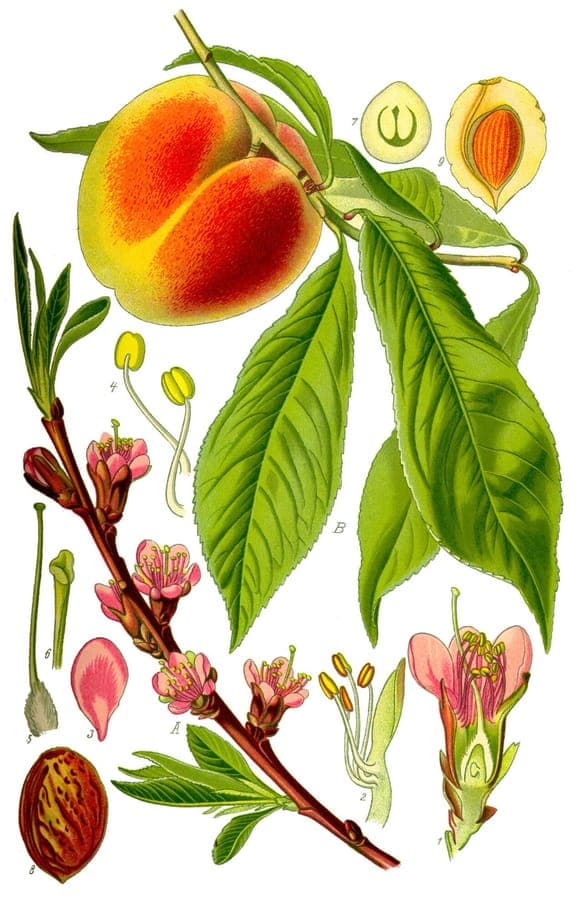
File:Illustration Prunus persica0.jpg: PLEASE COMPLETE AUTHOR INFORMATION derivative work: Kenraiz / Public domain, via Wikimedia Commons
Peach: complete guide
Prunus persica
Want to see Peach: complete guide in your garden?
1 minute, no credit card
Overview
The peach (Prunus persica) is a deciduous tree native to northern China and has been cultivated for over 4,000 years. It's prized not only for its juicy, fragrant fruit but also for its ornamental spring blossoms. While it thrives in USDA zones 5b to 7, gardeners in cooler zones can still grow peaches with proper site selection and winter protection. Modern varieties include both fuzzy peaches and smooth-skinned nectarines, all under the same species.
In the UK and northern Europe, peaches often grow best against a warm wall or in a sheltered garden nook. On gardenworld.app, you can map out a sun-trap layout that maximizes heat retention and protects blossoms from late frosts. The platform also helps you plan spacing-peach trees need at least 4 to 5 meters between them for proper airflow.
Appearance & bloom cycle
Peach trees reach 4 to 6 meters tall with a spreading, open canopy. The lance-shaped leaves are bright green, slightly serrated, and up to 20 cm long. In early spring (March to April), before the leaves emerge, the tree bursts into bloom with showy pink to purplish flowers, 2 to 3 cm wide. These blossoms are self-fertile but benefit from bee activity.
Fruit set follows pollination, and peaches develop rapidly through late spring and summer. Harvest time varies by cultivar: early types like 'Early Amber' ripen in July, while later ones such as 'Autumn Lady' go into September. Fruit size ranges from 5 to 8 cm, with golden-yellow skin blushed in red.
Ideal location
Full sun is non-negotiable-aim for 8 to 10 hours of direct light daily. A south-facing wall works exceptionally well, radiating heat and protecting against cold winds. Avoid frost pockets; low-lying areas trap cold air and increase the risk of blossom kill. If your garden is exposed, consider planting in a container so you can move it to a greenhouse or lean-to during critical periods.
Urban gardeners can take advantage of heat-retaining surfaces like concrete or brick. On gardenworld.app, use the microclimate planner to identify warm zones in your yard, especially useful in cooler regions.
Soil requirements
Well-drained soil is essential. Peaches hate wet feet-clay soils should be amended with sand and organic matter. Ideal pH is between 6.0 and 7.0. Do not over-fertilize; excess nitrogen promotes leafy growth at the expense of fruit. A light application of balanced organic fertilizer in early spring is enough.
Raised beds or mounded planting holes (30–40 cm high) improve drainage and root warmth, especially in cooler climates.
Free design
Want to see Peach: complete guide in your garden? Make a free design now.
Watering
Consistent moisture is key, especially from June to August during fruit swell. Young trees need 10–15 liters per week in dry spells. Mature trees are somewhat drought-tolerant but produce better fruit with regular watering. Mulch with 5–7 cm of wood chips to retain moisture, but keep the mulch 15 cm away from the trunk to prevent rot.
Reduce watering in late summer to help the tree harden off for winter.
Pruning
Pruning keeps the tree productive and healthy. Do it in late winter or early spring (February–March), after the worst frosts but before sap rises. Aim for an open center (vase shape) to allow sunlight and air penetration. Remove dead, crossing, or inward-growing branches. Cut back last year's growth by about one-third to stimulate fruiting wood.
Always disinfect your tools between cuts to prevent disease spread. Peaches fruit on one-year-old wood, so avoid over-pruning. Remove water sprouts-vigorous vertical shoots-as they appear.
Maintenance calendar
- January: Inspect bark for pests like scale insects. Clean off moss or lichen.
- February–March: Prune and apply dormant oil spray if needed.
- April: Protect blossoms from late frosts with horticultural fleece.
- May: Watch for peach leaf curl. Use copper spray if necessary.
- June–July: Water regularly. Thin fruit to 15–20 cm apart for larger peaches.
- August: Begin reducing water. Harvest early varieties.
- September: Finish harvest. Remove fallen leaves to reduce disease carryover.
- October–December: No active care needed. Protect young trees in pots from freezing.
Winter hardiness
Peaches are hardy to USDA zone 5b (-23°C), but flower buds are sensitive to temperatures below -2°C in spring. Even a brief frost during bloom can ruin the crop. In cooler zones, choose late-blooming varieties like 'Reliance' or grow in a greenhouse. Container-growing offers flexibility-move the tree indoors during extreme cold.
Companion plants
Plant low-growing, drought-tolerant herbs under the tree: thyme, oregano, or chives. They suppress weeds and attract beneficial insects. Avoid deep-rooted plants like comfrey or mint, which compete for water. Garlic or onions planted around the base can help deter fungal diseases.
Closing
Growing peaches takes patience and attention, but the reward-sun-warmed, homegrown fruit-is unmatched. Choose disease-resistant, cold-hardy cultivars and plant in the warmest spot in your garden. Buy from reliable nurseries at garden centres across the UK, or order online for best variety selection. And remember: on gardenworld.app, you can create a seasonal care schedule tailored to your peach tree's growth stage and local weather patterns.
Want to see Peach: complete guide in your garden? Make a free design now.
Upload a photo, pick a style, and get a photorealistic design with plant list in under a minute.
No credit card required


Similar plants
Siberian crab apple: complete guide
Malus x robusta
Complete guide to the Siberian crab apple (Malus x robusta): location, soil, pruning, winter hardiness and the best companion plants for your garden.
Chinese flowering crabapple (Malus x spectabilis): complete guide
Malus x spectabilis
Meet the Chinese flowering crabapple (Malus x spectabilis): a classic spring bloomer with carmine buds and pink blossom.
Potentilla crassinervia: complete guide
Potentilla crassinervia
Potentilla crassinervia, the Corsican cinquefoil, grows wild on Corsica and Sardinia's peaks. Discover how to grow this hardy alpine rock garden gem.