
Bruce Marlin / CC BY-SA 3.0, via Wikimedia Commons
Fuji cherry: complete guide
Prunus incisa
Want to see Fuji cherry: complete guide in your garden?
1 minute, no credit card
Overview
Prunus incisa, commonly called the Fuji cherry, is a small ornamental tree or large shrub native to the mountainous regions of Japan. Despite some records listing New York as part of its range, this is likely due to cultivated or naturalized specimens rather than native populations. For gardeners in temperate climates, this cherry stands out as a reliable early bloomer with a graceful form and minimal care requirements. It's perfect for compact gardens, courtyard spaces, or even large containers.
If you're planning where to place your Fuji cherry, gardenworld.app offers customizable garden designs that factor in bloom cycles and mature spread, so your tree gets the spotlight it deserves.
Appearance & bloom cycle
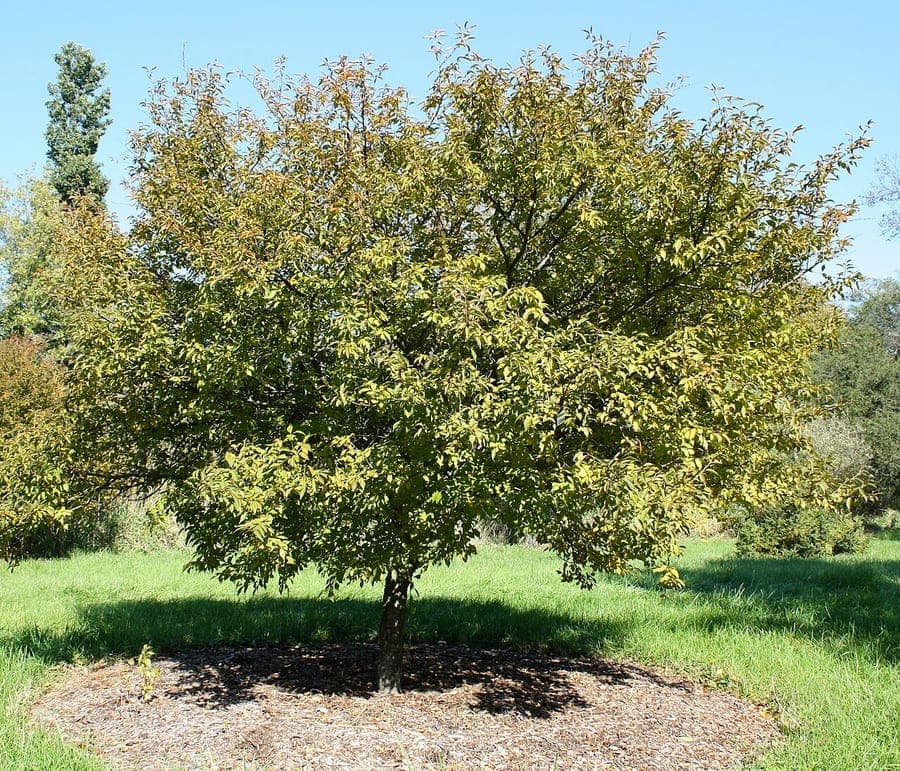
The Fuji cherry typically reaches 5 to 8 feet (1.5–2.5 m) in height with a similar spread. It features finely branched, spreading growth and a naturally open canopy. Its most striking feature is the early bloom - usually from mid-March to early April, depending on the region. The flowers are light pink to white, about 1 to 1.5 inches (2.5–3.8 cm) across, with five delicate petals. They appear before the leaves, creating a cloud-like effect.
After blooming, small purplish-black fruits form, about 0.4 inches (1 cm) wide. These are not particularly tasty for humans but attract birds. The leaves emerge shortly after flowering, lance-shaped, 1.2 to 2 inches (3–5 cm) long, with serrated edges. In autumn, they can turn attractive shades of yellow to orange, especially in cooler areas.
Ideal location
Fuji cherry thrives in full sun to partial shade. At least 6 hours of direct sunlight ensures the best flowering. In hotter zones (USDA 7–8), light afternoon shade helps protect the blooms from scorching. Avoid planting under dense tree canopies or near buildings that block airflow - good ventilation helps prevent fungal diseases.
This tree is ideal for small gardens, patios, or as a feature in mixed borders. When grown in containers, use a pot at least 18 inches (45 cm) in diameter with ample drainage. Place it on a sunny patio or balcony where you can enjoy the spring blossoms up close.
Soil requirements
Prunus incisa prefers well-drained, slightly acidic to neutral soil (pH 5.5–7.0). It tolerates a range of soil types but struggles in heavy, waterlogged clay. Improve drainage by mixing in compost or coarse sand. For sandy soils, add organic matter to increase moisture retention.
When planting, dig a hole twice as wide and just as deep as the root ball. Mix the backfill with compost or a slow-release organic fertilizer. Avoid high-nitrogen fertilizers, as they promote leafy growth at the expense of flowers.
Free design
Want to see Fuji cherry: complete guide in your garden? Make a free design now.
Watering
Water regularly during the first two growing seasons, especially during dry spells. Deep, infrequent watering encourages strong root development. Once established, the Fuji cherry is moderately drought-tolerant but performs best with consistent moisture.
Container-grown trees need more attention. Check soil moisture at least twice a week during spring and summer. Water when the top 2 inches (5 cm) feel dry. Use rainwater if possible - this species is sensitive to lime and chlorine in tap water.
Pruning
Pruning is rarely needed. The Fuji cherry has a naturally pleasing shape. If required, prune lightly right after flowering, between May and June. Pruning later in the year removes next season's flower buds.
Remove only dead, damaged, or crossing branches. Use clean, sharp tools to prevent disease spread. For older specimens, consider removing one or two old stems at the base to encourage new growth from the roots.
Maintenance calendar
- January: Inspect for winter damage. Brush off heavy snow.
- February: Prepare for early bloom. Check soil moisture.
- March: Flowers appear. Water during dry periods.
- April: Peak bloom. Remove spent flowers if desired.
- May: Light pruning. Apply organic mulch or compost.
- June: Monitor for aphids. Keep soil evenly moist.
- July: Water during heatwaves. Watch for powdery mildew.
- August: No pruning. Let new wood mature.
- September: Reduce watering. Prepare for dormancy.
- October: Leaves may turn yellow/orange. Add leaf litter as mulch.
- November: No major tasks. Protect young trees from deer.
- December: Ensure root protection in containers. Avoid salt spray.
Winter hardiness
The Fuji cherry is hardy in USDA zones 5 to 8. In zone 5, young trees may suffer tip dieback in harsh winters. Protect them with burlap wraps or plant in sheltered spots. Mature trees generally withstand cold without issues.
Container plants are more vulnerable. Elevate pots on feet and insulate sides with bubble wrap. Avoid placing near de-icing salt or strong winter winds.
Companion plants
Pair with early spring bulbs like daffodils or crocuses for a vibrant display. Low-growing perennials such as epimedium or heuchera work well beneath the canopy. For a Japanese garden theme, combine with Japanese forest grass (Hakonechloa), ferns, or dwarf conifers.
gardenworld.app has planting schemes that include seasonal pairings and spacing recommendations tailored to Prunus incisa.
Closing
The Fuji cherry is a gem for any garden seeking early spring color and graceful structure. Its modest size, stunning bloom, and adaptability make it ideal for urban yards, patios, and traditional borders alike. Give it a sunny spot, well-drained soil, and a little care in the first few years, and it will reward you with years of reliable beauty. Available at garden centres across the UK and US, including local independents and larger retailers.
Want to see Fuji cherry: complete guide in your garden? Make a free design now.
Upload a photo, pick a style, and get a photorealistic design with plant list in under a minute.
No credit card required


Similar plants
Siberian crab apple: complete guide
Malus x robusta
Complete guide to the Siberian crab apple (Malus x robusta): location, soil, pruning, winter hardiness and the best companion plants for your garden.
Chinese flowering crabapple (Malus x spectabilis): complete guide
Malus x spectabilis
Meet the Chinese flowering crabapple (Malus x spectabilis): a classic spring bloomer with carmine buds and pink blossom.
Potentilla crassinervia: complete guide
Potentilla crassinervia
Potentilla crassinervia, the Corsican cinquefoil, grows wild on Corsica and Sardinia's peaks. Discover how to grow this hardy alpine rock garden gem.