
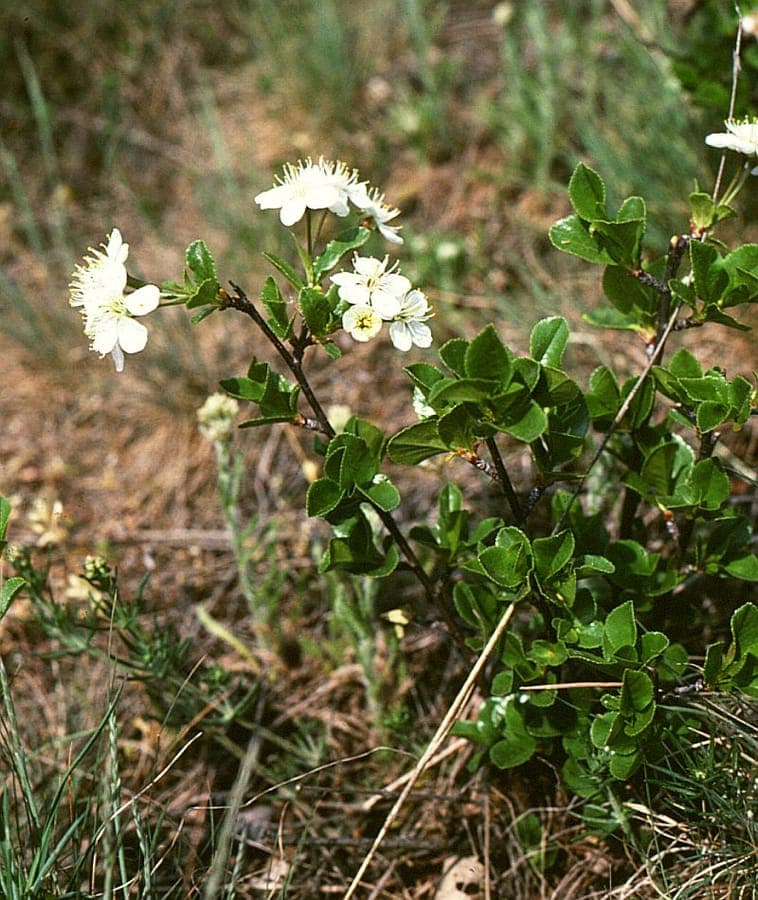
Franz Xaver / CC BY-SA 3.0, via Wikimedia Commons
European dwarf cherry: complete guide
Prunus fruticosa
Want to see European dwarf cherry: complete guide in your garden?
1 minute, no credit card
Overview
Prunus fruticosa, commonly known as the European dwarf cherry, is a hardy, low-growing shrub native to central and eastern Europe, from Austria to Kazakhstan. It's a top choice for gardeners who want a tough, attractive plant that thrives in tough conditions with little fuss. Reaching only 1 metre in height but spreading up to 1.5 metres wide, it's perfect for rock gardens, borders, or as ground cover under trees. This shrub blooms early, feeds pollinators, and produces small edible cherries, making it a multitasker in any garden.
At gardenworld.app, you can visualise how this shrub fits into your garden layout, whether you're designing a cottage-style border or a modern low-maintenance yard. It's especially useful for small gardens where every plant must earn its place.
Appearance & bloom cycle
The European dwarf cherry has a spreading, mounding habit with stems that often root where they touch the ground. Its leaves are rounded to oval, 3–6 cm long, with a serrated edge and a dark green upper surface. In April and May, clusters of pure white flowers, about 1.5 cm across, cover the shrub. Each flower has five petals and bright yellow stamens, creating a delicate, frothy display.
After flowering, small round cherries develop-8 to 10 mm in diameter-turning from red to dark purple or black when ripe in late summer. They're tart but edible, loved by birds and children alike. In autumn, the foliage turns soft yellow to pale red, adding seasonal interest. The bark is smooth and reddish-brown, peeling slightly on older stems.
Ideal location
This shrub thrives in full sun to light shade. For the best flowering and fruiting, plant it in a sunny spot. It tolerates wind and urban pollution but avoids waterlogged or stagnant air pockets, which can encourage fungal diseases like leaf spot or mildew.
It works well as a low hedge, understorey plant in woodland gardens, or in rockeries. Pair it with later-flowering perennials like Allium or Geranium to maintain visual interest after the bloom fades. Use gardenworld.app to experiment with spacing and companion planting before you buy.
Soil requirements
Prunus fruticosa grows well in well-drained soil with a pH between 6.0 and 7.5. It tolerates clay if amended with grit or compost, and it handles sandy soils too. Avoid overly rich or wet soils-these can lead to weak growth and root rot. If your soil is acidic (below pH 6), add garden lime in autumn to prevent chlorosis, which shows as yellowing leaves with green veins.
A light mulch of leaf mould or compost in spring helps retain moisture and suppress weeds without over-feeding the plant.
Free design
Want to see European dwarf cherry: complete guide in your garden? Make a free design now.
Watering
Water newly planted shrubs weekly during the first growing season, giving about 10 litres per plant, especially in dry spells. Once established, it's drought-tolerant and relies on rainfall. Water only during prolonged dry periods in summer, focusing at the base to avoid wetting foliage and triggering disease.
Morning watering is best, allowing leaves to dry before nightfall.
Pruning
This cherry shrub rarely needs pruning. Its natural shape is dense and spreading. If you need to control size or remove leggy growth, prune right after flowering in late spring. Cut back long shoots by up to one-third to encourage bushiness. Remove any dead, damaged, or diseased wood as soon as you spot it.
Never prune in autumn-flower buds form in summer, and cutting then will reduce next year's display.
Maintenance calendar
- January: Check for winter dieback; remove damaged stems
- February: Inspect for pests; lightly fork soil around base
- March: Final chance to prune; watch for aphids
- April: Flowers emerge; protect from late frost if needed
- May: Peak bloom; fruit begins to set
- June: Monitor for fungal spots; water during dry weeks
- July: No maintenance needed; plant is dormant
- August: Cherries ripen; birds may arrive early
- September: Let fallen leaves decompose as natural mulch
- October: Test soil pH; apply lime if acidic
- November: Leave plant undisturbed
- December: Minimal care; check for rodent damage
Winter hardiness
Extremely hardy, Prunus fruticosa survives in USDA zones 3 to 7. It tolerates temperatures down to -35°C. In the UK and northern Europe, it needs no winter protection. Young plants may benefit from rabbit guards or a ring of wire mesh to prevent bark stripping, but mature shrubs are generally left alone by pests.
Companion plants
Pair this shrub with early bulbs like Scilla or Chionodoxa for a spring display. Ground covers such as Ajuga or Pachysandra work well beneath it. For contrast, plant with silver-foliaged herbs like Artemisia or Stachys. Avoid tall, aggressive perennials that might shade it out.
Keep at least 50 cm of space between plants to ensure good airflow and reduce disease risk.
Closing
Prunus fruticosa is a quiet achiever-unassuming but reliable. It blooms early, supports wildlife, and asks for little in return. Whether you're planting a wildlife garden, a low hedge, or a naturalistic border, this shrub earns its keep. Buy it from local garden centres, and use gardenworld.app to plan where it fits best. With the right spot and basic care, it will thrive for years, bringing spring joy and summer fruit to your garden.
Want to see European dwarf cherry: complete guide in your garden? Make a free design now.
Upload a photo, pick a style, and get a photorealistic design with plant list in under a minute.
No credit card required


Similar plants
Siberian crab apple: complete guide
Malus x robusta
Complete guide to the Siberian crab apple (Malus x robusta): location, soil, pruning, winter hardiness and the best companion plants for your garden.
Chinese flowering crabapple (Malus x spectabilis): complete guide
Malus x spectabilis
Meet the Chinese flowering crabapple (Malus x spectabilis): a classic spring bloomer with carmine buds and pink blossom.
Potentilla crassinervia: complete guide
Potentilla crassinervia
Potentilla crassinervia, the Corsican cinquefoil, grows wild on Corsica and Sardinia's peaks. Discover how to grow this hardy alpine rock garden gem.