
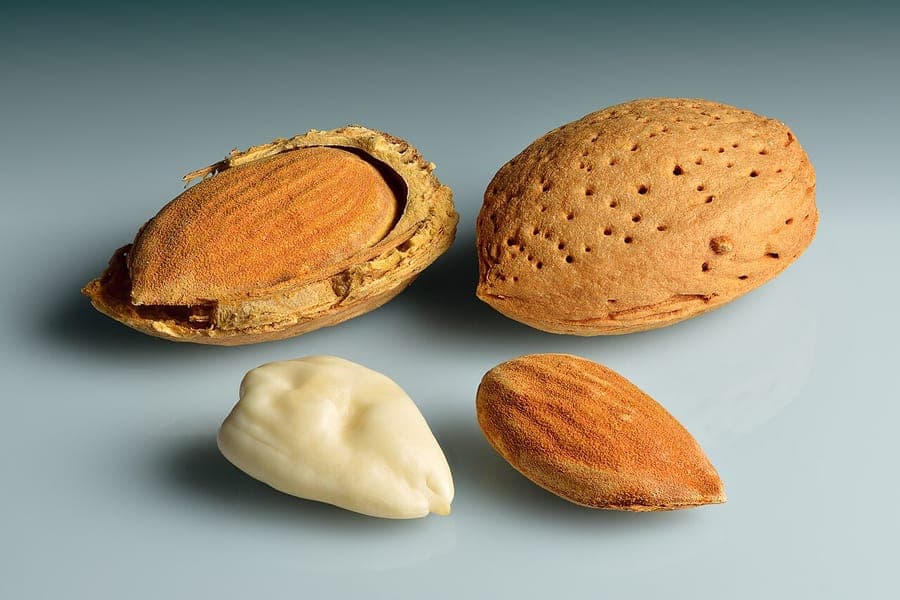
Ivar Leidus / CC BY-SA 4.0, via Wikimedia Commons
Almond: complete guide
Prunus dulcis
Want to see Almond: complete guide in your garden?
1 minute, no credit card
Overview
The almond tree (Prunus dulcis) is a graceful, medium-sized tree from the Rosaceae family grown for its edible kernels. Native to the Mediterranean, it thrives in hot, dry climates but can be grown in temperate zones with care. In the UK and northern Europe, it's often planted as an ornamental for its stunning early spring bloom. More gardeners are adding it to their backyards, not just for looks but for the chance to harvest homegrown nuts. On gardenworld.app, you can design a garden layout that fits the almond tree's needs, including spacing, sun exposure, and companion planting.
Appearance & bloom cycle
Mature almond trees reach 4 to 10 meters in height, with a spread of 4 to 6 meters. The trunk is upright, with smooth gray-green bark that develops shallow fissures over time. Leaves are lance-shaped, 6–12 cm long, with finely serrated edges and a glossy upper surface. The tree blooms in late February to early April, depending on climate, producing delicate pink or pale pink flowers before the leaves emerge. This early bloom makes it vulnerable to late frosts, so site selection is critical. Self-fertile varieties like 'All-in-One' or 'Tuono' can produce nuts without a pollinator, but yields improve with a second compatible tree nearby.
Ideal location
Almond trees need full sun-aim for at least 8 hours daily (light rating 8/10). Choose a south- or southwest-facing slope or wall to maximise heat retention. Shelter from cold winds and avoid frost pockets. In cooler areas, grow in a large container and move to a cold greenhouse in winter. Urban gardeners can train it against a warm wall using fan pruning. Check your microclimate on gardenworld.app to see if your garden gets enough heat units for almond cultivation.
Soil requirements
Well-drained, light soil is essential. Heavy clay leads to waterlogging and root rot. The ideal pH is 7.0 to 7.5-slightly alkaline. Amend heavy soils with horticultural grit and compost. Sandy loam with some limestone content mimics its natural habitat. Avoid acidic soils; if your pH is below 6.5, add garden lime in autumn. Never plant in waterlogged or compacted ground.
Watering
Water young trees deeply once a week, about 10–15 liters per session, especially during dry spells in the first two growing seasons. Once established, almond trees are drought-tolerant but produce better crops with consistent moisture from bloom time through nut development (March to August). Use drip irrigation to keep roots moist without wetting foliage. Avoid overhead watering during bloom to prevent fungal issues.
Free design
Want to see Almond: complete guide in your garden? Make a free design now.
Pruning
Prune in summer, from July to August, to reduce the risk of silver leaf disease and bacterial canker. Remove dead, damaged, or crossing branches. Keep an open center (vase shape) to improve airflow and sunlight penetration. Don't prune in winter-this increases infection risk. If growing as a bush, allow 3–5 main stems and prune the tips to encourage branching.
Maintenance calendar
- Jan: Inspect for damage, protect trunks from rodents
- Feb: Monitor for early buds, cover if late frost is forecast
- Mar: Watch bloom progress, water if dry, check for aphids
- Apr: Continue watering, apply balanced fertiliser if needed
- May: Monitor for pests, thin overcrowded growth
- Jun: Light summer pruning if needed, watch water levels
- Jul-Aug: Main pruning window, harvest when hulls split
- Sep: Collect fallen nuts, cure in a dry, airy place
- Oct: Clean up debris, compost hulls
- Nov: Mulch around base with wood chips, avoid stem contact
- Dec: Check for cankers, wrap young trunks if extreme cold expected
Winter hardiness
Almond trees are hardy in USDA zones 7–9. In zone 7 (UK, Pacific Northwest), they survive with protection. Young trees benefit from fleece wraps or tree guards. Mature trees tolerate brief dips to -15°C, but open blossoms are killed at -2°C. Choose late-blooming, cold-hardy cultivars like 'Hall's Hardy' or 'Ne Plus Ultra' for better success in cooler zones.
Companion plants
Underplant with drought-tolerant, low-growing species such as thyme (Thymus vulgaris), lavender (Lavandula angustifolia), or sedum. These suppress weeds and attract pollinators. Avoid moisture-loving plants like hostas or ferns. Pair with other Mediterranean edibles-figs, olives, or dwarf peaches-for a heat-loving garden corner. Keep root competition low; don't plant aggressive perennials nearby.
Closing
The almond tree brings beauty and bounty to sunny gardens. With patience and proper care-especially good drainage, summer pruning, and frost protection-you can enjoy homegrown almonds in 3 to 5 years. Buy from reputable garden centres with healthy, grafted stock-look for self-fertile varieties if space is limited. Avoid cheap, ungrafted seedlings; they take longer to fruit and may not match the parent. Whether grown in the ground or in a container, the almond tree is a rewarding addition. For layout ideas and planting advice, visit gardenworld.app and plan a sun-drenched garden where your almond tree can thrive.
Want to see Almond: complete guide in your garden? Make a free design now.
Upload a photo, pick a style, and get a photorealistic design with plant list in under a minute.
No credit card required


Similar plants
Siberian crab apple: complete guide
Malus x robusta
Complete guide to the Siberian crab apple (Malus x robusta): location, soil, pruning, winter hardiness and the best companion plants for your garden.
Chinese flowering crabapple (Malus x spectabilis): complete guide
Malus x spectabilis
Meet the Chinese flowering crabapple (Malus x spectabilis): a classic spring bloomer with carmine buds and pink blossom.
Potentilla crassinervia: complete guide
Potentilla crassinervia
Potentilla crassinervia, the Corsican cinquefoil, grows wild on Corsica and Sardinia's peaks. Discover how to grow this hardy alpine rock garden gem.