
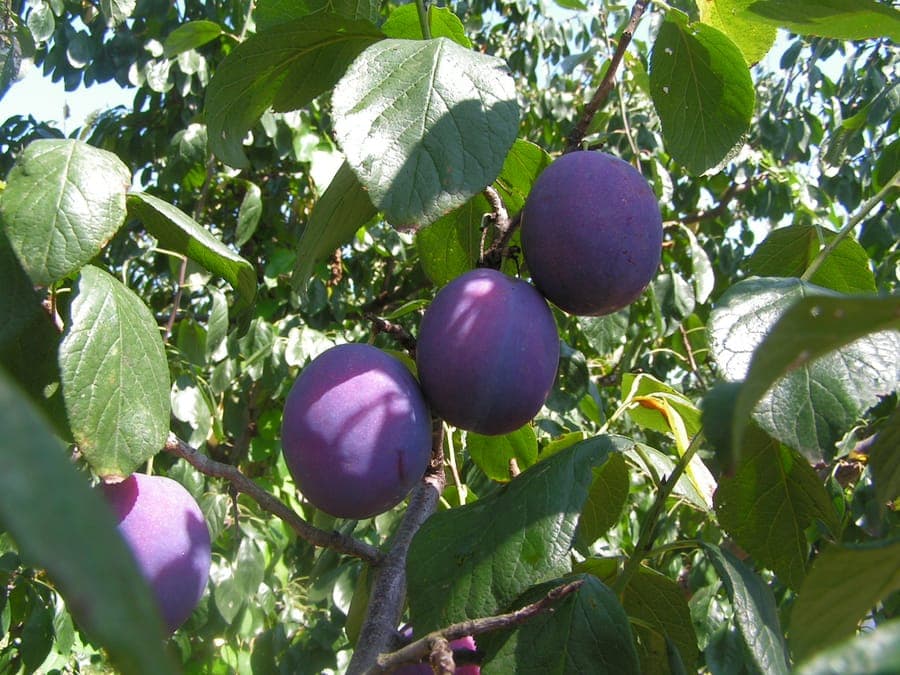
YAMAMAYA / CC BY-SA 3.0, via Wikimedia Commons
Wild plum: complete guide
Prunus domestica
Want to see Wild plum: complete guide in your garden?
1 minute, no credit card
Overview
Prunus domestica, commonly known as the Wild plum, is a hardy deciduous tree belonging to the Rosaceae family. Native to Turkey, it has adapted well to temperate climates across Europe and North America. Reaching heights of 5 to 8 meters with a spread of 4 to 6 meters, this tree grows at a moderate pace of 30–50 cm per year. It's prized not only for its ornamental value but also for its edible fruit, which can be eaten fresh, baked into tarts, or dried into prunes. The tree is long-lived, often producing fruit for 15 to 20 years with proper care.
On gardenworld.app, you can design a custom garden layout that integrates a Wild plum tree seamlessly, ensuring it has enough space and sunlight to thrive.
Appearance & bloom cycle
The Wild plum develops a dense, rounded crown that provides excellent structure in the garden. In March and April, it bursts into bloom with clusters of small, fragrant white flowers. These appear before or alongside the first leaves and are a vital early nectar source for bees and other pollinators. The fruit begins forming in late spring, growing steadily through summer. By August or September, depending on the cultivar and local climate, the plums ripen. They range in color from deep purple to yellow, with firm, juicy flesh and a sweet-tart flavor.
Ideal location
This tree thrives in full sun to light shade, scoring a 7 out of 10 for light requirements. Aim for a spot that receives at least 6 hours of direct sunlight daily. It performs best when sheltered from strong winds, especially in early spring when blossoms are vulnerable to late frosts. In smaller gardens, consider a fan-trained or espalier form against a south-facing wall. Standard trees need at least 4–5 meters of clearance from other large plants or structures.
Garden centres across the UK and US often stock named cultivars like 'Victoria' or 'Czar', which are self-fertile and ideal for smaller plots. Pair your planting plan with a visit to gardenworld.app, where you can visualise your tree in 3D and plan companion plantings around it.
Soil requirements
Prunus domestica is adaptable to a wide pH range, from 5.0 to 8.2, making it suitable for acidic, neutral, and slightly alkaline soils. However, good drainage is non-negotiable. Avoid heavy, waterlogged clay unless amended with grit and compost. The root system is sensitive to standing water, which can lead to root rot. When planting, dig a hole twice as wide as the root ball and mix in well-rotted manure or compost to improve fertility and structure.
Free design
Want to see Wild plum: complete guide in your garden? Make a free design now.
Watering
During the first growing season, water deeply once a week, providing 10–15 liters per tree. After establishment, the Wild plum is moderately drought-tolerant but benefits from supplemental watering during prolonged dry spells, especially when fruit is developing. Mulching around the base with bark or straw helps retain moisture and suppress weeds. Avoid piling mulch against the trunk to prevent rot.
Pruning
Prune in late summer (August to early September) to reduce the risk of silver leaf disease and bacterial canker. Focus on removing dead, damaged, or crossing branches. Open up the center to improve air circulation and light penetration. Since fruit forms on one-year-old wood, avoid heavy pruning that could remove next year's crop. Limit cuts to no more than 20% of the canopy per year. For trained forms like cordons or espaliers, follow a more structured pruning schedule to maintain shape.
Maintenance calendar
- Jan: Inspect for signs of disease or pest damage
- Feb: Prepare tools for pruning; check support stakes
- Mar-Apr: Watch for blossoms; protect from frost if needed
- May: Thin young fruit if overcrowded
- Jun: Monitor for aphids and plum moth
- Jul: Water during dry periods; check for ripening fruit
- Aug-Sept: Harvest ripe plums; prune after harvest
- Oct: Clear fallen leaves and fruit to reduce disease risk
- Nov-Dec: Apply mulch; protect young trunks from rodents
Winter hardiness
The Wild plum is hardy in USDA zones 5 to 8, tolerating winter lows down to -20°C (-4°F). Mature trees need little protection, but young saplings benefit from tree guards to prevent rabbit and vole damage. Avoid wet winter soils, as saturated conditions combined with cold can damage roots. In colder zones, choose a sheltered site and avoid frost pockets.
Companion plants
Good companions include chives, thyme, and comfrey, which improve soil health and deter pests. Avoid planting aggressive groundcovers near the trunk. Other fruit trees like apple or pear can be planted nearby, provided they're spaced at least 4 meters apart. Consider underplanting with shade-tolerant perennials like lungwort or barren strawberry to reduce maintenance.
Closing
The Wild plum is a reliable, productive tree that adds beauty and bounty to the garden. With proper siting, soil prep, and annual pruning, it will reward you with decades of harvests. Purchase your tree from reputable garden centres that offer healthy, disease-free stock. And before planting, take advantage of gardenworld.app to create a tailored design that includes planting depth, spacing, and seasonal care reminders.
Want to see Wild plum: complete guide in your garden? Make a free design now.
Upload a photo, pick a style, and get a photorealistic design with plant list in under a minute.
No credit card required


Similar plants
Siberian crab apple: complete guide
Malus x robusta
Complete guide to the Siberian crab apple (Malus x robusta): location, soil, pruning, winter hardiness and the best companion plants for your garden.
Chinese flowering crabapple (Malus x spectabilis): complete guide
Malus x spectabilis
Meet the Chinese flowering crabapple (Malus x spectabilis): a classic spring bloomer with carmine buds and pink blossom.
Potentilla crassinervia: complete guide
Potentilla crassinervia
Potentilla crassinervia, the Corsican cinquefoil, grows wild on Corsica and Sardinia's peaks. Discover how to grow this hardy alpine rock garden gem.