
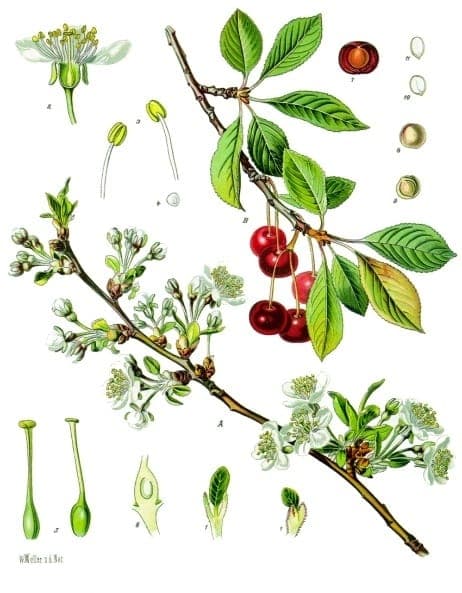
Franz Eugen Köhler, Köhler's Medizinal-Pflanzen / Public domain, via Wikimedia Commons
Morello cherry: complete guide
Prunus cerasus
Want to see Morello cherry: complete guide in your garden?
1 minute, no credit card
Overview
Prunus cerasus, better known as the morello cherry, is a deciduous fruit tree in the Rosaceae family that brings both harvest and beauty to temperate gardens. Native to the North Caucasus, it's now widely grown across Europe and North America in USDA hardiness zones 4 to 7. Unlike sweet cherries, morello types are prized for their high acidity, making them ideal for pies, jams, liqueurs, and preserves. They're also tougher, more disease-resistant, and easier to manage in smaller spaces.
Typically reaching 4 to 8 meters in height, morello cherries grow as small trees or large shrubs. Many modern cultivars are grafted onto dwarfing rootstocks like Gisela 5, keeping them under 5 meters and suitable for containers or tight urban plots. The tree blooms early in spring, so site selection is key to protecting fragile blossoms from late frosts. On gardenworld.app, you can map out a layout that positions your morello cherry for maximum sun and frost protection.
Appearance & bloom cycle
The morello cherry lights up the garden in late March to mid-April with clusters of white, five-petaled flowers that appear before or alongside emerging leaves. Each cluster holds 3 to 6 blossoms and lasts about 10 to 14 days. Bees and hoverflies are frequent visitors, essential for fruit set.
After pollination, small green fruits form and ripen by late June to early July, depending on cultivar and climate. The mature cherries are deep red to almost black, about 1.5 to 2 cm in diameter, with juicy, tart flesh. The leaves are oval to lanceolate, dark green, and slightly serrated. In autumn, they turn yellow to golden-orange, adding seasonal interest.
Unlike some ornamental cherries, morello varieties offer both visual appeal and edible yield, making them a dual-purpose choice for thoughtful garden planning.
Ideal location
Full sun is essential-aim for at least 6 hours of direct sunlight daily. Without enough light, fruit production drops and disease risk increases. A south- or southwest-facing spot offers the best warmth and protection from cold winds.
Avoid frost pockets, especially in early spring. Late frosts can kill blossoms, wiping out the entire harvest. If you're growing in a container, use a pot at least 50 cm wide with excellent drainage. Dwarf varieties like 'Stark Morello' or 'Rita' perform well this way. Check compatibility with your garden setup on gardenworld.app, where you can simulate sun exposure and space constraints.
Soil requirements
Morello cherries thrive in well-drained, loamy soil rich in organic matter. A pH between 6.0 and 7.0 is ideal. Heavy clay soils can suffocate roots, especially in winter, so consider raised beds or mounds. Sandy soils drain too quickly and may require regular mulching to retain moisture and nutrients.
Before planting, amend the soil with well-rotted compost or manure. Avoid waterlogged sites-root rot is a real threat. A soil test kit from your local garden centre can help you assess pH and nutrient levels before planting.
Free design
Want to see Morello cherry: complete guide in your garden? Make a free design now.
Watering
Young trees need consistent moisture during their first growing season-about 10 to 15 liters per week, split over two waterings. Once established, they're moderately drought-tolerant, but fruiting trees benefit from deep watering during dry spells in May and June, when fruit is developing.
For container-grown trees, check daily during summer. The top 2–3 cm of soil should dry slightly between waterings, but never let the entire rootball dry out. Use a saucer under the pot, but empty it after an hour to prevent waterlogging.
Pruning
Pruning is best done in summer (July–August) to reduce the risk of bacterial canker and silver leaf disease, which enter through fresh cuts in wet winter weather. Summer pruning also helps control size and improves air circulation.
Focus on removing dead, crossing, or inward-growing branches. Keep the center open to sunlight. Morello cherries fruit mainly on 2- to 4-year-old wood, so balance renewal with maintenance. Avoid heavy pruning in winter. Light shaping is fine, but save major cuts for summer.
Maintenance calendar
- January: Inspect for pests; remove loose bark.
- February: Prepare tools; check bud swell.
- March: Apply organic mulch or compost around the base.
- April: Monitor blossoms; protect from late frost with horticultural fleece.
- May: Begin regular watering; watch for aphids.
- June: Harvest when fruit is dark red and easily detaches.
- July–August: Main pruning window; remove water sprouts.
- September: Apply potassium-rich feed to aid hardening off.
- October: Clear fallen leaves to reduce disease carryover.
- November–December: Wrap young trunks to deter rabbits and voles.
Winter hardiness
Morello cherries are hardy in USDA zones 4–7, tolerating winter lows down to -30°C. However, blossoms are vulnerable to frost below -2°C during flowering. A sheltered site can make all the difference. Snow cover helps insulate roots, but prolonged dry cold can still stress trees-mulch well in late autumn.
Companion plants
Plant low-growing perennials like thyme, chives, or oregano beneath your cherry to suppress weeds and attract beneficial insects. Garlic or shallots may help deter pests. Avoid aggressive groundcovers like ivy that compete for nutrients.
Good shrub companions include currants or dwarf blueberries, which have similar soil needs. Avoid planting other Prunus species too close unless they're compatible pollinators. Apple trees or hawthorns can work well at a distance.
Closing
The morello cherry is a resilient, productive tree that rewards careful planting and modest upkeep. With full sun, proper drainage, and summer pruning, it can produce abundant sour cherries for decades. It's perfect for patios, small yards, or mixed orchards. Buy healthy stock from reputable garden centres, where you'll often find disease-resistant, grafted varieties. And before you plant, try visualizing your layout on gardenworld.app-plan for sunlight, spacing, and companion planting to get the most from your tree.
Want to see Morello cherry: complete guide in your garden? Make a free design now.
Upload a photo, pick a style, and get a photorealistic design with plant list in under a minute.
No credit card required


Similar plants
Siberian crab apple: complete guide
Malus x robusta
Complete guide to the Siberian crab apple (Malus x robusta): location, soil, pruning, winter hardiness and the best companion plants for your garden.
Chinese flowering crabapple (Malus x spectabilis): complete guide
Malus x spectabilis
Meet the Chinese flowering crabapple (Malus x spectabilis): a classic spring bloomer with carmine buds and pink blossom.
Potentilla crassinervia: complete guide
Potentilla crassinervia
Potentilla crassinervia, the Corsican cinquefoil, grows wild on Corsica and Sardinia's peaks. Discover how to grow this hardy alpine rock garden gem.