
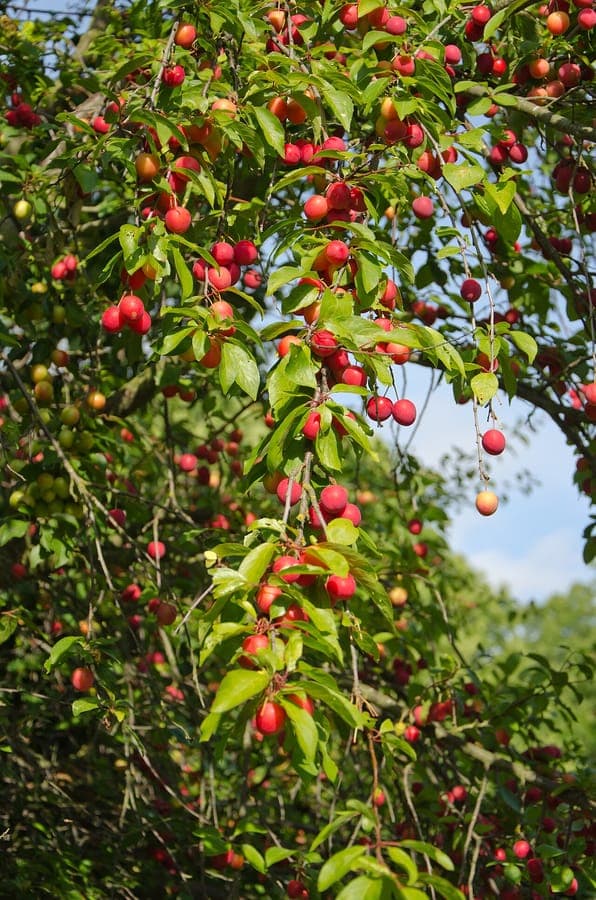
An-d / CC BY-SA 3.0, via Wikimedia Commons
Cherry plum: complete guide
Prunus cerasifera
Want to see Cherry plum: complete guide in your garden?
1 minute, no credit card
Overview
Prunus cerasifera, commonly known as the cherry plum, is a hardy, fast-growing deciduous tree that brings early spring colour and late summer fruit to gardens across temperate zones. Native to regions like Iran, Afghanistan, and the Balkans, it's now widely cultivated in the UK, US, and Western Europe. Reaching 6–10 metres in height with a spread of 4–6 metres, it fits well in medium to large gardens. The tree is appreciated both for its ornamental value and its edible plums, which can be used in jams or eaten fresh. On gardenworld.app, you can visualise how this tree will mature in your garden, factoring in root spread and seasonal shade.
Appearance & bloom cycle
The cherry plum blooms in late winter to early spring-typically February to March-depending on the climate. The pale pink to deep pink blossoms appear before the leaves, creating a dramatic cloud of colour. Each flower is about 2–3 cm wide, with five petals and prominent stamens, attracting early bees and pollinators. After flowering, ovate leaves emerge, 4–6 cm long, with a finely serrated edge. In cultivars like 'Nigra', the foliage is deep purple-bronze all season, adding architectural contrast. By July or August, small round plums (2–3 cm) ripen in shades of red, purple, or yellow, depending on the variety. Birds often enjoy them as much as people do.
Ideal location
Cherry plum thrives in full sun to light shade, scoring a 7 on the light scale (1–10). Aim for at least 6 hours of direct sunlight daily. South, southwest, or southeast-facing spots are ideal. Avoid frost pockets and windy areas, as early blossoms can be damaged by late frosts or strong winds. Allow a minimum of 3 metres clearance from buildings or other trees to prevent root competition and ensure good air circulation. This tree adapts well to urban settings and can be grown as a standard or multi-stem specimen. On gardenworld.app, you can simulate different planting positions to see how light patterns affect bloom quality.
Soil requirements
The cherry plum is adaptable but grows best in well-drained, fertile soil with a pH between 5.5 and 6.5. It tolerates clay if not waterlogged and sand if enriched. Heavy clay soils should be amended with compost and grit to improve drainage. Sandy soils benefit from organic matter like leaf mould or composted manure to retain moisture and nutrients. The tree can handle slightly alkaline conditions but struggles in highly calcareous or compacted soils. Avoid planting in low-lying areas where water pools.
Free design
Want to see Cherry plum: complete guide in your garden? Make a free design now.
Watering
Water young trees deeply once or twice a week during the first growing season. Apply about 20 litres per session, especially during dry spells. After the first year, established trees are fairly drought-tolerant but benefit from occasional deep watering during prolonged dry periods (3+ weeks without rain). Use a soaker hose or drip system to deliver water slowly to the root zone. Avoid frequent shallow watering, which encourages weak surface roots.
Pruning
Prune cherry plum in summer-July or August-to reduce the risk of silver leaf disease and bacterial canker. Remove dead, damaged, or crossing branches, and open up the canopy to improve airflow. Avoid winter pruning, as it can lead to sap bleeding. For ornamental cultivars like 'Nigra', pruning can help maintain shape and encourage vibrant foliage. Always use clean, sharp tools and disinfect between cuts if disease is suspected.
Maintenance calendar
- Jan: Check for storm damage and signs of pests.
- Feb: Monitor for early bloom; protect from late frost if needed.
- Mar: Flowers in full display; avoid disturbing pollinators.
- Apr: No pruning; watch for aphids or fungal spots.
- May: Water if soil is dry; apply mulch to retain moisture.
- Jun: Inspect for signs of moniliosis or canker.
- Jul: Prune if necessary; harvest ripe fruit.
- Aug: Remove diseased wood; let cuts heal in warm air.
- Sep: Stop feeding; rake fallen leaves to reduce disease risk.
- Oct: Apply organic mulch around the base, keeping it away from the trunk.
- Nov: Check for nesting pests; protect young trunks from rodents.
- Dec: Inspect structure; plan pruning for next summer.
Winter hardiness
Cherry plum is hardy to USDA zones 5–9 (-29°C to -1°C), making it suitable for most of the UK, US, and continental Europe. Young trees may benefit from tree wrap to prevent sunscald and rodent damage. Late frosts can kill blossoms, so keep an eye on forecasts during flowering. In colder zones, choose a sheltered location to improve survival.
Companion plants
Pair cherry plum with early spring bulbs like crocus, daffodils, or snowdrops, which bloom before the tree leafs out. Underplant with shade-tolerant perennials such as hellebores, hostas, or lungwort. Avoid invasive ground covers. For a productive garden, consider planting strawberries or chives beneath, which don't compete heavily for resources. On gardenworld.app, you can design a layered planting scheme combining bulbs, perennials, and your cherry plum for year-round interest.
Closing
The cherry plum is a low-maintenance, high-impact tree that earns its place in any garden. With early blooms, edible fruit, and graceful form, it offers beauty and function. Whether you're growing it as a focal point or for a taste of homegrown plums, this tree delivers. Prune in summer, protect young trunks, and give it space to grow. You can find healthy specimens at garden centres like B&Q, Wyevale, or local nurseries-always check for signs of disease before planting.
Want to see Cherry plum: complete guide in your garden? Make a free design now.
Upload a photo, pick a style, and get a photorealistic design with plant list in under a minute.
No credit card required


Similar plants
Siberian crab apple: complete guide
Malus x robusta
Complete guide to the Siberian crab apple (Malus x robusta): location, soil, pruning, winter hardiness and the best companion plants for your garden.
Chinese flowering crabapple (Malus x spectabilis): complete guide
Malus x spectabilis
Meet the Chinese flowering crabapple (Malus x spectabilis): a classic spring bloomer with carmine buds and pink blossom.
Potentilla crassinervia: complete guide
Potentilla crassinervia
Potentilla crassinervia, the Corsican cinquefoil, grows wild on Corsica and Sardinia's peaks. Discover how to grow this hardy alpine rock garden gem.