
MPF / CC BY 2.5, via Wikimedia Commons
Mazzard cherry: complete guide
Prunus avium
Want to see Mazzard cherry: complete guide in your garden?
1 minute, no credit card
Overview
Prunus avium, commonly known as Mazzard cherry, is a majestic deciduous tree that brings both beauty and bounty to the garden. Native to parts of Europe and western Asia, it thrives across temperate zones and adapts well to UK and North American gardens. If you're after a tree that offers fragrant spring blossoms, edible fruit, and autumn colour, this is a standout choice. Mature specimens reach 10–15 m in height with a rounded, spreading crown - making them excellent as focal points or shade trees in larger gardens.
On gardenworld.app you can create a custom garden plan that factors in the mature spread and root zone of a Mazzard cherry, helping you avoid placement mistakes before you plant.
Appearance & bloom cycle
The Mazzard cherry is a showstopper in spring. From late March to mid-April, the bare branches burst into clusters of pure white flowers, each about 1 inch (2.5 cm) across. These five-petaled blooms emerge before the leaves and attract bees and early pollinators with their light, sweet fragrance. The flowering period lasts roughly two weeks, depending on weather.
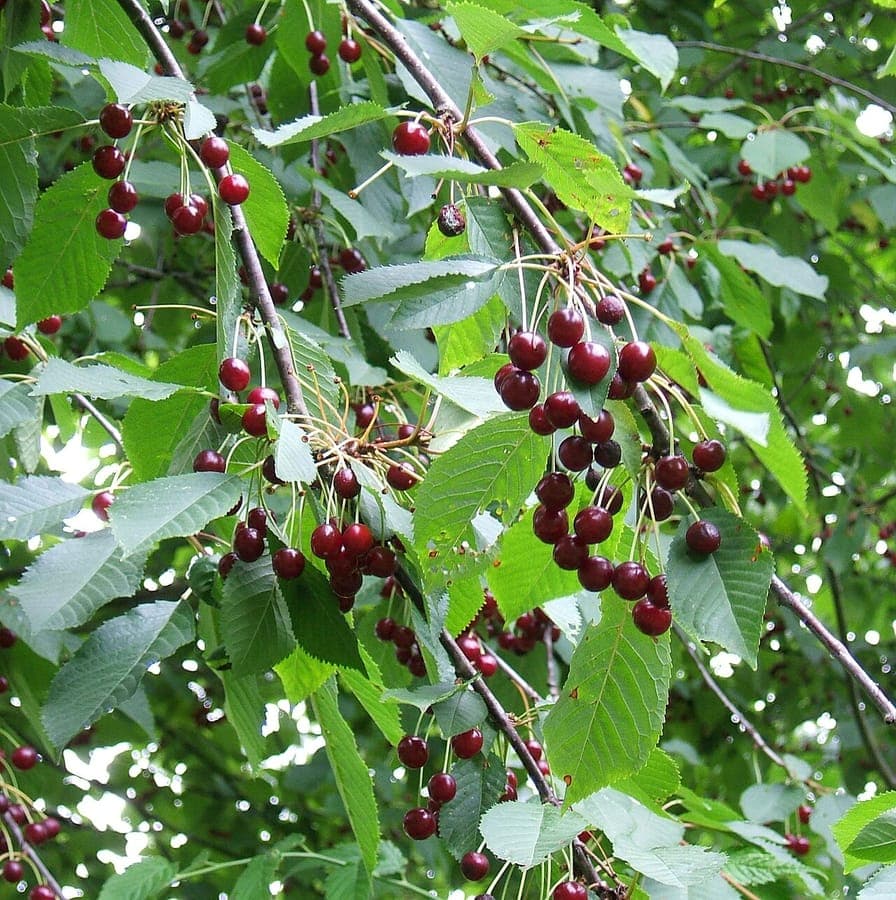
After pollination, small green cherries develop, ripening in late June to early July. The fruit is round, 1–2 cm in diameter, turning from red to deep maroon or almost black when fully ripe. The flesh is sweet with a subtle tartness - excellent for eating fresh, baking, or preserving. Birds love them too, so consider netting if you want to save some for yourself.
In autumn, the foliage turns golden-yellow to coppery-bronze, adding seasonal warmth to the landscape. The bark is smooth, reddish-brown with prominent horizontal lenticels - a key ID feature for Prunus species.
Ideal location
This tree prefers full sun - a 7 out of 10 on the light scale - meaning at least 6 hours of direct sunlight daily. Choose an open, unshaded spot away from large structures or overhanging trees. Avoid frost pockets, especially in spring when late frosts can damage blossoms.
Mazzard cherry develops a strong taproot and extensive lateral roots. Plant at least 4 m from buildings, driveways, or paving to prevent structural damage. It doesn't like competition, so keep grass and aggressive groundcovers clear from the root zone. On gardenworld.app, you can simulate long-term root expansion to ensure your tree has room to grow without future conflicts.
Soil requirements
Ideal soil is well-drained, humus-rich, and slightly acidic to neutral (pH 5.5–6.5). Heavy clay soils can cause root rot, so amend with compost and sharp sand at planting. Sandy soils drain too fast - boost moisture retention by incorporating organic matter like composted manure or leaf mould.
Avoid waterlogged or alkaline soils. High pH can lead to chlorosis, where leaves turn yellow between the veins. If your soil is too alkaline, apply chelated iron or grow in a raised bed with acidified compost.
Free design
Want to see Mazzard cherry: complete guide in your garden? Make a free design now.
Watering
Water deeply and regularly during the first two growing seasons - about 20 litres every 7–10 days during dry spells. After establishment, the tree becomes moderately drought-tolerant, but prolonged dry periods in summer still require supplemental watering, especially for fruiting trees.
Use drip irrigation or a soaker hose to deliver water slowly to the root zone. Avoid wetting the foliage to reduce fungal disease risk. Water early in the morning or late afternoon to minimise evaporation.
Pruning
Minimal pruning is best. Only prune in summer (July to mid-August) to avoid pathogens like silver leaf or bacterial canker that infect fresh cuts in wet months. Remove dead, crossing, or inward-growing branches. Keep a central leader and open the canopy for airflow.
Never top the tree or over-prune - this can trigger excessive water sprouts and reduce fruiting. Use sharp, sterilised tools and seal large cuts with pruning paint if needed.
Maintenance calendar
- January–February: Inspect for cankers, pests, and structural damage. No pruning.
- March: Apply a layer of compost or balanced organic fertiliser around the drip line.
- April–May: Flowering and fruit set. Protect blossoms from late frosts with horticultural fleece.
- June–July: Harvest ripe cherries. Begin summer pruning after harvest.
- August–September: Monitor for pests. Water during dry spells.
- October–December: Leaf drop. Clear fallen leaves if disease was present. Mulch around the base for root insulation.
Winter hardiness
Hardy in USDA zones 5–8 (-20°C to -10°C). Young trees benefit from mulch and tree guards to protect against frost cracks and rodent damage. Mature trees are resilient, but late spring frosts can kill emerging buds, so avoid planting in low-lying frost pockets.
Companion plants
Underplant with shade-tolerant perennials like lungwort (Pulmonaria), winter aconite (Eranthis hyemalis), or hardy geraniums. Avoid invasive groundcovers like ivy that can climb the trunk. Grass can grow beneath, but mow regularly and fertilise the tree separately - it's a heavy feeder.
Closing
The Mazzard cherry is a long-term investment. It may take 4–7 years to bear fruit, but once established, it can live for decades. Choose your planting site wisely - this tree won't forgive being cramped.
Buy healthy, disease-free stock from reputable garden centres. Look for grafted trees on Gisela 5 or Colt rootstock for size control. With proper care, your Mazzard cherry will become a beloved garden feature, drawing admiration every spring and rewarding you with fruit each summer.
Want to see Mazzard cherry: complete guide in your garden? Make a free design now.
Upload a photo, pick a style, and get a photorealistic design with plant list in under a minute.
No credit card required


Similar plants
Siberian crab apple: complete guide
Malus x robusta
Complete guide to the Siberian crab apple (Malus x robusta): location, soil, pruning, winter hardiness and the best companion plants for your garden.
Chinese flowering crabapple (Malus x spectabilis): complete guide
Malus x spectabilis
Meet the Chinese flowering crabapple (Malus x spectabilis): a classic spring bloomer with carmine buds and pink blossom.
Potentilla crassinervia: complete guide
Potentilla crassinervia
Potentilla crassinervia, the Corsican cinquefoil, grows wild on Corsica and Sardinia's peaks. Discover how to grow this hardy alpine rock garden gem.