
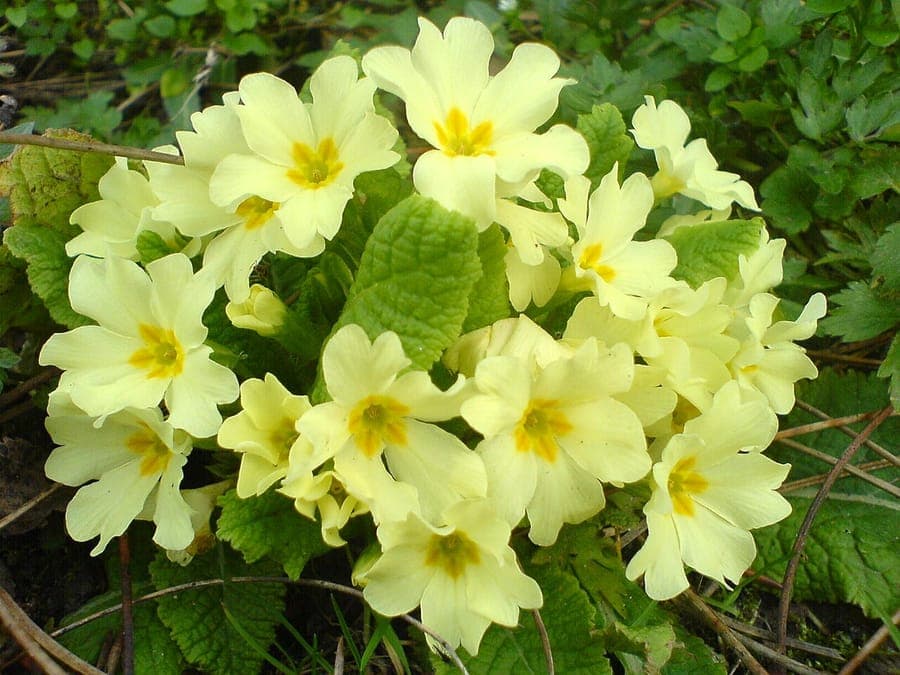
No machine-readable author provided. Pokrajac assumed (based on copyright claims). / CC BY-SA 3.0, via Wikimedia Commons
Primrose: complete guide
Primula vulgaris
Want to see Primrose: complete guide in your garden?
1 minute, no credit card
Overview
Primula vulgaris, commonly known as the primrose, is a cherished harbinger of spring, bringing soft colour to quiet corners of the garden when little else is in bloom. Native to woodlands and damp slopes across central and southern Europe, this perennial thrives in cool, moist, shaded conditions. It's fully hardy in USDA zones 7 to 9, tolerating winter lows down to –15 °C. In the UK and Ireland, it's often found naturalised in hedgerows and under deciduous trees, where it spreads gently over time.
On gardenworld.app, you can design a garden layout that features primroses in woodland-style borders or underplanting schemes that mimic their natural habitat.
Appearance & bloom cycle
The primrose forms low rosettes of crinkled, dark green leaves, typically 10–15 cm tall. The flowers rise slightly above the foliage on short stalks, usually in soft yellow, though cultivated varieties come in white, pink, lilac, and even deep salmon. Each bloom is 2–3 cm wide with a flat face and a central eye, often with a yellow throat. Blooming begins as early as late February in mild areas, lasting through April.
Unlike its relative the oxlip (Primula elatior), the primrose lacks a distinct floral stem - the blooms appear almost stemless. Double-flowered cultivars like 'Julia' or 'Zebra Blue' offer longer-lasting displays and are excellent for container planting.
Ideal location
Choose a spot with dappled shade or partial shade. Full sun will scorch the leaves and shorten the bloom period, especially in southern regions. An east-facing border, the base of a north wall, or beneath light-canopy trees like birch or hazel are ideal. The plant appreciates shelter from drying winds and areas where the soil stays cool and moist.
Avoid deep, dry shade under dense evergreens. While the primrose can tolerate some shade, it needs at least a few hours of indirect light to set buds.
Soil requirements
Primroses demand fertile, humus-rich, moisture-retentive yet well-drained soil. The ideal pH is between 5.5 and 6.5 - slightly acidic. Amend heavy clay with leaf mould or composted bark to improve structure. For sandy soils, mix in well-rotted manure or compost to increase water-holding capacity.
Plant at the same depth they were in their pots - the crown should sit level with the soil surface. Spacing of 15–20 cm apart allows for clump formation without overcrowding.
Watering
Keep the soil consistently moist, especially during flowering and dry spring spells. Avoid overhead watering where possible, as wet foliage can encourage fungal diseases like powdery mildew. Use a soaker hose or water at the base. Rainwater is preferable, as primroses dislike the high lime content in some tap water.
Containers need more frequent watering - check daily in warm spells. Use a peat-free compost with added coir for better moisture retention.
Free design
Want to see Primrose: complete guide in your garden? Make a free design now.
Pruning
Minimal pruning is needed. Deadhead spent flowers regularly to extend blooming and prevent self-seeding if desired. Remove damaged or yellowing leaves with clean secateurs. Never cut back the entire plant after flowering - the foliage feeds the roots for next year's growth.
Every 3–4 years, lift and divide congested clumps in early autumn. Replant the healthiest outer sections and discard the woody centres.
Maintenance calendar
- Jan: Check for emerging buds. Protect from hard frosts with horticultural fleece.
- Feb: Begin feeding with a diluted liquid seaweed solution.
- Mar: Peak bloom. Maintain soil moisture.
- Apr: Deadhead regularly. Watch for slugs.
- May: Let foliage die back naturally. Reduce watering.
- Jun: Monitor for aphids. Apply a thin mulch of compost.
- Jul: Dormant period. No action needed.
- Aug: Prepare planting beds. Divide and replant if needed.
- Sep: Plant new plugs or divisions. Water in well.
- Oct: Mulch with leaf mould to retain moisture.
- Nov: Protect young plants from early frosts.
- Dec: Fully hardy, but shelter container-grown plants in harsh weather.
Using gardenworld.app, you can generate a custom care calendar tailored to your region and primrose planting scheme.
Winter hardiness
Primula vulgaris is reliably hardy in USDA zones 7–9. In colder zones, mulch with straw or leaf litter to protect crowns from freeze-thaw cycles. Avoid waterlogged soil in winter - ensure good drainage to prevent root rot. Container plants should be moved to a sheltered spot or wrapped with bubble wrap in severe winters.
Companion plants
Pair primroses with other spring ephemerals like snowdrops, crocus, and bluebells. They also combine beautifully with hellebores, lungwort (Pulmonaria), and hardy geraniums. For a natural look, plant in drifts of 5–7 under deciduous shrubs or along woodland paths.
Avoid invasive groundcovers like periwinkle (Vinca minor) that may smother them.
Closing
The primrose is a timeless garden staple that asks for little and gives much. With its cheerful early blooms and ease of care, it's perfect for beginner and experienced gardeners alike. Buy healthy plants from local garden centres in autumn for best establishment. Avoid overwatering and ensure good air circulation to prevent common pests. With a little attention, your primroses will return year after year, brightening the earliest days of spring.
Want to see Primrose: complete guide in your garden? Make a free design now.
Upload a photo, pick a style, and get a photorealistic design with plant list in under a minute.
No credit card required


Similar plants
Primula incana: complete guide to silvery alpine primrose
Primula incana
Silvery primrose (Primula incana), a delicate alpine flower with white blooms and powdered grey-green leaves. Growing, care, and cultivation guide.
Mealy cowslip: complete guide
Primula pulverulenta
Grow the Mealy cowslip (Primula pulverulenta): striking candelabra flowers in red and purple tones, moisture-loving and ideal for shady, damp garden corners.
Cliff dwarf-primrose: complete guide
Androsace laevigata
Full guide to growing Androsace laevigata, a rare Pacific Northwest alpine cushion plant. Planting, care, and garden design tips explained.