
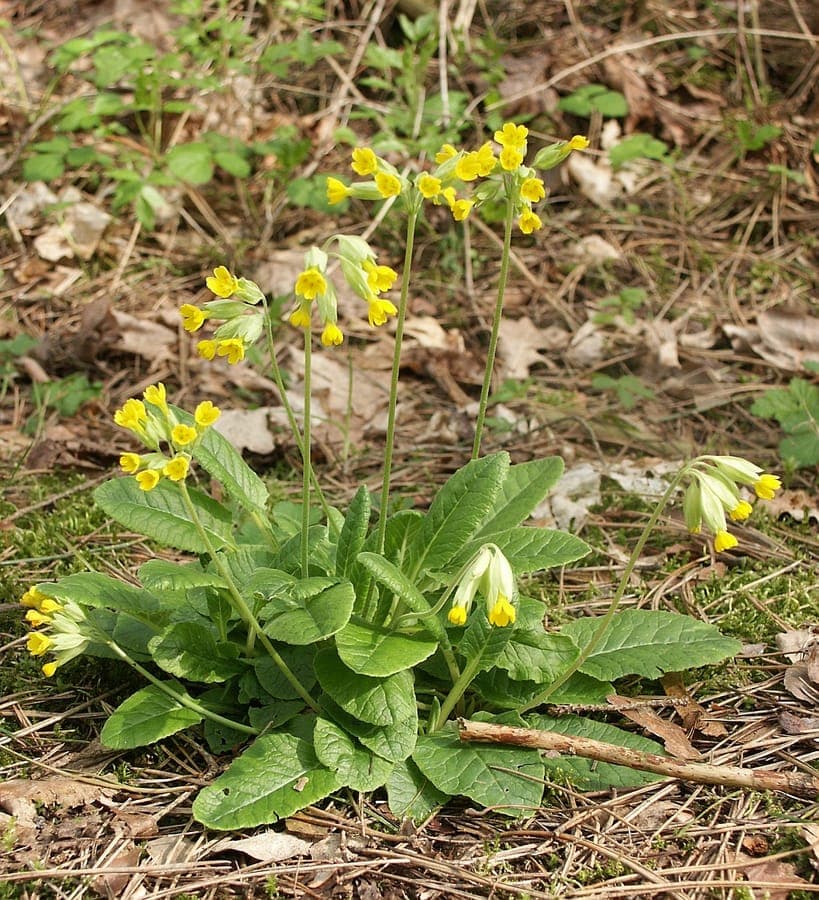
Picture taken by BerndH / CC BY-SA 3.0, via Wikimedia Commons
Cowslip: complete guide
Primula veris
Want to see Cowslip: complete guide in your garden?
1 minute, no credit card
Overview
Primula veris, commonly known as cowslip, is a cherished spring perennial native to much of Europe, including the UK and parts of Eastern Europe. It's a forb that thrives in meadows, woodland edges, and cottage-style gardens where it brings cheerful clusters of fragrant yellow flowers in early to mid-spring. This hardy plant is a staple for gardeners aiming to support early pollinators and create a natural, low-maintenance planting scheme.
Cowslip grows from a basal rosette and blooms reliably year after year in USDA zones 4 to 8. It's easy to grow, but thrives best when its basic needs-light, soil pH, and moisture-are respected. If you're designing a wildlife-friendly border or re-creating a traditional English wildflower patch, this plant is a must-have. On gardenworld.app you can build a garden plan that layers cowslips with taller perennials and grasses for a dynamic spring display.
Appearance & bloom cycle
Cowslip reaches a height of 15–25 cm, with upright stems bearing loose umbels of 10–30 drooping, bell-shaped flowers. Each bloom is a vibrant yellow with a distinctive orange or dark-centered spot at the throat, adding depth and contrast. The flowering period runs from late March to mid-May, depending on local climate and winter severity.
The leaves are oblong, slightly wrinkled, and form a low rosette at the base. They remain green through much of the year, providing ground-level texture even after flowering. After blooming, the plant sets seed and may self-sow in suitable conditions, creating natural drifts over time-ideal for informal or meadow-style gardens.
Ideal location
Cowslip performs best in partial shade to light sun, scoring a 7 on the light scale (where 10 is full sun). This means it tolerates morning sun and dappled afternoon shade, but struggles in hot, dry full-sun spots. It's perfect for planting beneath deciduous trees or shrubs that allow sunlight in early spring before leafing out fully.
Avoid south-facing beds with reflected heat or exposed, windy corners. East- or north-facing borders work well, as long as they receive at least 4–6 hours of indirect daylight. On gardenworld.app, use the sun mapping tool to find the best spot in your garden for cowslips based on seasonal light patterns.
Soil requirements
This plant prefers alkaline to neutral soils with a pH between 7.5 and 8.0. It naturally occurs on calcareous or chalky soils, so avoid acidic mixes or ericaceous compost. The soil should be well-draining but moisture-retentive-loamy or sandy loam with organic matter is ideal.
If your soil is heavy clay, amend it with grit or coarse sand to improve drainage. Don't over-enrich with manure or high-nitrogen fertilisers; cowslips prefer modest fertility. Excess nutrients lead to lush foliage but fewer blooms.
Free design
Want to see Cowslip: complete guide in your garden? Make a free design now.
Watering
Once established, cowslips are moderately drought-tolerant, especially in cooler climates. They rely on winter and spring moisture, so supplemental watering is rarely needed unless conditions are unusually dry.
During prolonged dry spells in April or May, water at the base to prevent crown rot. Use rainwater when possible, as tap water can be too alkaline over time. Avoid overhead watering to reduce fungal risks, especially in humid conditions.
Pruning
Minimal pruning is required. After flowering, you can deadhead spent blooms to prevent excessive self-seeding or leave them if you want natural spread. Cut flower stems back to the base with clean secateurs.
Never cut back the foliage until it yellows and dies down naturally-usually by late June. The leaves feed the root system for next year's growth. Only remove leaves if they show signs of disease or slug damage.
Maintenance calendar
- Jan: Check for crown rot in wet soils
- Feb: Dormant; no action needed
- Mar: Growth resumes; watch for aphids
- Apr: Peak bloom; ensure soil moisture
- May: Flowers fade; deadhead if desired
- Jun: Foliage dies back; avoid disturbance
- Jul: Plant dormant; check for seedlings
- Aug: Monitor for dryness; water if needed
- Sep: New growth may appear; reduce watering
- Oct: Collect seeds or allow self-seeding
- Nov: No care required; mulch lightly if desired
- Dec: Fully dormant; protect from waterlogging
Winter hardiness
Cowslip is fully hardy in zones 4–8, tolerating temperatures down to -30°C. In most UK and US gardens, it needs no winter protection. The basal rosette often stays green or turns bronze through winter, resuming growth early in spring.
In containers, ensure pots have drainage holes and are elevated to prevent freezing. Avoid mulching too heavily, as wet mulch can suffocate the crown. In cold, wet winters, improve drainage with a gravel top layer.
Companion plants
Pair cowslip with other spring ephemerals like Muscari, Anemone blanda, or Pulmonaria. It also works well with early bulbs such as Scilla or Chionodoxa. For a naturalistic look, combine with native grasses like Deschampsia cespitosa or Carex species.
Avoid aggressive spreaders like mint or ground ivy. Instead, choose gentle neighbours such as Alchemilla mollis or Tiarella cordifolia. These provide textural contrast without overwhelming the delicate cowslip.
Closing
Primula veris is a graceful, low-maintenance perennial that brings colour and life to the early garden. It supports biodiversity, adapts to various conditions, and adds a nostalgic charm to traditional and modern designs alike. Whether tucked into a woodland corner or massed in a wildflower lawn, it earns its place in any thoughtful planting scheme.
You can find cowslip at garden centres in spring, especially during March and April. Look for healthy rosettes with firm leaves-avoid plants with yellowing foliage or signs of mould. Choose true Primula veris over Primula vulgaris, which has paler flowers and different growing needs. With the right spot and a little patience, your cowslips will return with golden clusters year after year.
Want to see Cowslip: complete guide in your garden? Make a free design now.
Upload a photo, pick a style, and get a photorealistic design with plant list in under a minute.
No credit card required


Similar plants
Primula incana: complete guide to silvery alpine primrose
Primula incana
Silvery primrose (Primula incana), a delicate alpine flower with white blooms and powdered grey-green leaves. Growing, care, and cultivation guide.
Mealy cowslip: complete guide
Primula pulverulenta
Grow the Mealy cowslip (Primula pulverulenta): striking candelabra flowers in red and purple tones, moisture-loving and ideal for shady, damp garden corners.
Cliff dwarf-primrose: complete guide
Androsace laevigata
Full guide to growing Androsace laevigata, a rare Pacific Northwest alpine cushion plant. Planting, care, and garden design tips explained.