
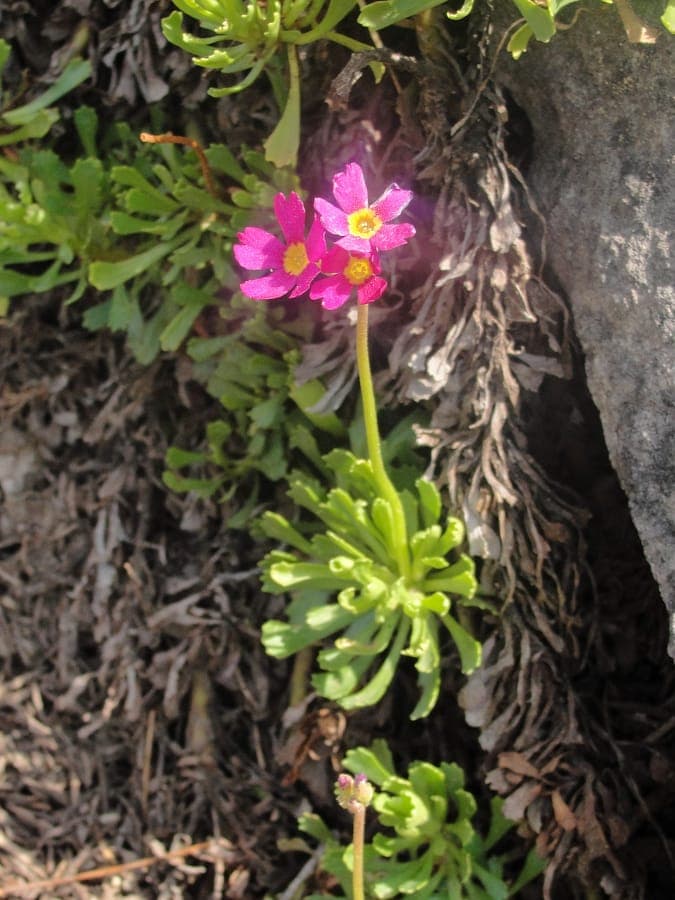
Miguel Vieira / CC BY 2.0, via Wikimedia Commons
Primula suffrutescens: complete guide
Primula suffrutescens
Want to see Primula suffrutescens: complete guide in your garden?
1 minute, no credit card
Overview
Primula suffrutescens, commonly known as Sierra primrose, is a beautiful but challenging alpine plant native to the steep granite rock faces of California's Sierra Nevada mountains. This difficult-to-grow primrose reaches just 10-20 centimetres in height and is celebrated for its delicate pink-purple flowers that appear in spring. This is truly a plant for the specialist gardener who enjoys a challenge.
Although much more difficult to cultivate than most alpine primroses, Primula suffrutescens can nevertheless be successfully grown if you understand the very specific conditions it requires. The plant is endemic to a very small geographic area and is therefore ecologically interesting and botanically valuable.
Appearance and Bloom
The flowers of Primula suffrutescens are small yet striking, in bright pink-purple tones with yellow eyes. They appear in small clusters on short stems from May through June. Each flower is approximately 1.5 centimetres across with delicate texture.
The plant grows as a small dwarf shrub with much branching, forming compact cushions of small, narrow lanceolate leaves. The stems become partially woody, giving the plant its name "suffrutescens" (semi-shrubby). Leaves are glossy green and persist year-round.
Ideal Location
In the wild, Primula suffrutescens grows on steep granitic rock faces between 1500 and 3000 metres elevation, where it is exposed to full sun and cold nights. In the garden, you must attempt to recreate this.
Provide a location in full sun with excellent air circulation. Wind is actually preferred, as this helps prevent fungal issues. A spot on a south-facing rock garden or in an alpine trough is ideal. Avoid shaded locations entirely.
Soil
This may be the most critical aspect of growing Primula suffrutescens. The plant grows in the wild exclusively on very lean, well-drained granitic soil. Use:
- 50% coarse granite or sandstone grit (not smooth sand)
- 25% alpine potting soil
- 25% coarse perlite
Add no compost or nutrients - the plant actually thrives better in poor soil. The soil must never be wetter than moist. Excellent drainage is essential.
Free design
Want to see Primula suffrutescens: complete guide in your garden? Make a free design now.
Watering
Although Primula suffrutescens experienced moderate moisture in rock crevices, growing in pots in gardens is very different. Water carefully and sparingly, only when the soil begins to dry out. During the growing period (March-July), water very lightly, maximum once weekly.
In autumn and winter, water minimally - more plants die from overwatering than drought. The plant prefers dry winters. Ensure excellent drainage to prevent waterlogging.
Pruning and Maintenance
Minimal maintenance is required, and actually preferred. Remove only dead leaves and spent flowers. Do not cut the plant back - respecting its natural growth pattern helps vitality.
Feeding is important: this plant needs very few nutrients. If you feed, use only very dilute formula twice yearly.
Maintenance Calendar
March-April: Start of growing season. Begin careful watering. No feeding.
May-June: Blooming period. Water very sparingly. Watch for fungal issues.
July-August: Beginning dormancy. Give much less water. Provide shade in extremely hot climates.
September-October: Preparation phase. Barely water. No feeding.
November-February: Winter dormancy. Minimal to no water. Check occasionally for moisture excess.
Winter Hardiness
Primula suffrutescens is very hardy, to approximately -15 to -20 degrees Celsius. The plant originates from a very high mountain climate. However, the greatest cause of death in gardens is not frost but rot from winter moisture.
Ensure excellent winter drainage. In very wet climates, it may be necessary to overwinter the plant in a pot in a dry location.
Companion Plants
It is difficult to grow other plants alongside Primula suffrutescens because of its very specific preferences. Possible companions:
- Lewisia (alpine beauty) - comparable preference
- Douglasia (alpine dwarf) - very drought tolerant
- Fendlera rupicola (alpine rock flower) - lean soil lover
- Eriogonum niveum (white buckwheat) - drought tolerant
Avoid all vigorous growers or nutrient-demanding plants.
Closing
Primula suffrutescens is not a plant for the impatient gardener, but for those who love a botanical challenge. Growing this rare Californian alpine gem requires attention to detail and respect for the plant's natural ecology. Once established, it rewards with year after year of small pink-purple flowers.
Looking for challenging alpine specialties? Specialist nurseries stock difficult cultivars. Visit gardenworld.app for more information about alpine plant cultivation.
Want to see Primula suffrutescens: complete guide in your garden? Make a free design now.
Upload a photo, pick a style, and get a photorealistic design with plant list in under a minute.
No credit card required

