
Matti Virtala / CC0, via Wikimedia Commons
Siberian primrose: complete guide
Primula nutans
Want to see Siberian primrose: complete guide in your garden?
1 minute, no credit card
Overview
Primula nutans, commonly known as Siberian primrose, is a delicate perennial herb native to cold, damp regions across northern Asia and Alaska. It thrives in moist, shaded spots and brings quiet charm to gardens from late April through early May. This low-growing plant typically reaches 10–20 cm in height and forms compact clumps that slowly spread over time. Unlike showy garden hybrids, Primula nutans has a subtle, wild beauty that fits perfectly in naturalistic planting schemes.
It's a great choice if you're working with wet soil near streams, pond edges, or woodland clearings. The plant is fully hardy in USDA zones 3–7, making it suitable for gardens across much of northern Europe and North America. Once established, it requires minimal care, but it does demand consistent moisture and cool root conditions.
On gardenworld.app, you can design a planting plan that integrates Siberian primrose into a rain garden or shaded border, ensuring it gets the right conditions from day one.
Appearance & bloom cycle
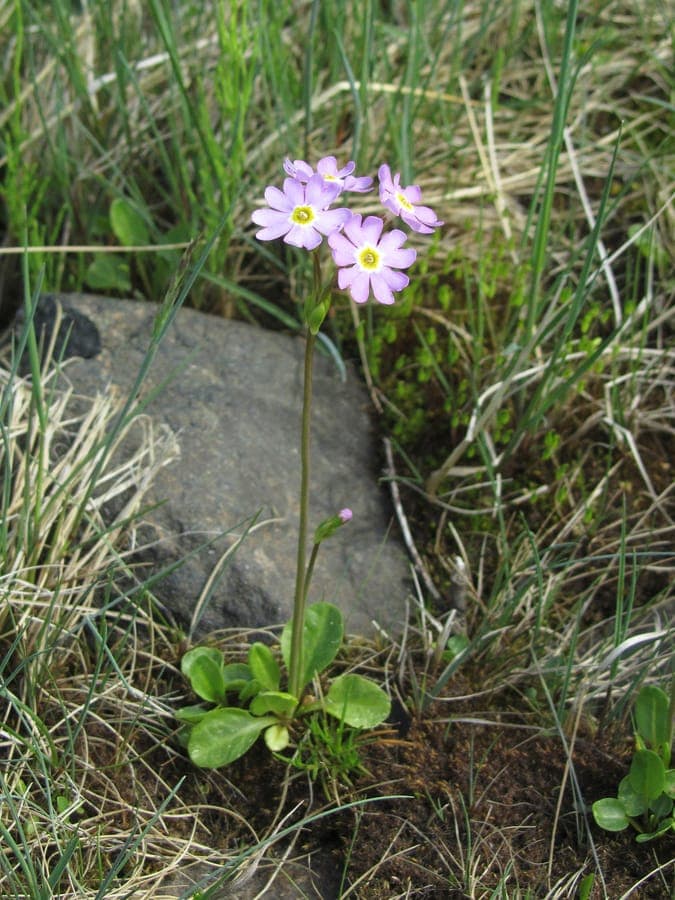
The Siberian primrose produces nodding, bell-shaped flowers on slender, arching stems. Each flower is about 2 cm wide, with five petals in soft pink to creamy white tones, often marked with a dark central eye. The blooms appear in small clusters of 5–10 per stem and face downward, giving them an elegant, shy look - a feature reflected in the name nutans, meaning 'nodding'.
Flowering starts in mid to late April in cooler climates and can last into early June in mountainous areas. The foliage is basal, forming a rosette of oval, slightly hairy, dark green leaves that remain semi-evergreen through winter. In autumn, leaves may bronze slightly but rarely die back completely unless exposed to prolonged frost.
Ideal location
Choose a spot with partial to full shade, especially avoiding hot afternoon sun. Siberian primrose flourishes under light tree canopy - such as birch, alder, or willow - where dappled light filters through. It also does well in bog gardens, rock crevices with seepage, or along shaded stream banks.
Avoid south-facing beds that heat up quickly. The plant struggles in urban heat islands or against dark walls that radiate warmth. An east- or north-facing slope or wall is ideal, where temperatures stay cooler and moisture lingers longer in the soil.
Soil requirements
The soil must be consistently moist, rich in organic matter, and well-draining. A mix of loam, leaf mold, and fine grit works well. Aim for a pH between 5.5 and 7.0. Heavy clay soils should be amended with compost and coarse sand to prevent waterlogging, while sandy soils benefit from added humus to retain moisture.
Mulch lightly in spring with leaf litter or well-rotted compost to maintain moisture and suppress weeds. Avoid thick mulch layers directly touching the crown, as this can encourage rot.
Free design
Want to see Siberian primrose: complete guide in your garden? Make a free design now.
Watering
Keep the soil evenly moist, especially during dry spells in spring. Water at the base to prevent wetting foliage, which can promote powdery mildew. Use rainwater when possible, as tap water with high lime content may affect long-term health.
In containers, check daily during warm periods. Potted plants dry out faster and need more frequent watering. Ensure pots have drainage holes and use a peat-free, moisture-retentive mix.
Pruning
Minimal pruning is needed. After flowering, remove spent stems to prevent self-seeding and keep the plant tidy. Cut back any damaged or diseased leaves with clean shears. Leave healthy foliage intact - it helps the plant store energy for next year's growth.
Maintenance calendar
- January: Check container plants for frost heave; keep soil slightly damp
- February: Monitor for early leaf emergence; clear debris around crowns
- March: Remove old foliage; apply thin compost layer
- April: Increase watering as growth resumes; watch for slug damage
- May: Peak bloom; deadhead spent flowers
- June: Growth slows; reduce watering slightly
- July: Watch for slugs and snails on young leaves
- August: Maintain moisture during dry spells
- September: Stop fertilizing; prepare for dormancy
- October: Leave dead leaves as natural mulch
- November: Move pots to sheltered spots; insulate if needed
- December: Minimal care; avoid disturbing crowns
Winter hardiness
Hardy to USDA zone 3 (-40°C), Primula nutans survives harsh winters when planted in the ground. The key is well-drained yet moist soil - avoid standing water, which can cause root rot. In containers, roots are more exposed, so wrap pots in hessian or move to a cold frame. A layer of straw or pine needles helps protect the crown.
In milder winters, new growth may appear as early as January. Protect tender shoots from slugs and late frosts.
Companion plants
Pair with moisture-loving companions like Astilbe, Carex, or Japanese ferns (Dryopteris). Trollius and Caltha palustris also thrive in similar conditions and bloom around the same time. For texture contrast, add evergreen ground covers like Hepatica or Omphalodes.
Avoid drought-tolerant plants such as lavender, sedum, or echinacea - they won't survive the wet conditions this primrose needs.
Using gardenworld.app, you can preview plant combinations in a virtual garden layout, adjusting for height, bloom time, and color harmony before planting.
Closing
Siberian primrose isn't loud or flashy, but that's its strength. It adds quiet elegance to the early garden, thriving where other plants struggle. Plant it in groups of 5 or more for a soft, natural drift effect. It's perfect for gardeners who appreciate understated beauty and ecological balance.
You can find Primula nutans at garden centres across the UK and North America in spring. Look for it at trusted retailers like OBI and Hornbach in Germany, or check with local nurseries. Always verify the botanical name - it's sometimes mislabeled as other primula species.
Want to see Siberian primrose: complete guide in your garden? Make a free design now.
Upload a photo, pick a style, and get a photorealistic design with plant list in under a minute.
No credit card required


Similar plants
Primula incana: complete guide to silvery alpine primrose
Primula incana
Silvery primrose (Primula incana), a delicate alpine flower with white blooms and powdered grey-green leaves. Growing, care, and cultivation guide.
Mealy cowslip: complete guide
Primula pulverulenta
Grow the Mealy cowslip (Primula pulverulenta): striking candelabra flowers in red and purple tones, moisture-loving and ideal for shady, damp garden corners.
Cliff dwarf-primrose: complete guide
Androsace laevigata
Full guide to growing Androsace laevigata, a rare Pacific Northwest alpine cushion plant. Planting, care, and garden design tips explained.