
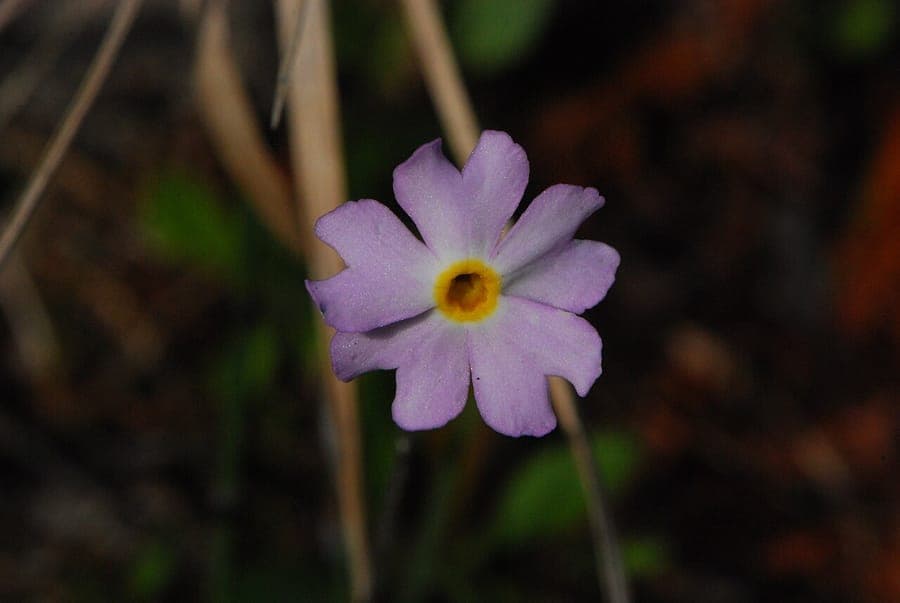
J M from Madison, WI, USA / CC BY-SA 2.0, via Wikimedia Commons
Mistassini Primrose: complete guide
Primula mistassinica
Want to see Mistassini Primrose: complete guide in your garden?
1 minute, no credit card
Overview
Mistassini primrose (Primula mistassinica) is a fully hardy alpine plant in the Primulaceae family, native to North America. Ranging from Alaska through Canada to the northeastern United States, the plant grows at alpine meadows and moist rocky outcrops. The plant reaches only 5-15 cm height, forming compact rosettes. Flowers appear in June and July in pink, red, or white hues with characteristic yellow eyes. This is an exceptionally hardy, challenging alpine preferring moisture-retaining yet well-drained soils.
Appearance and Bloom
Mistassini primrose forms extremely dense, compact rosettes of 6-12 cm diameter. The leaves are characteristically small: approximately 1-2 cm long, spatulate to oblong, dark green. The leaves form dense, dark mats. In June-July, 2-5 flowers appear per plant on short stems (5-10 cm tall). Flowers measure approximately 10-12 mm across, have 5 petals with deep, broad notches, and are pink to red with distinctive yellow or white eyes. A white form also exists naturally. The flowers emit a light fragrance. After flowering, small seed capsules develop.
Ideal Location
Mistassini primrose thrives in full sun to light shade. In gardens: a position with full sun (minimum 6 hours daily) on a north-facing or open site gives best results. The plant tolerates light shade well but grows somewhat more lax there. Wind is beneficial. The plant is sensitive to summer heat; a cool position with consistent moisture is essential.
Soil
Mistassini primrose grows in moisture-retaining yet well-drained alpine soils. In gardens: an ideal mix is 35% alpine grit, 35% coarse sand, 20% garden compost, and 10% leaf mold. The plant also thrives in more acidic soils (pH 5.5-6.5). Heavy clay must be avoided; good drainage is essential. Moisture retention is important; the plant must not dry out completely.
Free design
Want to see Mistassini Primrose: complete guide in your garden? Make a free design now.
Watering
Mistassini primrose requires consistent moisture without waterlogging. This is moisture-retentive but well-drained. During the growing season (May-July), water when the top 1-2 cm feels dry. During summer dormancy (August-September), reduce watering slightly. In winter (October-April), keep relatively dry but ensure the soil never becomes dust-dry. For potted plants, check regularly.
Pruning
Mistassini primrose requires no pruning. The plant naturally assumes a compact form. Spent flowers may be carefully removed after July's bloom. Dead leaves must be promptly removed to prevent botrytis. Seed capsules can be removed after ripening or left to produce seed.
Maintenance Calendar
April-May: Plant emerges from winter dormancy, gradually restore watering. June: Rapid growth and flowering, water consistently. July-August: Peak flowering, continue watering, provide afternoon shade. September-October: Plant transitions to dormancy, reduce watering. November-March: Deep dormancy, keep relatively dry.
Winter Hardiness
Mistassini primrose is fully hardy to USDA Zone 2 (-40 to -45 degrees C). This is the hardiest Primula species for European gardens. The plant overwinters without protection throughout northern Europe. In warm regions (Mediterranean), summer placement in cool shade may be necessary.
Companion Plants
Mistassini primrose grows best with similar bog-alpine species. Other alpine primulas are excellent companions. Small saxifrage species from boggy habitats and dwarf Carex species provide excellent associations. Plant in groups for better impact. Avoid drought-tolerant plants.
Summary
Mistassini primrose is an extremely hardy, challenging alpine requiring consistent moisture and cool conditions. Perfect for cold mountain gardens and alpine troughs. This is for dedicated alpine gardeners in cold climates.
Want to see Mistassini Primrose: complete guide in your garden? Make a free design now.
Upload a photo, pick a style, and get a photorealistic design with plant list in under a minute.
No credit card required


Similar plants
Primula incana: complete guide to silvery alpine primrose
Primula incana
Silvery primrose (Primula incana), a delicate alpine flower with white blooms and powdered grey-green leaves. Growing, care, and cultivation guide.
Mealy cowslip: complete guide
Primula pulverulenta
Grow the Mealy cowslip (Primula pulverulenta): striking candelabra flowers in red and purple tones, moisture-loving and ideal for shady, damp garden corners.
Cliff dwarf-primrose: complete guide
Androsace laevigata
Full guide to growing Androsace laevigata, a rare Pacific Northwest alpine cushion plant. Planting, care, and garden design tips explained.