
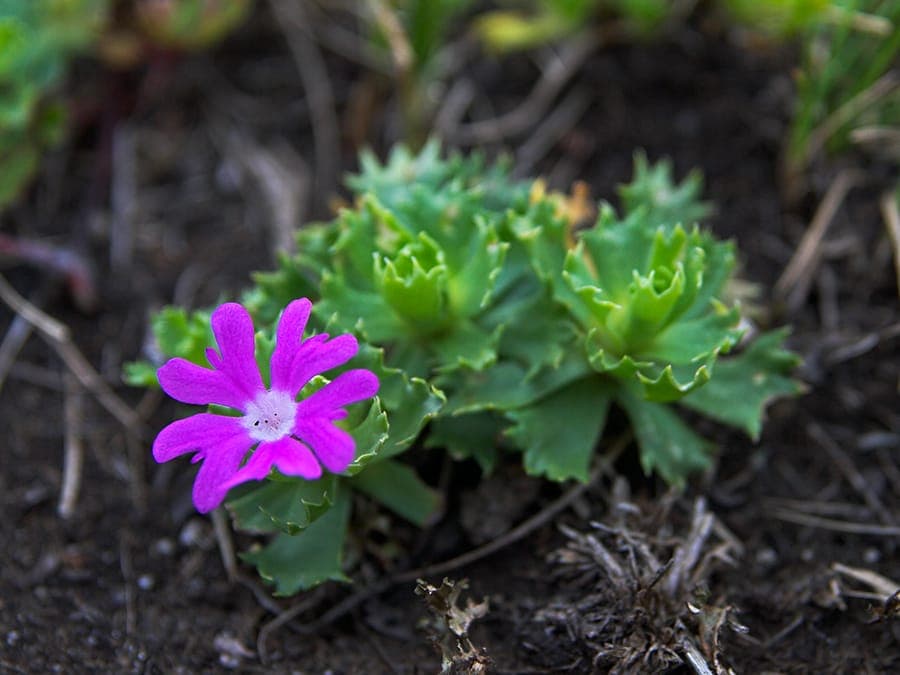
Thomas Huntke, Germany (der Uploader) http://www.huntke.de / CC BY-SA 3.0 de, via Wikimedia Commons
Alpine Primrose (Dwarf Primula): complete guide
Primula minima
Want to see Alpine Primrose (Dwarf Primula): complete guide in your garden?
1 minute, no credit card
Overview
Primula minima is one of the tiniest and hardiest alpine primroses, native to the Alps and Carpathians. This dwarf form (also called Zwerg-Primel in German) grows at high alpine elevations where temperatures drop below -40 degrees Celsius. Despite its miniscule stature (only 5-10 cm tall), Primula minima is a champion of rock gardens and alpine troughs worldwide.
This hardy mountain plant forms tight rosettes of bright green foliage and blooms early in the season, May to June, with tiny pink-red flowers. The plant is long-lived, stable in cultivation, and once well-established, virtually maintenance-free. For alpine plant enthusiasts and rock gardeners, this is an essential treasure.
Appearance & Bloom
Primula minima grows as a low, compact rosette never exceeding 10 cm in height. Leaves are tiny, bright green, spoon-shaped, arranged in dense rosettes. Foliage remains evergreen even in winter, though it becomes somewhat tougher and deep green. With the first warm spring days in May, delicate stems emerge from rosettes, each bearing a single flower.
Flowers are tiny, approximately 1 cm across, pink to red with a yellow eye at the centre. The bloom form is characteristic of Primula with five petals. Flowers persist for several weeks. After bloom, seed capsules form, though vegetative multiplication via rosette offsets is more reliable and faster.
Ideal Location
Primula minima thrives in full sun to light dappled shade in alpine or rock garden situations. The plant loves fresh air and good circulation, so avoid warm, still corners. A raised stone bed or alpine trough is perfect. The plant cannot tolerate waterlogged positions.
East or north exposure is preferable to full afternoon sun, especially in warm climates. The plant is often grown in crevices and wall situations where stone absorbs and releases heat. Ensure good ventilation around the plant to prevent fungal diseases and rot.
Soil
Thorough drainage is essential. Primula minima cannot tolerate waterlogged root zones. A mixture of alpine grit, sharp sand, compost, and peat (approximately 30 per cent peat, 40 per cent grit, 20 per cent sand, 10 per cent compost) is ideal. Soil pH can be neutral to slightly acidic (pH 6.5-7.0).
No animal manure is needed; plant-based compost suffices. The plant thrives in lean soils more than rich ones. Once yearly after bloom, a slow-release mineral feed may be applied, but is unnecessary with a well-composed soil medium.
Free design
Want to see Alpine Primrose (Dwarf Primula): complete guide in your garden? Make a free design now.
Watering
Watering must be careful. Primula minima loves moist yet well-drained substrate. Water when the top layer feels dry, usually every three to four days during the growing season. In winter, virtually no supplementary water is needed except during very dry spells.
Never allow the plant to dry completely, and never water over the rosette as fungal diseases may develop. For pot-grown plants, use alpine potting mix with extra grit, not standard compost. Self-watering pots can be useful for frequent travellers.
Pruning
Pruning is virtually unnecessary. Remove only faded flowers and dead leaves to keep the plant tidy. When rosettes become too large or the centre opens (after 4-5 years), they may be carefully divided. This is the best time to separate young plantlets from the mother rosette and pot them individually.
Oldening rosettes may develop a hollow centre; this is normal and not a disease sign. Small shoots appearing around the mother plant can be carefully removed and propagated as cuttings.
Maintenance Calendar
March: Plant inspection, gentle watering cycle begins. April: Begins blooming, monitor regularly. May-June: Peak bloom, remove faded flowers. July-September: Post-bloom, gradually reduce water. October-February: Winter dormancy, minimal water, frost protection.
Winter Hardiness
Primula minima is hardy to -40 degrees Celsius, which is exceptional. This represents USDA Zone 3 and below. However, the plant fears wet more than frost. In very wet winters, rot can occur. Good drainage and ventilation are more critical than frost protection.
In northern Europe, this plant is virtually immune to frost damage. A light roof overhang in extremely wet weather may help, but is rarely necessary. For pot cultivation, containers may be sheltered under a dry eaves as a precaution.
Companion Plants
Primula minima pairs beautifully with other alpines from the same habitat: Saxifraga species, Sedum alpinum, Silene acaulis, Armeria alpina, and other compact forms. Also excellent with tiny alpine grasses like Festuca ovina glauca. Avoid large, vigorous growers that would shade it out.
In a rock garden, it works superbly with other small mountain plants. Position it high where tiny flowers are visible and appreciated.
Conclusion
Primula minima is an absolute must for the dedicated alpine plant lover. Extremely small, extraordinarily hardy, and with pretty spring bloom, it requires minimal care once well-established. Sow or plant in May and enjoy decades of alpine joy.
Available from specialist alpine nurseries, seed companies, or online alpine plant merchants. Best planted May-June after last frost.
Want to see Alpine Primrose (Dwarf Primula): complete guide in your garden? Make a free design now.
Upload a photo, pick a style, and get a photorealistic design with plant list in under a minute.
No credit card required


Similar plants
Primula incana: complete guide to silvery alpine primrose
Primula incana
Silvery primrose (Primula incana), a delicate alpine flower with white blooms and powdered grey-green leaves. Growing, care, and cultivation guide.
Mealy cowslip: complete guide
Primula pulverulenta
Grow the Mealy cowslip (Primula pulverulenta): striking candelabra flowers in red and purple tones, moisture-loving and ideal for shady, damp garden corners.
Cliff dwarf-primrose: complete guide
Androsace laevigata
Full guide to growing Androsace laevigata, a rare Pacific Northwest alpine cushion plant. Planting, care, and garden design tips explained.