
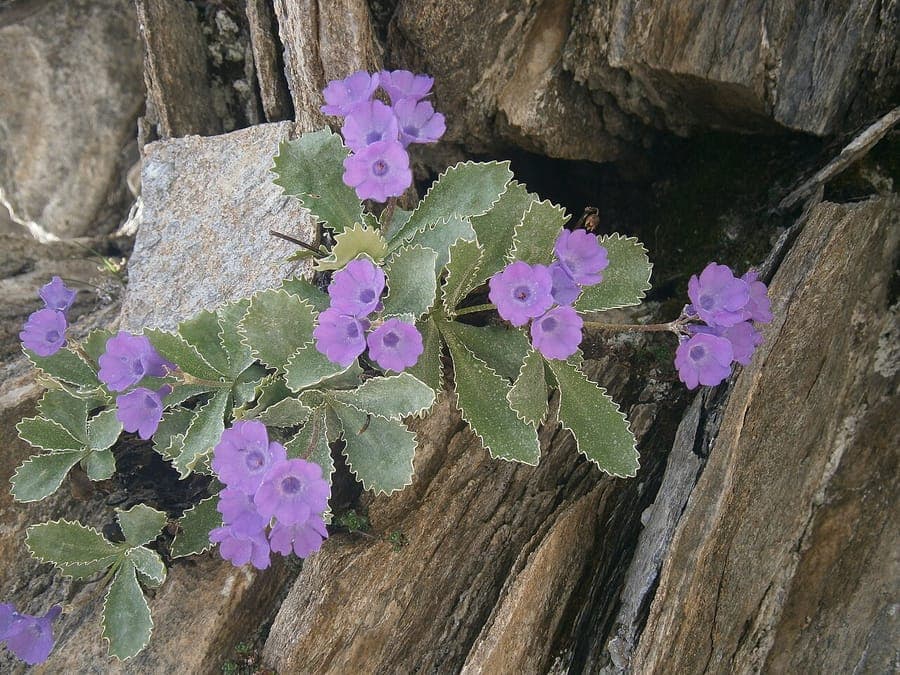
Meneerke bloem / CC BY-SA 3.0, via Wikimedia Commons
Primula marginata: complete guide
Primula marginata
Want to see Primula marginata: complete guide in your garden?
1 minute, no credit card
Overview
Primula marginata, commonly known as the Margined Primrose, is a striking alpine perennial that brings both texture and color to small-scale gardens. Native to the southern Alps of France and Italy, this plant thrives in well-drained, calcareous soils and sunny to lightly shaded spots. Reaching only 15–20 cm in height, it forms dense, creeping rosettes with distinctive silvery-edged leaves and rich purple flowers from June to July. It's a standout in rock gardens, crevices, and alpine beds.
Hardy down to -20°C (USDA zone 5), Primula marginata handles cold winters with ease, especially when planted in sheltered spots. One of the quiet strengths of this plant is its evergreen foliage, which remains present through winter, offering structure when little else is green. If you're planning a low-maintenance alpine display, gardenworld.app lets you design a layout that highlights the seasonal rhythm of plants like Primula marginata.
Appearance & bloom cycle
The defining feature of Primula marginata is its dark green, spoon-shaped leaves rimmed with a dramatic silvery-white, frilly edge. These form tight basal clumps about 20–25 cm wide. In early summer, slender flowering stems rise to 15–20 cm, topped with umbel-like clusters of deep purple, star-shaped flowers. The blooms can appear almost violet in full sun and soften to a dusky pink in shade.
Flowering begins in June and continues into late July. While not long-lasting, the bloom period is reliable and coincides with a quieter phase in many gardens, making it a valuable addition. The flowers attract pollinators like bumblebees and hoverflies. After blooming, stems fade, but the foliage persists, slowly expanding each year through gentle self-division.
Ideal location
Full sun to partial shade is ideal. In the UK and similar climates, a south- or east-facing slope or wall crevice works best. Avoid deep shade, which leads to weak growth and sparse flowering. The plant enjoys warmth but benefits from light afternoon protection in hotter summers.
Good air circulation is essential-stagnant, humid air encourages fungal issues. Plant it in a rock garden, on a raised bed, or tucked into a stone wall. These microclimates provide drainage and thermal mass. Use gardenworld.app to test different garden zones and plant groupings before placing your Primula marginata where it will thrive.
Soil requirements
This primrose needs sharp drainage and lime-rich soil. A mix of loam, grit, and crushed limestone or chalk gravel ensures the right structure and pH (7.0–7.8). Heavy clay or water-retentive soils are a no-go-they lead to root rot.
When planting, amend the soil with a generous handful of horticultural lime or crushed oyster shell. In containers, use a gritty alpine mix with added perlite or pumice. Avoid peat-based composts, which hold too much moisture and acidify over time.
Free design
Want to see Primula marginata: complete guide in your garden? Make a free design now.
Watering
Once established, Primula marginata is surprisingly drought-tolerant. However, during its first growing season and active bloom period (May–July), it benefits from consistent but moderate watering. Let the soil dry slightly between waterings-never allow it to sit in wetness.
Use rainwater when possible, as tap water can build up salts and affect soil pH. In dry spells, a weekly soak is enough. Avoid overhead watering in humid weather to prevent fungal leaf spots.
Pruning
Minimal pruning is needed. Deadhead spent flower stems to keep the plant tidy and redirect energy. Snip them off at the base with clean scissors. Remove any damaged or yellowing leaves in spring, but leave healthy foliage intact-it supports next year's growth.
Do not cut into the crown, as this can damage the plant. Light grooming is all it takes to maintain its compact form.
Maintenance calendar
- Jan: Check for frost heave; protect young plants with dry mulch.
- Feb: No action needed; ensure drainage is clear.
- Mar: Remove old leaves, inspect for aphids.
- Apr: Apply light lime-rich fertilizer as growth resumes.
- May: Water regularly if dry; watch for slugs.
- Jun: Flowers emerge; maintain even moisture.
- Jul: Peak bloom; deadhead regularly.
- Aug: Reduce watering; avoid fertilizing.
- Sep: Monitor for leaf spot in wet weather.
- Oct: Leave foliage; no pruning.
- Nov: Protect container plants from freezing.
- Dec: Dormant; minimal care.
Winter hardiness
Hardy to USDA zone 5 (-20°C), Primula marginata overwinters well in most temperate climates. In gardens, it usually survives unprotected, especially in well-drained sites. Young or newly planted specimens benefit from a light winter mulch of dry bracken or straw-but never wet covers.
In pots, move containers to a cold frame or against a sheltered wall. Elevate them on feet and wrap with bubble wrap in severe cold. Avoid moisture buildup, which is more dangerous than frost.
Companion plants
Pair Primula marginata with other alpine specialists: Sedum spurium, Thymus praecox, Dianthus gratianopolitanus, or small Allium species. These share similar soil and moisture needs. Silver-foliaged plants like Artemisia or Stachys byzantina offer beautiful contrast.
Avoid vigorous spreaders like mint or ground ivy. Stick to low, slow growers that won't overwhelm this delicate primrose. A gravel garden with dwarf conifers or creeping phlox also works well.
Closing
Primula marginata is a refined, underused gem for gardeners who appreciate subtle beauty and year-round structure. With sharp drainage, full sun, and a touch of lime, it rewards with reliable summer blooms and evergreen charm. Pick one up at your local garden centre in spring-it's often sold in alpine sections. And when you're ready to plan your rock garden, gardenworld.app helps you visualise combinations that bring out the best in plants like this alpine primrose.
Want to see Primula marginata: complete guide in your garden? Make a free design now.
Upload a photo, pick a style, and get a photorealistic design with plant list in under a minute.
No credit card required


Similar plants
Primula incana: complete guide to silvery alpine primrose
Primula incana
Silvery primrose (Primula incana), a delicate alpine flower with white blooms and powdered grey-green leaves. Growing, care, and cultivation guide.
Mealy cowslip: complete guide
Primula pulverulenta
Grow the Mealy cowslip (Primula pulverulenta): striking candelabra flowers in red and purple tones, moisture-loving and ideal for shady, damp garden corners.
Cliff dwarf-primrose: complete guide
Androsace laevigata
Full guide to growing Androsace laevigata, a rare Pacific Northwest alpine cushion plant. Planting, care, and garden design tips explained.