
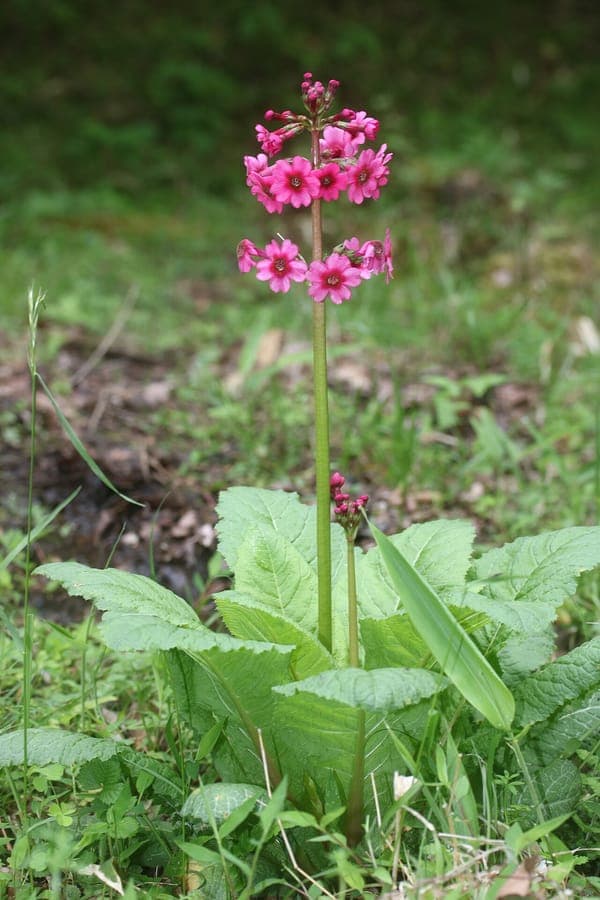
Alpsdake / CC BY-SA 4.0, via Wikimedia Commons
Primula japonica: complete guide
Primula japonica
Want to see Primula japonica: complete guide in your garden?
1 minute, no credit card
Overview
Primula japonica, also known as Japanese cowslip or Japanese primrose, is a beautiful perennial native to Japan and the Kuril Islands. This plant is renowned for its distinctive tiered flower spikes with blooms in yellow, red, pink, or white. It's an ideal choice for moisture-loving gardens, water features, and shaded plantings. The plant grows vertically and compactly, making it suitable for borders around water gardens.
Appearance & Bloom
Japanese primrose is a stately perennial reaching 30-60 cm in height. The leaves are elongated, green, and form an attractive rosette. The most striking feature is the tiered flower spikes (candelabra) that extend vertically, with flowers in rings blooming from bottom to top. The flowers can be yellow, pink, red, or cream-colored, depending on the cultivar. The blooming period runs from May to July, creating a spectacular color display.
Ideal Location
Japanese primrose grows best in partial shade but can also thrive in full shade if light is sufficient. Full sun is unsuitable as foliage yellows and flowers wilt. The plant thrives along water margins, in boggy areas, and damp, woodland settings. Place this plant where it receives 2-4 hours of indirect light. Provide protection from intense midday sun.
Soil
Essential is a very moist, humus-rich soil. Japanese primrose requires constantly moist soil without waterlogging. Add generous amounts of leaf mold or garden compost to your planting hole. The plant prefers acidic to neutral soils (pH 5.5-7.0). In dry soils, the plant will suffer greatly. Ideal is a bog-type soil with plenty of organic matter and nutrients.
Free design
Want to see Primula japonica: complete guide in your garden? Make a free design now.
Watering
Watering is critical and continuous. Keep the soil consistently moist but not waterlogged. During the growing season (April-October), water regularly, especially in dry periods. Mulch around the plant with 5 cm of leaf mold to improve moisture retention. In winter, you can water slightly less, but it remains important that soil doesn't dry out.
Pruning
Japanese primrose requires minimal pruning. Remove spent flowers after blooming to encourage secondary flowering. Remove yellowed or damaged leaves. After blooming, entire flower spikes can be removed if they become unsightly. The plant self-seeds, so if you want to prevent self-seeding, remove seed heads.
Maintenance Calendar
Spring: Plant out or divide existing plants. Add leaf mold as soil amendment. Summer: Water regularly, fertilize as needed. Autumn: Leave seed heads for birds, divide plants if desired. Winter: Protect with leaf mold, minimize watering.
Winter Hardiness
Primula japonica is moderately hardy, suitable for USDA zones 5-8 (-25 to -15 degrees Celsius). In the Netherlands and Belgium, the plant can remain outdoors, but a layer of leaf mold helps against extreme frost. The plant is cold-resistant, but its moisture preference can lead to rot problems in wet winters. Ensure good drainage of excess water.
Companion Plants
Japanese primrose combines beautifully with other moisture-loving plants such as astilbe, rodgersia, and hostas. Pair with helleborus and heuchera for shade plantings. Find more plant combinations for bog gardens on gardenworld.app. These primulas also work well with fragrant cowslip and marsh marigold.
Closing
Japanese primrose is an elegant, moisture-loving perennial ideal for shaded gardens near water. With regular maintenance, this beautiful primula blooms for years. Available at major garden centers. Discover more plant guides on gardenworld.app.
Want to see Primula japonica: complete guide in your garden? Make a free design now.
Upload a photo, pick a style, and get a photorealistic design with plant list in under a minute.
No credit card required


Similar plants
Primula incana: complete guide to silvery alpine primrose
Primula incana
Silvery primrose (Primula incana), a delicate alpine flower with white blooms and powdered grey-green leaves. Growing, care, and cultivation guide.
Mealy cowslip: complete guide
Primula pulverulenta
Grow the Mealy cowslip (Primula pulverulenta): striking candelabra flowers in red and purple tones, moisture-loving and ideal for shady, damp garden corners.
Cliff dwarf-primrose: complete guide
Androsace laevigata
Full guide to growing Androsace laevigata, a rare Pacific Northwest alpine cushion plant. Planting, care, and garden design tips explained.