
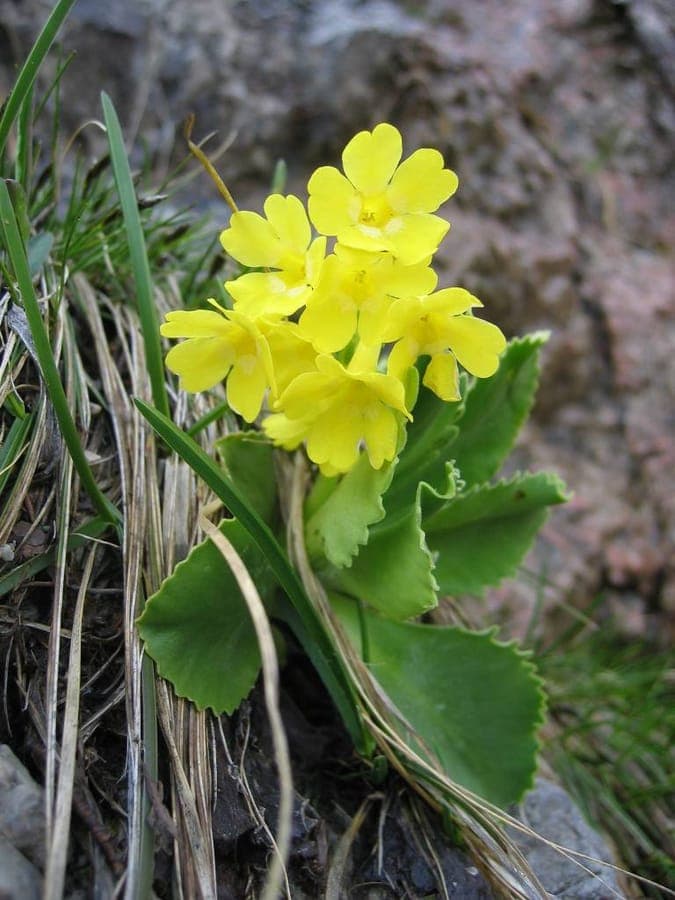
Wikimedia Commons / CC BY-SA 3.0, via Wikimedia Commons
Auricula: complete guide
Primula auricula
Want to see Auricula: complete guide in your garden?
1 minute, no credit card
Overview
Primula auricula, commonly known as Auricula, is a charming perennial from the Primulaceae family, native to the alpine regions of Central Europe - Austria, Switzerland, France, and Italy among them. This compact plant, reaching just 10 to 15 cm in height, has been cultivated for centuries, especially in British horticultural circles where specialist shows still celebrate unique cultivars. On gardenworld.app you can design a garden layout that highlights the early charm of this spring bloomer.
What makes the Auricula stand out is its resilience in small-scale environments. It forms tight rosettes of fleshy, dark green leaves and produces cheerful, funnel-shaped flowers in early spring. Its compact size and early bloom make it a favorite for rockeries, troughs, and even alpine windowsill gardens.
Despite its delicate look, it's a tough little plant when grown under the right conditions. And with gardenworld.app, you can explore creative planting combinations that bring out the best in Primula auricula's vibrant hues and tidy form.
Appearance & bloom cycle
Auricula blooms from February to April, depending on the region and microclimate. The flowers are typically a bright yellow to deep orange, often with a contrasting dark central 'eye' - a feature prized by collectors. Each bloom cluster holds 3 to 8 flowers on short stems no taller than 20 cm.
The leaves are oval to rounded, 5–8 cm long, slightly fuzzy, and arranged in a dense basal rosette. They remain evergreen through winter, making the plant visually interesting even when not in bloom. Some varieties have a powdery bloom (farina) on the leaves, giving them a silvery sheen - a natural defense against sun and moisture.
The bloom cycle is tightly linked to temperature. In mild zones, flowering starts as early as late January. Once pollinated, the plant may set seed, but most gardeners deadhead to conserve energy.
Ideal location
Auricula prefers partial shade with morning sun and afternoon shade - think east-facing walls or under light canopy. Full, hot sun, especially in summer, can scorch the leaves and dry out the plant too quickly.
In its natural habitat, it grows on limestone cliffs and rocky outcrops, often shaded by overhanging rocks. Mimicking this in your garden means providing a well-ventilated spot with protection from heavy rain. For container growing, a north- or east-facing windowsill works well.
Avoid deep shade or areas with poor air circulation. Damp, stagnant air encourages fungal diseases like powdery mildew, which Auricula can be prone to.
Soil requirements
This plant thrives in sharply drained, slightly alkaline soil. A gritty mix works best - aim for 2 parts loam-based compost, 1 part coarse sand, and 1 part crushed limestone or grit. Avoid peat-heavy mixes, as they retain too much moisture and acidify over time.
For container plants, use a well-draining alpine mix. Add a small amount of lime to maintain pH between 6.5 and 7.5. Heavy clay or waterlogged soils will lead to root rot - a common cause of failure.
Ensure pots have generous drainage holes. A layer of gravel or broken pottery at the base improves water flow.
Free design
Want to see Auricula: complete guide in your garden? Make a free design now.
Watering
Water carefully. Auricula dislikes sitting in wet soil, especially in winter. Water only when the top inch of soil feels dry. During active growth (February to April), maintain slightly moist conditions.
Use rainwater if possible - tap water with high calcium content can build up and harm the roots over time. Avoid overhead watering; instead, water at the base to keep foliage dry and reduce fungal risk.
During summer dormancy, reduce watering to once every 7–10 days, depending on rainfall and container size.
Pruning
Pruning is minimal. After flowering, remove spent flower stems at the base to prevent seed formation and keep the plant tidy. Also remove any damaged or yellowing leaves, especially in late spring.
Never cut into the crown - this is where new growth emerges. Use clean, sharp tools to prevent disease spread. Regular grooming helps improve airflow and reduces fungal issues.
Maintenance calendar
- January: Check for new buds, keep dry
- February: Begin light watering as growth resumes
- March: Maintain consistent moisture, watch for pests
- April: Deadhead spent blooms, reduce water after flowering
- May: Move containers to partial shade, reduce watering
- June–August: Dormant - water sparingly, no fertiliser
- September: Inspect for new growth, repot if needed
- October: Keep dry, protect from heavy rain
- November: Minimal care, avoid overwatering
- December: Dormant - keep cool and dry
Winter hardiness
Auricula is hardy in USDA zones 3 to 7. In zones 8 and above, it can survive but may struggle with wet winters. The real danger isn't cold - it's wet foliage during freeze-thaw cycles.
For container plants, elevate pots to prevent waterlogging. Use breathable materials like terracotta. In harsh winters, move pots against a sheltered wall or under eaves.
In-ground plants need sharp drainage and a mulch of gravel or grit to keep moisture off the crown. Avoid organic mulches that hold water.
Companion plants
Pair Auricula with other alpine specialists: Saxifraga, Sempervivum, Thymus, or small bulbs like Chionodoxa. These share similar needs - good drainage, light shade, and minimal feeding.
Great combinations include Auricula with Pulmonaria for leaf contrast, or with dwarf irises for extended bloom time. In a trough, arrange in groups of three for a natural look.
Avoid aggressive spreaders or moisture-loving plants that could overshadow or outcompete Auricula.
Closing
Primula auricula is a rewarding plant for gardeners who appreciate subtle beauty and early color. With proper placement and care, it can thrive for years in containers or crevices. Its early bloom lifts the winter garden, and its tidy form adds structure.
Look for specialist varieties at garden centres, especially in late winter. Retailers like OBI and Hornbach in Germany or Truffaut in France often stock unique cultivars. In the UK, independent nurseries and shows are excellent sources.
For layout inspiration, visit gardenworld.app - whether you're designing a miniature rock garden or a sunny windowsill display, this platform helps you place Auricula where it shines.
Want to see Auricula: complete guide in your garden? Make a free design now.
Upload a photo, pick a style, and get a photorealistic design with plant list in under a minute.
No credit card required


Similar plants
Primula incana: complete guide to silvery alpine primrose
Primula incana
Silvery primrose (Primula incana), a delicate alpine flower with white blooms and powdered grey-green leaves. Growing, care, and cultivation guide.
Mealy cowslip: complete guide
Primula pulverulenta
Grow the Mealy cowslip (Primula pulverulenta): striking candelabra flowers in red and purple tones, moisture-loving and ideal for shady, damp garden corners.
Cliff dwarf-primrose: complete guide
Androsace laevigata
Full guide to growing Androsace laevigata, a rare Pacific Northwest alpine cushion plant. Planting, care, and garden design tips explained.