
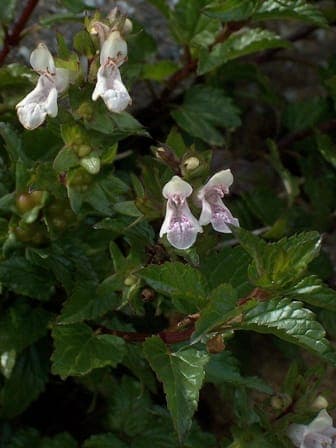
Laura Morelli / CC BY-SA 3.0, via Wikimedia Commons
Mediterranean Prasium: complete guide
Prasium majus
Want to see Mediterranean Prasium: complete guide in your garden?
1 minute, no credit card
Overview
Prasium majus, commonly known as Mediterranean Prasium, is a robust evergreen shrub from the Lamiaceae (mint) family. Native to the Mediterranean basin from the Canary Islands to Turkey, this plant combines elegance with exceptional hardiness. Reaching 80-120 cm in height, it produces delicate white flowers in May-June and offers year-round architectural interest with its grey-green foliage.
Despite its Mediterranean origins, Prasium majus thrives in northern European gardens, making it an ideal choice for gardeners seeking Mediterranean authenticity without excessive fussiness. The plant's value lies not just in its aesthetic appeal but in its remarkable resilience to drought, poor soil, and neglect once established.
Appearance & Bloom
This shrub develops into a compact, upright specimen with fine-textured evergreen foliage. Leaves are small to medium (3-4 cm), slightly hairy, grey-green, and emit a subtle, pleasant fragrance when crushed. The overall habit remains dignified throughout the year, though winter colour deepens somewhat.
Florets appear from April onwards, reaching peak abundance in May-June. The distinctive two-lipped flowers of the Lamiaceae family are white or very pale pink, arranged in terminal spikes that attract bees and butterflies with ease. Flowers are followed by small seed capsules. Even after bloom, the plant maintains attractive form through October; winter dormancy is incomplete, leaving the structure visible and useful in design.
Ideal Location
Prasium majus demands full sun to part shade, with a minimum of six hours of direct sunlight daily for optimal flowering and compact growth. In hot Mediterranean climates, afternoon shade in peak July-August heat is acceptable and sometimes beneficial.
This is not a plant for wet, shaded, or boggy positions. Position it on warm, south-facing slopes, against warm sun-reflecting walls, or in well-drained raised beds. The plant excels in Mediterranean borders, gravel gardens, and steppe-like plantings. Exposed, windswept sites are tolerated well.
Soil
Soil demands are minimal. The plant accepts virtually all well-draining soil types, from sandy to gravelly loams. Heavy clay soils must be amended with sand, grit, or garden compost to ensure drainage. Optimal soil pH is 7.0-7.5 (neutral to alkaline).
Prasium majus is extremely tolerant of poor, infertile soil. Add compost when planting for soil structure, but avoid nitrogen excess, which promotes weak, sappy growth. Once established, the plant needs virtually no feeding. An annual mulch of coarse sand or fine gravel maintains even moisture and supports hardiness.
Free design
Want to see Mediterranean Prasium: complete guide in your garden? Make a free design now.
Watering
Once established (after year one), Prasium majus is highly drought-tolerant. During the growing season (April-October), water moderately, approximately twice weekly in dry spells. Avoid overwatering; the plant dislikes excessive moisture.
During winter, almost no water is required. In regions with wet winters, ensure excellent drainage around the plant base. Container-grown plants need more consistent moisture than ground plantings, but should never be waterlogged.
Pruning
Prasium majus responds well to pruning and becomes fuller and more compact with regular attention. After bloom (July-August), lightly trim flowering tips to maintain shape. For an upright form, retain central stems; for a broader habit, encourage side shoots.
Light winter pruning to remove dead or damaged wood is beneficial, though heavy autumn cutting can cause frost damage. An annual maintenance prune in late spring (March-April) prevents legginess and excessive woodiness. Complete rejuvenation is rarely necessary.
Maintenance Calendar
March: Light pruning, inspect plant health. April: Planting season begins, light feeding. May-June: Peak bloom, monitor for drought stress. July-August: Opportunity for light formative pruning. September-October: Supply water during dry periods. November-March: Winter dormancy, minimal intervention.
Winter Hardiness
Prasium majus is fully hardy to USDA Zone 8 (minimum -12 C), and usually Zone 7. In very cold climates (Zone 6 and colder), protect with a leaf or straw mulch, though severe frost damage is unlikely. Snow loading is tolerated well.
In mild winters (Zones 8-9), the plant often remains 100 per cent green. In Zone 7, some leaf drop may occur, but regrowth is rapid in spring. Cold, wet winters pose more risk than pure frost.
Companion Plants
Prasium majus pairs beautifully with drought-tolerant Mediterranean herbs and shrubs such as lavender (Lavandula), sage (Salvia), santolina, and cistus. Also excellent with grasses like feather reed (Stipa) and native flowering plants. For colour contrast, combine with dark-leaved sedums.
In less sunny spots, it works well with snowberry (Symphoricarpos), dwarf barberry, and ferns. Ensure neighbouring plants do not demand excessive moisture, maintaining good water balance.
Conclusion
Prasium majus is an underrated, foolproof choice for Mediterranean or dry gardens. Winter-hardy, spring-flowering, and structurally valuable year-round, it fills an important niche. Plant this Mediterranean beauty this spring and enjoy years of effortless garden pleasure.
Available at specialist garden centres and Mediterranean plant nurseries. In the UK: major garden centres with Mediterranean sections. Best planted May-June for establishment.
Want to see Mediterranean Prasium: complete guide in your garden? Make a free design now.
Upload a photo, pick a style, and get a photorealistic design with plant list in under a minute.
No credit card required


Similar plants
Apple mint (Mentha x villosa): complete guide
Mentha x villosa
Meet apple mint (Mentha x villosa): a fruity-scented kitchen herb with woolly leaves, perfect for tea and mojitos.
Salvia peyronii: complete guide
Salvia peyronii
Discover Salvia peyronii, a rare Lebanese mountain sage. Growing tips, hardiness, and companion planting for a Mediterranean gravel garden.
Bigleaf mint (Mentha x rotundifolia): complete guide
Mentha x rotundifolia
Discover bigleaf mint: cultivation, care tips, and garden uses. Learn how to grow this aromatic herb with soft, hairy leaves.