
Olivier Pichard / CC BY-SA 3.0, via Wikimedia Commons
European fivefinger: complete guide
Potentilla reptans
Want to see European fivefinger: complete guide in your garden?
1 minute, no credit card
Overview
Potentilla reptans, commonly known as European fivefinger, is a creeping perennial herb that forms a dense, low carpet across the soil. Native to much of Europe, North Africa, and parts of Western Asia, it naturally grows along woodland edges, footpaths, and dry grasslands. In the UK and wider Europe, it's often dismissed as a weed, but in the right garden setting, it's an excellent, resilient ground cover. The plant spreads via stolons-horizontal stems that root at the nodes-allowing it to establish stable mats over time. It's evergreen in milder climates, retaining most of its foliage through winter. Reaching only 5–10 cm in height, it's ideal for spaces where you want ground cover without bulk.
On gardenworld.app you can design a planting scheme that integrates European fivefinger seamlessly, especially in areas where you need a natural, low-effort ground cover that thrives in partial shade.
Appearance & bloom cycle
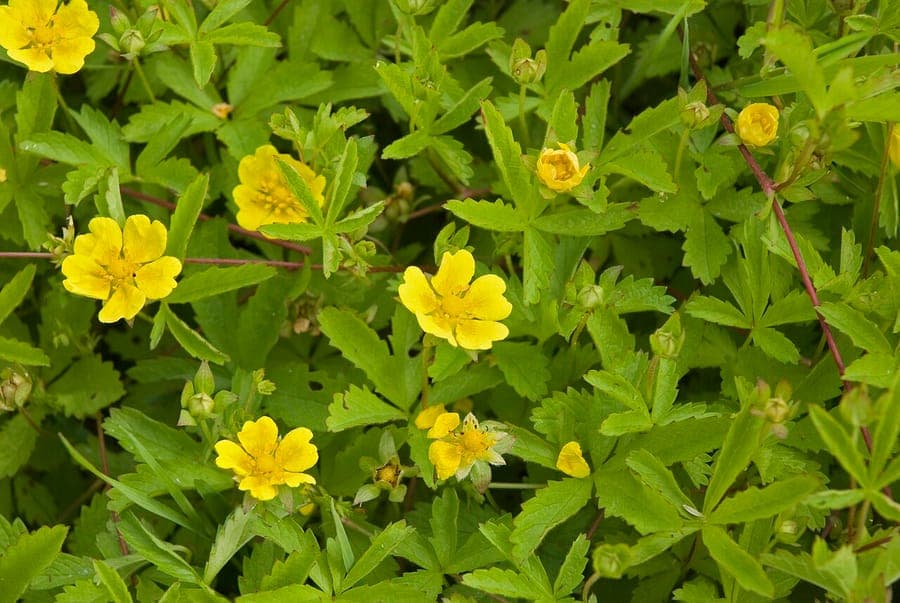
The plant gets its name from its distinctive leaves: five narrow, finger-like leaflets arranged in a palmate pattern, resembling an open hand. The foliage is mid-green, slightly hairy, and stays close to the ground. Flowers emerge from June through October, peaking in July and August. Each bloom is bright yellow, about 1.5–2 cm wide, with five petals and a cluster of yellow stamens in the center. They sit atop slender stalks just above the leaf canopy, creating a cheerful, scattered effect across the planting area. While not strongly scented, the flowers attract hoverflies, bees, and small butterflies-making this a valuable plant for pollinator support.
Ideal location
European fivefinger thrives in full sun to light shade, ideally at a light level of 7 out of 10. In full sun (8–9), it blooms more profusely but may dry out in prolonged droughts. In deep shade (below 4), it becomes leggy and blooms sparsely. A spot with morning sun and afternoon shade works best. It's hardy in USDA zones 4–8, making it suitable for most temperate climates. Avoid deep shade under dense evergreens or heavily compacted soils.
Soil requirements
It prefers well-drained, neutral to slightly alkaline soils with a pH between 7.0 and 7.5. It grows well in loam, sandy loam, or humus-rich soils. Avoid heavy clay or constantly waterlogged conditions. While tolerant of moderate drought once established, it performs better with consistent moisture. Amend the soil with well-rotted compost at planting to improve structure and nutrient availability.
Free design
Want to see European fivefinger: complete guide in your garden? Make a free design now.
Watering
During the first 6–8 weeks after planting, water weekly during dry spells. Once established, the plant is drought-tolerant and rarely needs supplemental water. In extended dry summers, a light watering every 10–14 days helps maintain vigor, especially for younger plants. Rainwater is preferred, as tap water with high lime content can gradually affect soil pH over time.
Pruning
Pruning isn't required, but you can tidy up old or damaged foliage in early spring (March–April). Use clean, sharp shears to avoid tearing the stolons. If the plant spreads too aggressively, trim back the outer edges or install a root barrier. Avoid heavy shearing, as it may reduce flowering.
Maintenance calendar
- Jan: inspect for frost damage, remove any compacted snow
- Feb: no action needed
- Mar: cut back old growth, check for new stolon development
- Apr: apply a thin layer of compost, monitor for slug activity
- May: watch for slugs on new leaves, ensure even moisture
- Jun: flowering begins, check soil moisture in sunny spots
- Jul: peak bloom, light watering in prolonged dry spells
- Aug: continue monitoring for drought stress
- Sep: leave spent flowers for seed-eating insects
- Oct: allow plant to die back naturally, no cutting
- Nov: minimal care, let leaf litter accumulate
- Dec: check for winter heave, protect young plants if exposed
On gardenworld.app you can generate a custom maintenance calendar tailored to your garden's microclimate, with reminders for watering, pruning, and seasonal checks for European fivefinger.
Winter hardiness
Hardy in USDA zones 4–8, Potentilla reptans survives winter without protection. Foliage remains mostly green, though it may bronze in harsh winters. No mulching is required, but in areas with heavy winter wetness, ensure good drainage to prevent root rot. The plant rebounds quickly in spring.
Companion plants
Pair European fivefinger with other low-growing perennials like Ajuga reptans, Geranium macrorrhizum, or Tiarella cordifolia. It works well under deciduous shrubs or at the front of borders. Avoid planting near aggressive spreaders like mint or bishop's weed. Good companions include Helleborus, Alchemilla mollis, and small ferns like Dryopteris filix-mas. The creeping habit helps suppress weeds but may overwhelm seedlings.
Closing
European fivefinger isn't flashy, but it's dependable. Its long bloom season, resilience, and ecological benefits make it a smart addition to low-maintenance gardens. Buy healthy plants from garden centres in spring, particularly those specialising in native or ground cover plants. With minimal care and the right placement, Potentilla reptans will form a living carpet that returns year after year. For inspiration, check local suppliers like OBI or Hornbach in Germany, Truffaut in France, or well-stocked garden centres across the UK.
Want to see European fivefinger: complete guide in your garden? Make a free design now.
Upload a photo, pick a style, and get a photorealistic design with plant list in under a minute.
No credit card required


Similar plants
Siberian crab apple: complete guide
Malus x robusta
Complete guide to the Siberian crab apple (Malus x robusta): location, soil, pruning, winter hardiness and the best companion plants for your garden.
Chinese flowering crabapple (Malus x spectabilis): complete guide
Malus x spectabilis
Meet the Chinese flowering crabapple (Malus x spectabilis): a classic spring bloomer with carmine buds and pink blossom.
Potentilla crassinervia: complete guide
Potentilla crassinervia
Potentilla crassinervia, the Corsican cinquefoil, grows wild on Corsica and Sardinia's peaks. Discover how to grow this hardy alpine rock garden gem.