
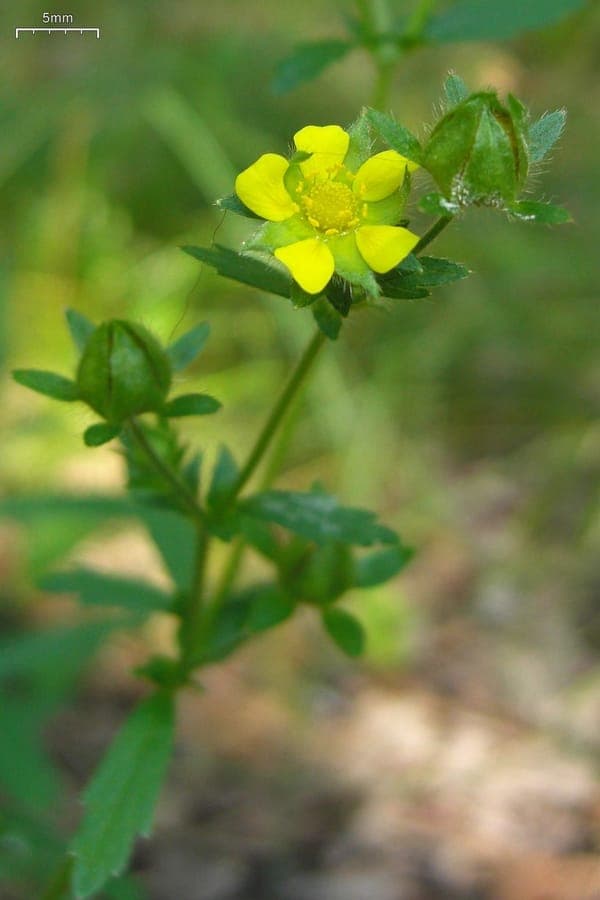
pellaea / CC BY 2.0, via Wikimedia Commons
Ternate-leaf cinquefoil: complete guide
Potentilla norvegica
Want to see Ternate-leaf cinquefoil: complete guide in your garden?
1 minute, no credit card
Overview
Ternate-leaf cinquefoil (Potentilla norvegica) is an herbaceous forb in the Rosaceae family, native to regions stretching from Alaska to the Baltic States and parts of Central Europe. Though often overlooked, this plant brings subtle charm and ecological value to gardens. It's typically an annual or short-lived biennial, reaching heights between 30 and 60 cm, with an upright, branching habit. While not as flamboyant as some garden stars, its resilience and adaptability make it a smart choice for low-intervention landscapes.
This cinquefoil thrives in disturbed soils, roadsides, and open fields - conditions that many cultivated plants struggle with. In garden settings, it fits perfectly into wildflower meadows, gravel gardens, or naturalistic planting schemes. If you're designing a drought-prone border, consider using gardenworld.app to build a layout where Ternate-leaf cinquefoil plays a supporting yet essential role.
Appearance & bloom cycle
The plant features deeply divided, ternate (three-parted) or occasionally five-parted leaves with a slightly hairy texture. The foliage ranges from bright green to a soft grey-green, creating a fine-textured backdrop in planting beds. Stems are erect and can branch multiple times, giving the plant an airy, open look.
Flowers appear from June through September, peaking in midsummer. Each bloom is small - about 1 to 1.5 cm across - with four bright yellow petals, which distinguishes it from most other Potentilla species that typically have five. The center is filled with numerous yellow stamens, attracting hoverflies, small bees, and other pollinators. After flowering, dry achenes form and disperse easily by wind or wildlife.
Ideal location
Ternate-leaf cinquefoil prefers full sun to light shade, scoring about 7 out of 10 on the light scale. It performs best in open, unshaded areas where it receives at least 6 hours of direct sunlight daily. Ideal spots include the front of sunny borders, rock gardens, or dry slopes. It also adapts well to container gardening, provided the pot has excellent drainage.
Avoid heavily shaded areas or spots under dense tree canopies, as this leads to leggy growth and fewer blooms. For gardeners aiming for a naturalistic look, pair it with other sun-loving, drought-tolerant species. You can test different plant combinations on gardenworld.app to see how Ternate-leaf cinquefoil fits into your overall design.
Soil requirements
This plant favors well-drained, sandy loam or gravelly soils with a pH between 5.5 and 6.5. It tolerates poor, low-fertility soils and does not require enrichment. Heavy clay soils should be amended with grit or coarse sand to improve drainage.
Avoid over-fertilizing, as this encourages lush green growth at the expense of flowering and can make the plant more susceptible to fungal diseases. A thin layer of compost in spring is sufficient if the soil is particularly depleted.
Free design
Want to see Ternate-leaf cinquefoil: complete guide in your garden? Make a free design now.
Watering
Once established, Ternate-leaf cinquefoil is highly drought-tolerant. During the first four to six weeks after planting, water young specimens twice a week with about 1–2 liters per plant, depending on weather. After that, supplemental watering is rarely needed unless experiencing prolonged dry spells.
Water at the base to prevent wetting the foliage, which can promote powdery mildew. Use rainwater when possible, especially in areas with hard tap water. Overhead irrigation should be avoided.
Pruning
Pruning isn't essential, but cutting back spent flower stems in late summer helps maintain a tidy appearance and limits self-seeding. Trim stems to about 10–15 cm above ground level after flowering slows down in August.
If you want to encourage natural reseeding, leave a few stems intact until seeds mature in late September. Collect the small, dark seeds and sow them directly in prepared soil or in trays for spring germination.
Maintenance calendar
- January: Clear away dead stems if not already decomposed.
- February: Prepare seed trays with sandy compost; start sowing indoors.
- March: Sow seeds outdoors in sheltered spots once soil warms.
- April: Transplant seedlings after last frost (typically late April in USDA zones 5–7).
- May: Monitor for slugs and early growth; water during dry spells.
- June: Flowering begins; ensure full sun exposure.
- July–August: Peak bloom; deadhead for neatness.
- September: Collect seeds or allow natural dispersal.
- October–December: Plants die back; seeds overwinter in soil.
Winter hardiness
Ternate-leaf cinquefoil is hardy in USDA zones 4 to 8. It generally completes its life cycle by late autumn, surviving as seed rather than perennial rootstock. In milder winters, a few basal rosettes may persist, but this is uncommon.
No winter protection is needed. The plant self-seeds reliably in suitable conditions, ensuring return the following year without intervention.
Companion plants
Excellent companions include:
- Black-eyed Susan (Rudbeckia hirta)
- Common yarrow (Achillea millefolium)
- Catmint (Nepeta faassenii)
- Lavender (Lavandula angustifolia)
- Coreopsis (Coreopsis verticillata)
These pairings create a long-blooming, pollinator-rich border. Avoid aggressive spreaders like mint or goldenrod that may overcrowd young cinquefoil plants.
Closing
Ternate-leaf cinquefoil isn't a plant for those seeking instant impact, but it rewards patient gardeners with resilience, long bloom time, and ecological benefits. It's ideal for xeriscaping, cottage gardens, or restoration projects. With minimal care, it supports biodiversity and adds texture to the mid-border. Seeds or young plants may be available at garden centres during spring, especially those focusing on native or wildflower mixes.
Want to see Ternate-leaf cinquefoil: complete guide in your garden? Make a free design now.
Upload a photo, pick a style, and get a photorealistic design with plant list in under a minute.
No credit card required


Similar plants
Siberian crab apple: complete guide
Malus x robusta
Complete guide to the Siberian crab apple (Malus x robusta): location, soil, pruning, winter hardiness and the best companion plants for your garden.
Chinese flowering crabapple (Malus x spectabilis): complete guide
Malus x spectabilis
Meet the Chinese flowering crabapple (Malus x spectabilis): a classic spring bloomer with carmine buds and pink blossom.
Potentilla crassinervia: complete guide
Potentilla crassinervia
Potentilla crassinervia, the Corsican cinquefoil, grows wild on Corsica and Sardinia's peaks. Discover how to grow this hardy alpine rock garden gem.