
Hectonichus / CC BY-SA 3.0, via Wikimedia Commons
Nepalese Cinquefoil: complete guide
Potentilla nepalensis
Want to see Nepalese Cinquefoil: complete guide in your garden?
1 minute, no credit card
Overview
Nepalese cinquefoil (Potentilla nepalensis) is a hardy herbaceous perennial in the rose family (Rosaceae), native to the Himalayan mountains. Ranging from Pakistan to Nepal and the western Himalayas at elevations of 2,000 to 3,500 meters, this species is celebrated for its striking flowers in shades of crimson, orange, salmon, and rose. Growing 30-50 cm tall with equivalent spread, it flowers continuously from May through October. This is an exceptionally popular garden plant in Europe and Britain, prized for its extended bloom season and exotic color palette. It is low-maintenance and thrives in virtually any well-drained garden soil.
Appearance and Bloom
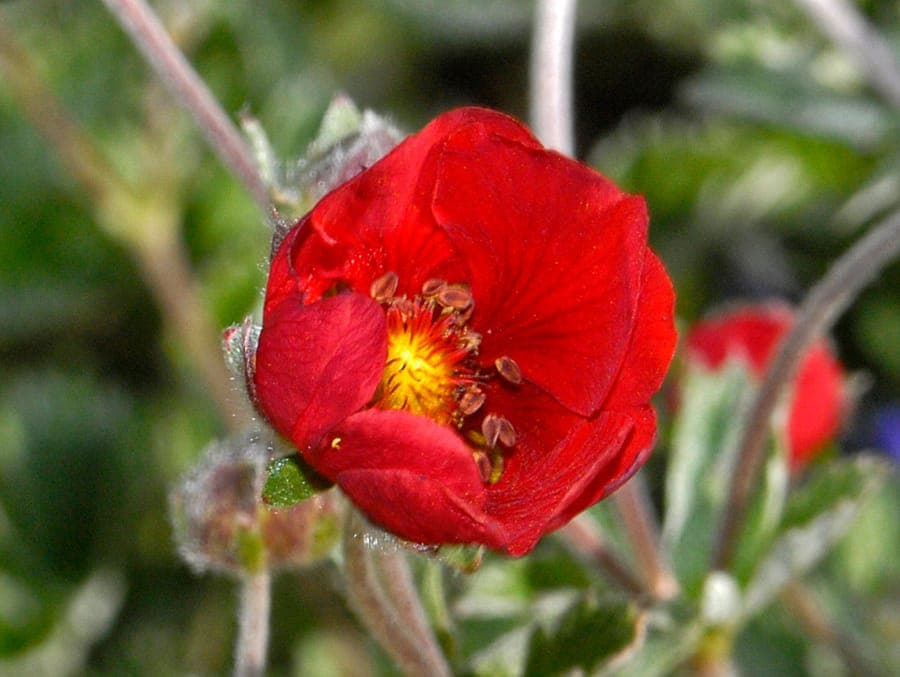
Nepalese cinquefoil forms upright, branched clusters with compound leaves of 5-7 leaflets. The leaves are approximately 4-8 cm long, finely formed, and dark green. The plant grows vigorously and reaches full size within a few months. The flowering period is remarkably extended, running from May through mid-October. Flowers measure 15-20 mm across with the characteristic 5 petals of Potentilla species. Color varies from deep red to orange-red, often with a yellow center (the cultivar "Nepalese Jewel" exemplifies this beautifully). Flowers are organized in dense cymose clusters. This prolonged bloom makes it invaluable for summer borders. After flowering, numerous small seeds develop, providing bird forage.
Ideal Location
Nepalese cinquefoil thrives optimally in full sun (6-8 hours direct light daily). The plant tolerates light shade (3-4 hours sun) but produces fewer flowers there. Avoid deep shade. South-southeast, south, and south-southwest aspects are ideal. The plant requires warmth for optimal flowering. A warm position against a south-facing wall or in the heart of a border provides the best conditions. Excessive shade results in lax growth and sparse flowering. Wind exposure is beneficial, promoting sturdy stems and compact habit.
Soil
Nepalese cinquefoil has moderate soil requirements and grows well in reasonably fertile, well-drained garden soil. A pH of 6.5-7.5 is ideal. Heavy clay soils can be improved with sand and garden compost at planting time. The plant tolerates slightly acidic to neutral to slightly alkaline soils well. Adding organic matter (garden compost or leaf mold) at planting promotes faster establishment. In very poor soils, growth is slower but still acceptable. Drainage must be good; waterlogging is not tolerated. The plant responds positively to moderate feeding.
Free design
Want to see Nepalese Cinquefoil: complete guide in your garden? Make a free design now.
Watering
Nepalese cinquefoil requires consistent moisture supply, especially during dry, warm spells. After planting, water regularly (4-5 times weekly) until well established, usually within 6-8 weeks. During the growing season (May-October), water when the top 2-3 cm of soil feels dry. During hot, dry periods (temperature above 25 degrees C), daily watering may be needed, especially in containers. Container-grown plants require more frequent watering than garden specimens. Reduce watering in autumn to prepare the plant for dormancy and reduce soft growth.
Pruning
Nepalese cinquefoil requires minimal pruning. The plant naturally assumes a neat form. Spent flowers may be regularly deadheaded to encourage continuous blooming; this extends the bloom period from May through late October. This is optional but highly recommended. After the first autumn frost (October), the plant can be cut back to 10 cm above ground. In spring, remove any dead material. Annual pruning produces more compact, floriferous plants for the following season.
Maintenance Calendar
April: Plants can be grown from seed or cuttings; prepare young plants for garden planting. May: Transplant outdoors, water regularly. June-August: Peak flowering period, regularly remove spent flowers. September: Flowering continues, feeding can boost vigor. October: As month progresses, first frost arrives. November-March: Plant rests; keep on the dry side if overwintering in containers.
Winter Hardiness
Nepalese cinquefoil is frost-hardy to USDA Zone 5-6 (-20 to -29 degrees C), though many cultivars are slightly more tender and hardy to Zone 6 (-18 to -23 degrees C). In the Netherlands and Belgium, the plant can overwinter outdoors, especially in well-drained locations. In very wet winters, protection with dry leaves is beneficial. In Germany and France, the plant usually overwinters outdoors successfully. In extremely cold winters (below -25 degrees C), protection with fleece or a thick leaf mulch is advisable.
Companion Plants
Nepalese cinquefoil creates stunning combinations with other summer bloomers. Plant alongside blue Delphinium or Agapanthus for color contrast. White Phlox or silver-leaved Artemisia create harmonious pairings. Yellow Achillea or Goldenrod establish warm harmonies. For exotic gardens: combine with Dahlia or Tropaeolum. In borders: plant in groups of three or more for maximum impact. The ferny foliage of cinquefoil provides textural balance to heavier plants.
Summary
Nepalese cinquefoil is a hardy, low-maintenance plant with an extended bloom season and exotic color. Perfect for summer borders, wildflower plantings, and container cultivation. This Himalayan beauty deserves a place in every long-season color garden. Seeds or young plants are available in spring from nurseries and seed suppliers.
Want to see Nepalese Cinquefoil: complete guide in your garden? Make a free design now.
Upload a photo, pick a style, and get a photorealistic design with plant list in under a minute.
No credit card required


Similar plants
Siberian crab apple: complete guide
Malus x robusta
Complete guide to the Siberian crab apple (Malus x robusta): location, soil, pruning, winter hardiness and the best companion plants for your garden.
Chinese flowering crabapple (Malus x spectabilis): complete guide
Malus x spectabilis
Meet the Chinese flowering crabapple (Malus x spectabilis): a classic spring bloomer with carmine buds and pink blossom.
Potentilla crassinervia: complete guide
Potentilla crassinervia
Potentilla crassinervia, the Corsican cinquefoil, grows wild on Corsica and Sardinia's peaks. Discover how to grow this hardy alpine rock garden gem.