
Hectonichus / CC BY-SA 4.0, via Wikimedia Commons
Pink barren strawberry: complete guide
Potentilla micrantha
Want to see Pink barren strawberry: complete guide in your garden?
1 minute, no credit card
Overview
Potentilla micrantha, commonly known as pink barren strawberry, is a modest yet valuable perennial that brings early-season charm to woodland gardens. Native to southern Europe but well-suited to temperate zones, it grows between 10–20 cm tall and spreads slowly by rhizomes, forming a neat, non-invasive carpet. Despite its name, it's not a true strawberry and produces no edible fruit. It is, however, a resilient plant that thrives in challenging spots where other groundcovers struggle.
This species is semi-evergreen, meaning it keeps much of its foliage through winter, adding structure to dormant gardens. It's particularly effective under light tree canopies or along shaded pathways. In the UK and northern US, it performs well in USDA zones 6–8. On gardenworld.app, you can simulate how this plant fits into your garden layout, especially under trees where light and moisture vary.
Appearance & bloom cycle
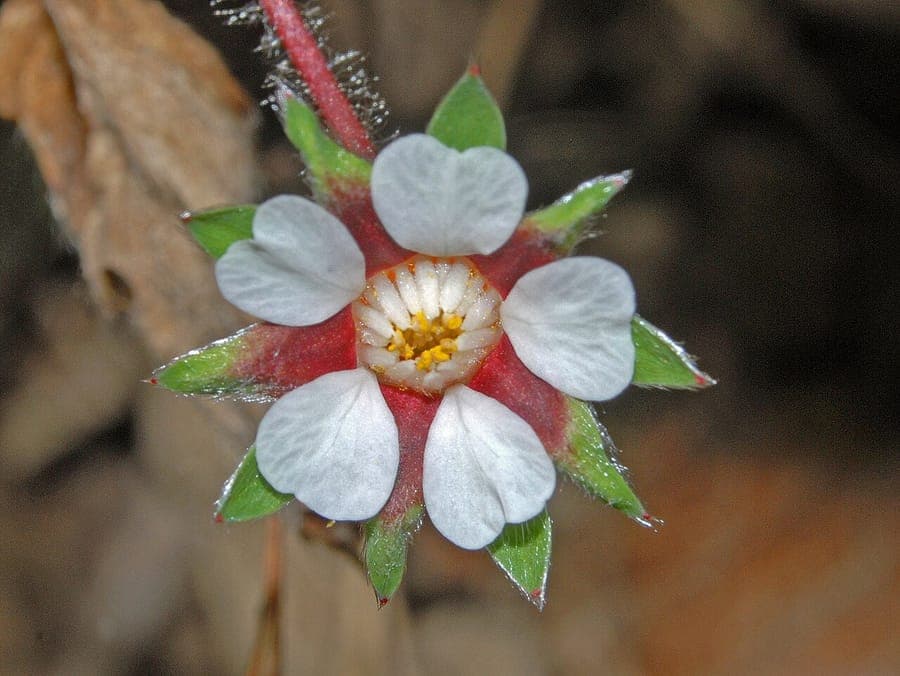
From March to May, the plant produces delicate white flowers, each about 1–1.5 cm across. Though called 'pink', the blooms often appear white with a faint rosy blush, especially in shade. The petals are heart-shaped and slightly crinkled, surrounding a cluster of yellow stamens. The foliage is palmate, divided into five to seven slender, toothed leaflets, dark green above and paler beneath.
The blooming period starts in late March in milder winters, making it one of the earliest flowering plants in the garden. After flowering, small, dry achene fruits form - not ornamental, but beneficial to micro-insects and pollinators. The leaves remain attractive through summer, turning slightly bronzed in autumn before settling in for winter.
Ideal location
Pink barren strawberry prefers partial to full shade, ideally with morning sun and afternoon shade. A light level of 5 on a 1–10 scale suits it best. It grows well under open-crowned trees like birch, hornbeam, or young oaks. Avoid deep, dry shade under dense evergreens, as the plant needs consistent moisture and some indirect light.
It's also effective in rock gardens, wall crevices, or between stepping stones where soil remains cool and moist. On gardenworld.app, you can map light patterns in your garden to find the optimal microclimate for planting Potentilla micrantha.
Soil requirements
This plant thrives in alkaline soils with a pH of 7.5–8.0. It prefers humus-rich, well-draining loam or clay-loam. Avoid acidic or waterlogged soils. If your soil is too acidic, amend it with garden lime to gradually raise the pH. Adding compost or leaf mould improves moisture retention and structure, especially in sandy soils.
It often grows naturally on calcareous substrates, so it adapts well to chalky or limestone-based gardens. If you're unsure about your soil, use a simple test kit - many garden centres sell affordable versions.
Free design
Want to see Pink barren strawberry: complete guide in your garden? Make a free design now.
Watering
Keep the soil consistently moist during active growth (March–June). In dry springs, water weekly, ensuring the moisture reaches the root zone. Once established, it tolerates short dry spells but performs poorly in prolonged drought. During summer dormancy, reduce watering to once every 10–14 days unless conditions are exceptionally dry.
Use rainwater when possible, as tap water can raise soil alkalinity over time. Mulching with leaf litter helps retain moisture and mimics natural woodland conditions.
Pruning
Pruning is minimal. Remove dead or damaged foliage in early spring before new growth emerges. Use clean scissors to trim back any tattered leaves, but avoid cutting into old wood, as regrowth is slow. Do not shear the plant - its natural form is part of its appeal.
You can lightly rake through the foliage to remove fallen leaves or debris that might smother young shoots.
Maintenance calendar
- Jan: Check for winter damage, ensure debris isn't compacting the crowns
- Feb: Remove old foliage if needed, inspect for pests
- Mar: Begin regular watering, light pruning, bloom starts
- Apr: Peak bloom, keep soil moist
- May: Flowering ends, allow seed heads for insects
- Jun–Dec: Minimal care, water only in droughts, monitor for slugs in wet summers
Winter hardiness
Hardy to -15°C (USDA zone 6), Potentilla micrantha survives most winters without protection. In colder zones (6a), a light mulch of straw or leaf litter can help prevent frost heaving. Since it's semi-evergreen, the foliage provides insulation - avoid cutting it back in autumn.
Companion plants
Pair it with other shade-tolerant perennials like Epimedium, Alchemilla mollis, or Helleborus. Early spring bulbs such as Chionodoxa or Scilla add colour contrast. Avoid aggressive spreaders like Lamium galeobdolon, which can overwhelm it.
In naturalistic plantings, it works well with ferns, hostas, and woodland sedges. For formal edges, combine with low boxwood hedges or use in gravel paths with thyme.
Closing
Pink barren strawberry is a quiet achiever - it doesn't shout for attention but delivers reliable beauty and ecological value. It's perfect for gardeners who want low-effort, high-reward planting. Available in spring at garden centres across the UK and US, look for it at local nurseries or online. Retailers like OBI and Hornbach in Germany, or Truffaut and Jardiland in France, often stock it too. Use gardenworld.app to design a planting scheme that includes Potentilla micrantha alongside compatible companions for a cohesive, thriving garden.
Want to see Pink barren strawberry: complete guide in your garden? Make a free design now.
Upload a photo, pick a style, and get a photorealistic design with plant list in under a minute.
No credit card required


Similar plants
Siberian crab apple: complete guide
Malus x robusta
Complete guide to the Siberian crab apple (Malus x robusta): location, soil, pruning, winter hardiness and the best companion plants for your garden.
Chinese flowering crabapple (Malus x spectabilis): complete guide
Malus x spectabilis
Meet the Chinese flowering crabapple (Malus x spectabilis): a classic spring bloomer with carmine buds and pink blossom.
Potentilla crassinervia: complete guide
Potentilla crassinervia
Potentilla crassinervia, the Corsican cinquefoil, grows wild on Corsica and Sardinia's peaks. Discover how to grow this hardy alpine rock garden gem.