
Famartin / CC BY-SA 4.0, via Wikimedia Commons
Indian strawberry: complete guide
Potentilla indica
Want to see Indian strawberry: complete guide in your garden?
1 minute, no credit card
Overview
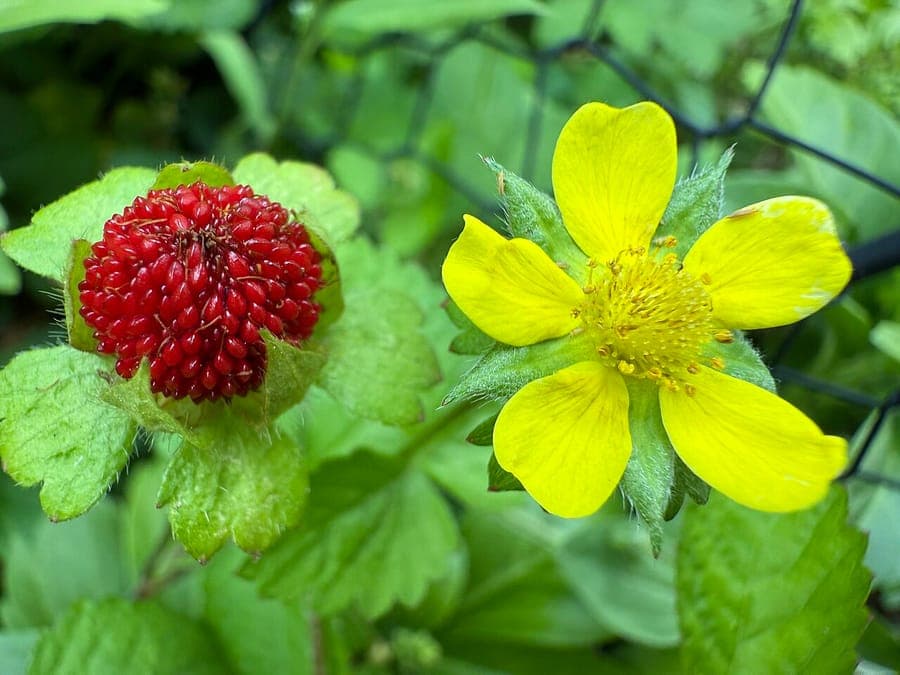
Potentilla indica, commonly known as Indian strawberry, is a resilient and quietly charming ground cover that thrives where many plants struggle - in deep shade and under trees. Native to regions across Asia, from India and China to Japan and the East Himalaya, this creeping perennial has found its way into gardens worldwide thanks to its adaptability and subtle beauty. Despite its common name and strawberry-like fruit, it's not closely related to true strawberries (Fragaria spp.) and the fruits are bland, often flavourless. Still, its ornamental value is high. On gardenworld.app, you can design a shaded garden layout that features Indian strawberry as a living mulch layer, reducing weeding and enhancing visual texture.
Appearance & bloom cycle
Indian strawberry forms a low, spreading mat, typically growing 15–25 cm tall and spreading up to 40 cm wide. The foliage is trifoliate or palmate, with three to five toothed leaflets that stay fresh green throughout the growing season. From May through September, it produces cheerful yellow flowers, about 1.5–2 cm in diameter, with five rounded petals and a dark central cluster of stamens. After flowering, small, round, orange-yellow fruits develop that resemble tiny strawberries. While not particularly tasty, they persist on the plant and add ornamental interest well into autumn.
Ideal location
This plant excels in partial to full shade. It's ideal for planting under deciduous trees, along north-facing walls, or in woodland gardens. In full sun, especially in hot climates, the leaves can scorch and dry out. A spot with dappled sunlight or afternoon shade is optimal. It also works well in containers placed on shaded patios or balconies. When planted alongside hostas, ferns, or Ajuga, it creates a lush, layered look. Use gardenworld.app to map out a shade garden plan where Indian strawberry fills in the understory with minimal effort.
Soil requirements
Indian strawberry isn't fussy about soil but prefers moist, well-drained, humus-rich conditions. It tolerates clay soils as long as they don't become waterlogged in winter. Sandy soils can work if amended with compost to retain moisture. The ideal pH range is slightly acidic to neutral (5.5–7.0). Before planting, mix in a generous amount of compost or leaf mould to improve soil structure and fertility. Once established, it helps suppress weeds, making it a smart choice for low-maintenance areas.
Free design
Want to see Indian strawberry: complete guide in your garden? Make a free design now.
Watering
Consistent moisture is key, especially during establishment and dry spells. Water deeply every two to three days in summer, depending on rainfall and temperature. Container-grown plants may need daily watering in hot weather. Avoid wetting the foliage to reduce the risk of fungal diseases - water at the base instead. Rainwater is preferred, as the plant can be sensitive to lime in tap water.
Pruning
Pruning isn't necessary, but a light trim in March helps remove old or damaged leaves and encourages fresh growth. If the plant spreads too aggressively, you can cut back runners or divide and replant excess. The stolons root easily where they touch the soil, making propagation simple. In formal beds, keep its spread in check; in naturalistic gardens, let it weave between other plants.
Maintenance calendar
- Jan: Check for frost damage; protect container plants if needed.
- Feb: Prepare soil for division or transplanting.
- Mar: Trim dead foliage; apply a thin layer of compost.
- Apr: Monitor for new runners; keep soil moist.
- May: Blooming begins; maintain consistent watering.
- Jun: Peak flowering; ensure soil doesn't dry out.
- Jul: Flowers continue; watch for dry patches.
- Aug: Fruits develop; continue watering.
- Sep: Flowering slows; let fruits remain for visual appeal.
- Oct: No major care needed; plant prepares for dormancy.
- Nov: Leave fallen leaves as natural mulch.
- Dec: Dormant period; water lightly if soil is dry.
Winter hardiness
Indian strawberry is hardy in USDA zones 6 to 9, tolerating winter lows down to -20°C. In colder zones, the top growth may die back, but the roots usually survive and re-sprout in spring. In containers, move pots to a sheltered spot or wrap them to prevent root freeze. A light mulch of leaves or straw helps protect crowns in exposed garden beds.
Companion plants
Pair Indian strawberry with shade-loving perennials like Heuchera, Pulmonaria, or ferns such as Athyrium filix-femina. It contrasts beautifully with silver-foliaged plants like Lamium maculatum 'White Nancy'. Avoid planting near aggressive spreaders like mint or ground elder. In mixed borders, it acts as a soft, green filler that doesn't compete for attention but adds continuity.
Closing
Indian strawberry is a humble yet reliable performer in the shade garden. It doesn't demand much - just some moisture and shelter from harsh sun - and in return, it provides months of blooms, attractive foliage, and a tidy ground cover. You can find it at most garden centres, especially during spring planting season. It's an excellent choice for beginners and seasoned gardeners alike. And remember, on gardenworld.app you can design a custom garden plan that integrates Indian strawberry seamlessly into your landscape.
Want to see Indian strawberry: complete guide in your garden? Make a free design now.
Upload a photo, pick a style, and get a photorealistic design with plant list in under a minute.
No credit card required


Similar plants
Siberian crab apple: complete guide
Malus x robusta
Complete guide to the Siberian crab apple (Malus x robusta): location, soil, pruning, winter hardiness and the best companion plants for your garden.
Chinese flowering crabapple (Malus x spectabilis): complete guide
Malus x spectabilis
Meet the Chinese flowering crabapple (Malus x spectabilis): a classic spring bloomer with carmine buds and pink blossom.
Potentilla crassinervia: complete guide
Potentilla crassinervia
Potentilla crassinervia, the Corsican cinquefoil, grows wild on Corsica and Sardinia's peaks. Discover how to grow this hardy alpine rock garden gem.