
Wikimedia Commons / CC BY-SA 3.0, via Wikimedia Commons
Grey cinquefoil: complete guide
Potentilla inclinata
Want to see Grey cinquefoil: complete guide in your garden?
1 minute, no credit card
Overview
Grey cinquefoil (Potentilla inclinata) is a tough, compact herbaceous perennial that thrives where many plants struggle. Native to alpine and subalpine regions across Central and Eastern Europe, it's perfectly adapted to dry, sunny conditions and poor soils. In the garden, it's a quiet achiever - not flashy, but incredibly reliable. It grows well in USDA hardiness zones 4 through 8, making it a solid choice for gardeners in the UK, northern US, and much of Europe.
On gardenworld.app you can design a rock garden or drought-tolerant border that highlights the subtle beauty of this plant, pairing it with complementary textures and bloom times.
Appearance & bloom cycle
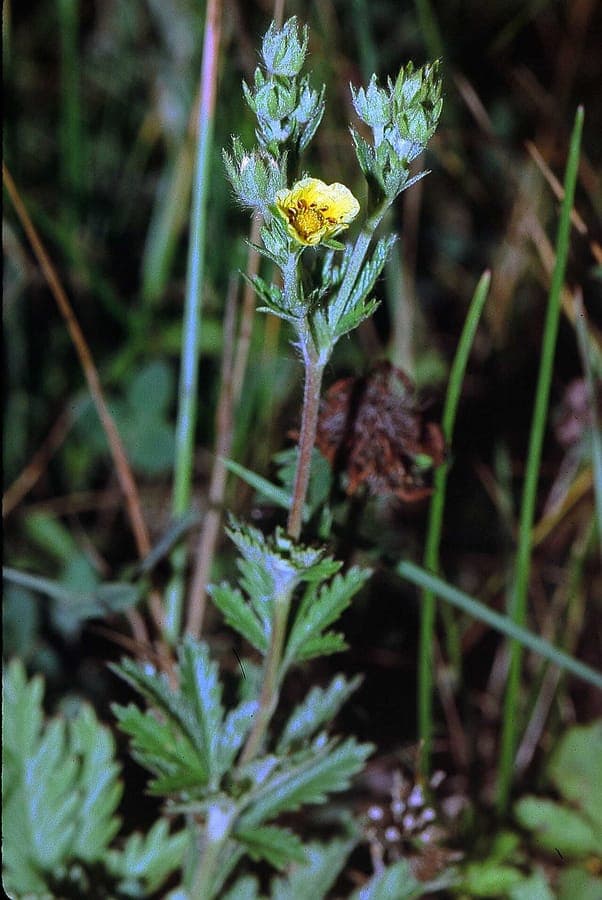
Grey cinquefoil forms low mounds 15–25 cm tall, with a spreading habit that makes it ideal for ground cover or front-of-border use. The foliage is silvery-grey, deeply divided, and covered in fine hairs that give it a soft, felt-like texture. This not only adds visual interest but also helps reduce water loss - a smart adaptation to dry habitats.
From June through July, the plant is covered in small, bright yellow flowers. Each bloom is about 1.5 cm across, with five glossy petals arranged symmetrically. While individual flowers don't last long, the overall display is persistent and cheerful. After blooming, the foliage remains tidy and greenish-grey through the rest of the season.
Ideal location
This plant demands full sun - aim for a rating of 9 out of 10 for light exposure. It thrives in open, unshaded spots like south-facing slopes, rock gardens, or gravel beds. Partial shade leads to leggy growth and fewer flowers.
Avoid planting it under trees or near large shrubs that create dense shade. Instead, use it in modern or naturalistic designs where low-growing, drought-tolerant plants are needed. It works beautifully near stone walls or in crevices where drainage is excellent.
Soil requirements
Grey cinquefoil prefers lean, well-drained soil with a pH between 6.5 and 7. It doesn't need rich compost or high fertility - in fact, too much organic matter can lead to floppy growth and reduced flowering. Sandy or gravelly soils are ideal. If you're working with heavier clay, amend it with grit, pumice, or coarse sand to improve drainage.
Avoid moisture-retentive mulches like bark or compost. Instead, top-dress with small stones or gravel to mimic its natural habitat and keep the crown dry.
Watering
Once established, this plant is highly drought-tolerant. During the first growing season, water weekly during dry spells to help roots settle. After that, it rarely needs supplemental watering, even in hot summers.
When you do water, do it deeply and infrequently - this encourages roots to grow downward. Avoid frequent shallow watering, which promotes weak root systems. Overwatering is one of the few ways to kill this otherwise tough plant.
Free design
Want to see Grey cinquefoil: complete guide in your garden? Make a free design now.
Pruning
Pruning isn't essential, but a light trim after flowering in July can keep the plant looking neater and may encourage a second, smaller flush of blooms in late summer. Use sharp, clean shears and cut back just the spent flower stems.
In early spring, remove any old or damaged foliage to make room for fresh growth. Don't cut into hard wood - this is a herbaceous perennial, so it dies back to the ground in winter.
Maintenance calendar
- January: Dormant. No action needed.
- February: Check for winter damage. Remove any matted debris.
- March: Clear old foliage. Prepare soil with light gravel top-dressing.
- April: Monitor for slugs on new shoots. Water only if unusually dry.
- May: Watch for early blooms. Avoid over-fertilizing.
- June: Peak bloom. No pruning.
- July: Flowers fade. Light trim to tidy up.
- August: Optional second bloom. Keep soil dry.
- September: Growth slows. Reduce watering.
- October: Let foliage die back naturally.
- November: No maintenance.
- December: Dormant. Protect from waterlogged soil.
Winter hardiness
Hardy in zones 4–8, Grey cinquefoil handles cold winters with ease. In zone 4, it survives temperatures down to -34°C with no protection. The foliage may persist through mild winters but often browns in harsh conditions. The real danger isn't cold - it's wet soil.
Ensure excellent drainage to prevent crown rot. Avoid organic mulches that hold moisture. Use inorganic options like gravel instead.
Companion plants
Pair Grey cinquefoil with other sun-loving, drought-tolerant perennials. Excellent choices include Sedum 'Autumn Joy', Thymus vulgaris, Eryngium giganteum, and Achillea millefolium. These share similar soil and light needs and create a layered, textural look.
Avoid moisture-loving plants like hostas or astilbes - they'll struggle in the same conditions and pull you toward overwatering.
On gardenworld.app you can explore real garden designs featuring Grey cinquefoil, helping you visualize how it works in combination with other plants.
Closing
Grey cinquefoil is a quiet powerhouse in the garden. It won't shout, but it delivers year after year - low maintenance, drought-resistant, and full of subtle charm. It's perfect for rock gardens, dry borders, or as a ground cover on difficult slopes.
You'll find it at garden centres across the UK and North America, especially those specializing in alpine or drought-tolerant plants. Check with local suppliers or browse online listings. For design inspiration, visit gardenworld.app - where you can build custom plans that make the most of this understated perennial.
Want to see Grey cinquefoil: complete guide in your garden? Make a free design now.
Upload a photo, pick a style, and get a photorealistic design with plant list in under a minute.
No credit card required


Similar plants
Siberian crab apple: complete guide
Malus x robusta
Complete guide to the Siberian crab apple (Malus x robusta): location, soil, pruning, winter hardiness and the best companion plants for your garden.
Chinese flowering crabapple (Malus x spectabilis): complete guide
Malus x spectabilis
Meet the Chinese flowering crabapple (Malus x spectabilis): a classic spring bloomer with carmine buds and pink blossom.
Potentilla crassinervia: complete guide
Potentilla crassinervia
Potentilla crassinervia, the Corsican cinquefoil, grows wild on Corsica and Sardinia's peaks. Discover how to grow this hardy alpine rock garden gem.