
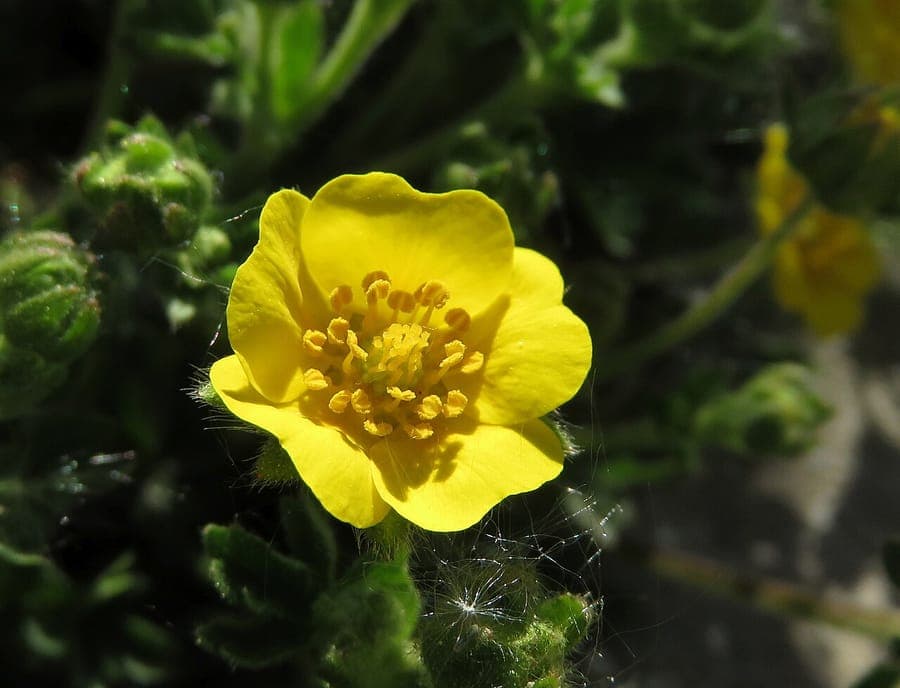
Alex Hauner / CC BY-SA 4.0, via Wikimedia Commons
Alpine cinquefoil: complete guide
Potentilla crantzii
Want to see Alpine cinquefoil: complete guide in your garden?
1 minute, no credit card
Overview
Alpine cinquefoil (Potentilla crantzii) is a compact, hardy perennial from the Rosaceae family, native to rocky slopes across Central and Eastern Europe and parts of Asia, including Austria, Bulgaria, and the Altay region. Growing 15–25 cm tall, it forms neat, woolly mounds that thrive in harsh, exposed conditions. This plant is ideal for rock gardens, crevices in stone walls, or the front of sunny borders where low competition and excellent drainage are key.
It's a quiet achiever - not flashy, but incredibly reliable. Once established, it asks for almost nothing and delivers consistent yellow blooms year after year. On gardenworld.app, you can design a custom garden layout that highlights alpine cinquefoil's strengths in dry, sunny corners.
Appearance & bloom cycle
The foliage is its first standout feature: silvery-green, deeply divided into five narrow leaflets, and densely covered in fine, soft hairs - giving it a fuzzy, felt-like texture. The leaves stay semi-evergreen in mild winters, adding winter interest.
From June to August, bright yellow, buttercup-like flowers (1.5–2 cm wide) emerge on short stems. Each flower has five glossy petals and opens fully only in direct sunlight, closing at night or on overcast days. This sun-tracking habit makes the plant feel alive and responsive. After blooming, seed heads form but are inconspicuous and don't self-seed aggressively.
The plant spreads slowly by short rhizomes, forming clumps 20–25 cm across over several years.
Ideal location
Alpine cinquefoil needs full sun - aim for a 9 out of 10 light exposure. A south- or southwest-facing spot is best. It thrives in open, airy locations with minimal shade. Avoid planting under trees or near tall shrubs that cast shade or compete for water.
It's perfect for rockeries, gravel gardens, or between paving stones where heat and light reflect. On gardenworld.app, use the sun-mapping tool to identify the sunniest zones in your garden and plan your cinquefoil placement accordingly.
Soil requirements
This plant demands sharply drained soil with a pH of 7.5–8.0 - slightly alkaline to alkaline. It prefers gritty, sandy, or rocky substrates. If your soil is heavy clay, amend it with horticultural grit, coarse sand, or small gravel to improve drainage.
Avoid rich, moisture-retentive soils. Too much organic matter leads to floppy growth and reduced flowering. A lean soil is better - this plant evolved in nutrient-poor environments.
Free design
Want to see Alpine cinquefoil: complete guide in your garden? Make a free design now.
Watering
During the first month after planting, water weekly to help roots establish. After that, it's highly drought-tolerant. In average UK or US summers, no supplemental watering is needed unless there's a prolonged dry spell (over 3 weeks without rain).
Water at the base to avoid wetting the foliage, which can encourage fungal issues. Use rainwater if possible - tap water with high mineral content can build up in the soil over time.
Pruning
Minimal pruning is required. After flowering (late summer), lightly trim back spent flower stems to maintain a tidy shape. This may encourage a second, lighter flush of blooms in September.
In early spring, remove any damaged or dead foliage. Avoid cutting into old wood, as regrowth may be slow. Use clean, sharp snips to prevent disease spread.
Maintenance calendar
- Jan: Check for crown rot in wet winters.
- Feb: No action needed.
- Mar: Clear away old leaves if still present.
- Apr: Watch for new growth. Light top-dressing with gritty compost if desired.
- May: Plant prepares for bloom.
- Jun–Aug: Peak flowering. Monitor during extreme drought.
- Sep: Trim back flower stems.
- Oct: Leave seed heads for winter texture or remove for neatness.
- Nov: No maintenance.
- Dec: Protect young plants with dry mulch (e.g., straw) in areas with harsh frosts.
Winter hardiness
Alpine cinquefoil is fully hardy to USDA zone 4 (-30°C). In zones 5–8, it remains semi-evergreen. The main winter threat is not cold, but wet soil. In poorly drained sites, winter wet can cause root and crown rot. Ensure the planting site dries quickly after rain or snowmelt.
Avoid moisture-retentive mulches like bark - use gravel or small stones instead to keep the crown dry.
Companion plants
Pair with other drought-tolerant, sun-loving plants: Sedum 'Autumn Joy', Thymus vulgaris, Helianthemum 'Wisley Pink', or Arabis caucasica. These create a harmonious, low-water planting scheme.
Avoid moisture-loving or shade-tolerant plants like ferns or hostas. On gardenworld.app, experiment with plant pairing suggestions based on light, soil, and water needs.
Closing
Alpine cinquefoil is a quiet powerhouse for tough garden spots. Unfazed by heat, poor soil, or dry spells, it's a reliable performer in low-input gardens. Its cheerful yellow flowers and soft texture add charm without fuss. Look for it at garden centres across the UK and US, especially in alpine or rock garden sections. Plant it right, and it'll thrive for years with little attention. With tools on gardenworld.app, you can visualise how it fits into your long-term garden design.
Want to see Alpine cinquefoil: complete guide in your garden? Make a free design now.
Upload a photo, pick a style, and get a photorealistic design with plant list in under a minute.
No credit card required


Similar plants
Siberian crab apple: complete guide
Malus x robusta
Complete guide to the Siberian crab apple (Malus x robusta): location, soil, pruning, winter hardiness and the best companion plants for your garden.
Chinese flowering crabapple (Malus x spectabilis): complete guide
Malus x spectabilis
Meet the Chinese flowering crabapple (Malus x spectabilis): a classic spring bloomer with carmine buds and pink blossom.
Potentilla crassinervia: complete guide
Potentilla crassinervia
Potentilla crassinervia, the Corsican cinquefoil, grows wild on Corsica and Sardinia's peaks. Discover how to grow this hardy alpine rock garden gem.