
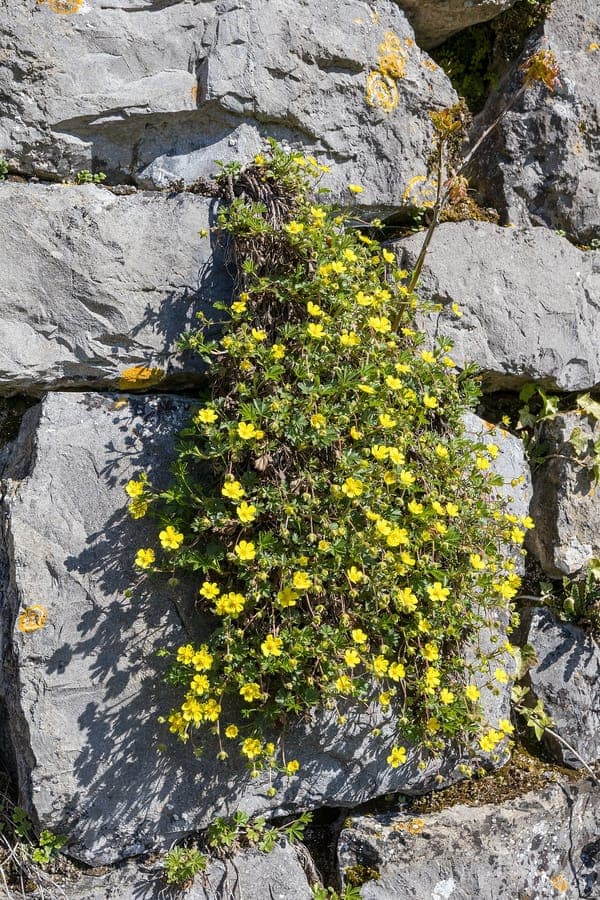
JackyM59 / CC BY-SA 4.0, via Wikimedia Commons
Abbotswood potentilla: complete guide
Potentilla cinerea
Want to see Abbotswood potentilla: complete guide in your garden?
1 minute, no credit card
Overview
Abbotswood potentilla (Potentilla cinerea) is a tough, ground-hugging perennial that thrives where other plants struggle. Native to rocky, sandy areas of southern Europe - from Spain to Bulgaria - it's built for heat, sun, and poor soils. As part of the Rosaceae family, it shares structural traits with roses but without the fuss. This is a no-nonsense plant for gardeners who want long bloom times, minimal watering, and a neat, compact form. It's not flashy, but it's dependable - and that's why it earns its place in thoughtful garden designs.
On gardenworld.app, you can create a custom planting plan that includes Abbotswood potentilla, matching it with other drought-loving plants for a resilient, low-water garden.
Appearance & bloom cycle
Abbotswood potentilla grows 8–12 inches (20–30 cm) tall and spreads 12–16 inches (30–40 cm) wide. It forms a dense, cushion-like mound of finely divided, silvery-gray foliage. The leaves are covered in fine hairs, giving them a soft, felted texture and helping reduce water loss - a smart adaptation to dry conditions.
From June to September, it produces cheerful, butter-yellow flowers, each about 1–1.2 inches (2.5–3 cm) across. The blooms are simple but abundant, opening in succession to ensure a long flowering period. Deadheading isn't essential, but a light trim after peak bloom can encourage a second flush.
Ideal location
Full sun is non-negotiable. This plant needs at least 6–8 hours of direct sunlight daily. In partial shade, it becomes leggy, flowers sparsely, and is more prone to fungal issues. It's ideal for rock gardens, gravel beds, dry borders, or slopes. In the UK and similar climates, south- or west-facing spots work best.
It's perfect for coastal gardens or inland areas with sandy, fast-draining soil. Use gardenworld.app to map your garden's sun exposure and see where Abbotswood potentilla will perform best.
Soil requirements
Well-drained soil is critical. Avoid heavy clay or water-retentive soils. Sandy or gravelly loam with a pH between 6.5 and 8.0 is ideal. If your soil is dense, build a raised bed or amend it with grit and coarse sand. A 2–3 inch layer of drainage material at the base helps prevent root rot.
This plant thrives in low- to moderate-fertility soils. Rich compost or heavy feeding leads to lush foliage but fewer flowers.
Free design
Want to see Abbotswood potentilla: complete guide in your garden? Make a free design now.
Watering
Once established, Abbotswood potentilla is highly drought tolerant. During the first growing season, water weekly to help roots settle. After that, it survives on rainfall alone in most climates. Only during extended droughts (3+ weeks without rain) should you water deeply at the base - avoid wetting the foliage to prevent mildew.
Pruning
In late summer, after the main bloom, give the plant a light trim - cut back by about one-third. This keeps it tidy and may prompt a second, smaller bloom. Use sharp, clean shears and cut just above a leaf node. In early spring, remove any dead or damaged stems to make room for new growth. No heavy pruning needed - this plant naturally maintains its shape.
Maintenance calendar
- Jan: Check for winter damage, remove any collapsed stems
- Feb: Prepare tools, assess drainage in planting areas
- Mar: Clear old foliage, apply light compost if desired
- Apr: Monitor for early growth, water if unusually dry
- May: Plants enter active growth; ensure good air flow
- Jun: Bloom season begins; watch for slugs on new shoots
- Jul: Deadhead spent flowers; reduce watering
- Aug: Trim lightly after bloom; check for pests
- Sep: Final flowering; stop fertilising
- Oct: Let plant die back naturally; no pruning
- Nov: Leave枯 old growth for winter insulation
- Dec: Minimal care; check for frost heave in containers
Winter hardiness
Abbotswood potentilla is hardy in USDA zones 5–8 (down to -23°C). It handles cold winters well, with foliage often remaining semi-evergreen. In wet winters, poor drainage is the main threat - ensure the soil doesn't stay soggy. In containers, move to a sheltered spot or elevate pots to improve drainage.
Companion plants
Pair it with other sun-loving, drought-tolerant perennials: Nepeta, Salvia officinalis, Sedum 'Autumn Joy', or Eryngium. The silvery foliage contrasts beautifully with purple or blue blooms. It also works well with ornamental grasses like Festuca glauca or in gravel gardens with Thymus and Artemisia.
Avoid moisture-loving plants like Astilbe or Heuchera - they need different conditions and will suffer if planted too close.
Closing
Abbotswood potentilla isn't the kind of plant that stops traffic - but it's the one that keeps blooming when others fade. It asks for little and gives back months of colour and texture. Look for it at garden centres across the UK, where it's often sold as a rockery plant or groundcover. With its resilience and neat habit, it's a smart choice for modern, sustainable gardens. Use gardenworld.app to visualise how this plant fits into your space - whether tucked between stones or massed in a dry border.
Want to see Abbotswood potentilla: complete guide in your garden? Make a free design now.
Upload a photo, pick a style, and get a photorealistic design with plant list in under a minute.
No credit card required


Similar plants
Siberian crab apple: complete guide
Malus x robusta
Complete guide to the Siberian crab apple (Malus x robusta): location, soil, pruning, winter hardiness and the best companion plants for your garden.
Chinese flowering crabapple (Malus x spectabilis): complete guide
Malus x spectabilis
Meet the Chinese flowering crabapple (Malus x spectabilis): a classic spring bloomer with carmine buds and pink blossom.
Potentilla crassinervia: complete guide
Potentilla crassinervia
Potentilla crassinervia, the Corsican cinquefoil, grows wild on Corsica and Sardinia's peaks. Discover how to grow this hardy alpine rock garden gem.