
Jomegat / CC BY-SA 3.0, via Wikimedia Commons
Potentilla canadensis: complete guide
Potentilla canadensis
Want to see Potentilla canadensis: complete guide in your garden?
1 minute, no credit card
Potentilla canadensis, known as Canada cinquefoil or dwarf cinquefoil, is a tough and useful groundcover from North America. Native from Canada to the eastern United States, this low-growing herbaceous plant plays an important role in natural ecosystems and gardens.
Overview
Canada cinquefoil is a hairy, low-growing plant found naturally from Nova Scotia to the Carolinas, and westward to Missouri. It grows in preference in open fields, along roadsides, and in dry, sandy areas. This plant is exceptionally adaptable and tolerant of many soil types and weather conditions. The plant typically reaches 10 to 25 centimeters in height and spreads via underground runners (stolons) that root at contact points with the ground.
It is valuable for erosion control thanks to its dense, mat-like growth habit. The plant binds soil effectively, making it ideal for slopes and other erosion-prone zones. For gardeners seeking low-maintenance groundcovers, this is an excellent choice.
Appearance and Bloom
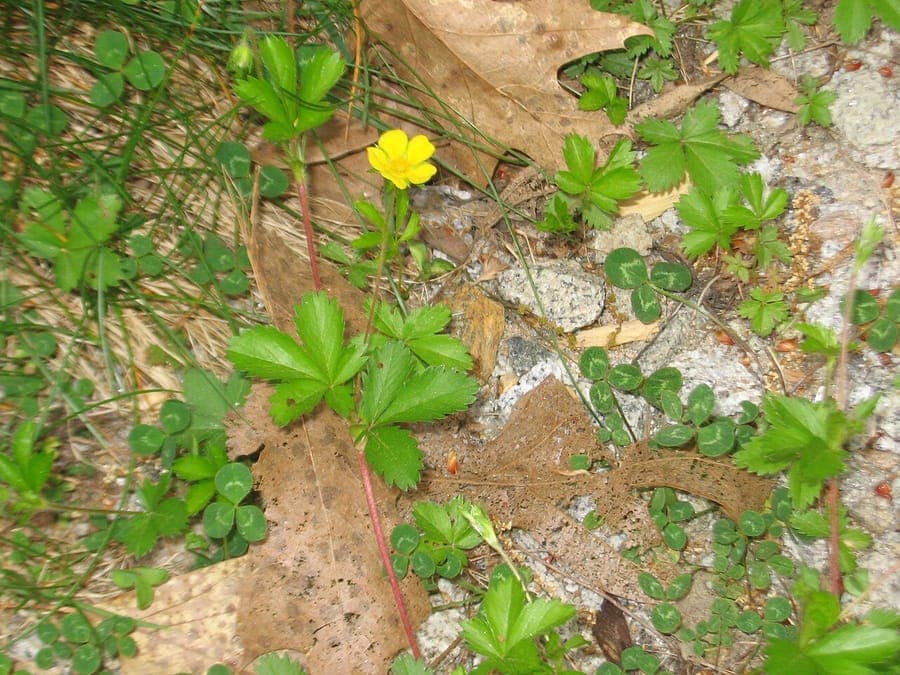
Potentilla canadensis grows as a low, compact rosette of palmate compound leaves. Each leaf consists of five (sometimes seven) small leaflets, hence the name "Cinquefoil" (five leaves). The leaves are dark green and develop a red-purple tint in autumn. The entire plant is covered with fine hairs.
Flowers appear from April to May (in frost-free climates) to June-July (in northern regions). The flowers are small, about 6 to 10 millimeters in diameter, and bright yellow. They arise individually or in small clusters at the end of thin stems. Each flower has five petals and numerous stamens. The plant produces achenes (dry single-seeded fruits) after flowering, but spread occurs mainly via vegetative expansion.
Ideal Location
Potentilla canadensis thrives in open sun conditions and full sun (at least 6 hours of direct sunlight daily). In shade, growth may be poor or flowering diminished. The plant is highly adaptable to soil types - sand, clay, rocky, and even poorly draining soils are all acceptable.
The plant prefers dry to moderately moist soils. Wet conditions during extended periods can cause rot. Excellent drainage is essential. For garden use, place this in borders, rockeries, pathways, or as general groundcover. It works well along roads where it can tolerate traffic and salt spray.
Free design
Want to see Potentilla canadensis: complete guide in your garden? Make a free design now.
Soil and Nutrition
Potentilla canadensis is undemanding regarding soil quality. Fertile or poor soil - it grows anywhere. The plant thrives even in sandy, nutrient-poor soils where many plants would fail. This makes it ideal for difficult sites.
The plant requires good drainage above all. Add gravel or coarse sand to heavy clay soil to improve structure and drainage. No fertilization needed under normal circumstances. Excessive feeding can lead to excessive foliage at the expense of flowers.
Watering
Once established, Potentilla canadensis is fairly drought-tolerant. During the growing period (April-August), water moderately once the soil surface is dry. In dry spells, supplemental watering may be needed, but the plant can tolerate considerable drought.
Avoid waterlogging - this is the primary cause of failure. Ground water is preferred; overhead watering can lead to leaf rot. The plant also tolerates salt, making it suitable near roads and other salty environments.
Pruning and Shaping
Potentilla canadensis requires minimal pruning. If the plant becomes too expansive, light pruning can maintain shape. This is best done after flowering (July-August). Remove dead or damaged stems.
If you want to prevent the plant from spreading, cut runners before they form roots. Some gardeners keep this under control by installing edging around the planting area.
Maintenance Calendar
Spring (March-April): Begin watering carefully as soil dries. Remove dead growth from winter. April-May: Flowering peaks; enjoy the yellow blooms. June-July: Flowering reduces, foliage dominates. Light prune after bloom. August-October: Gradually slow as temperatures drop. October-March: Winter dormancy; minimal care needed. In snowy regions, mulch can protect against extreme frost and freeze-thaw cycles.
Winter Hardiness
Potentilla canadensis is very cold-hardy, USDA zones 3-8 (to -40 degrees Celsius in zone 3). In colder climates, the plant winters in ground; in warmer zones, it remains evergreen and grows weakly through winter. In very warm climates (zone 9 and warmer), the plant may suffer from heat; provide shade in these areas.
The plant tolerates heavy snow without damage. In very wet winters, the foliage may suffer from moisture problems.
Conclusion
Potentilla canadensis is an underrated groundcover requiring minimal maintenance and offering numerous benefits. For erosion control, shadeless borders, and dry areas, it is an excellent choice. For GardenWorld users wanting to introduce native North American plants, this is a good option that attracts pollinators and promotes biodiversity.
Want to see Potentilla canadensis: complete guide in your garden? Make a free design now.
Upload a photo, pick a style, and get a photorealistic design with plant list in under a minute.
No credit card required


Similar plants
Siberian crab apple: complete guide
Malus x robusta
Complete guide to the Siberian crab apple (Malus x robusta): location, soil, pruning, winter hardiness and the best companion plants for your garden.
Chinese flowering crabapple (Malus x spectabilis): complete guide
Malus x spectabilis
Meet the Chinese flowering crabapple (Malus x spectabilis): a classic spring bloomer with carmine buds and pink blossom.
Potentilla crassinervia: complete guide
Potentilla crassinervia
Potentilla crassinervia, the Corsican cinquefoil, grows wild on Corsica and Sardinia's peaks. Discover how to grow this hardy alpine rock garden gem.