
Potentilla bipinnatifida: complete guide
Potentilla bipinnatifida
Want to see Potentilla bipinnatifida: complete guide in your garden?
1 minute, no credit card
Overview
Potentilla bipinnatifida, commonly known as tansy cinquefoil, plains cinquefoil, or bipinnate cinquefoil, is a delicate yet hardy groundcover hailing from the mountainous regions of North America. This member of the rose family (Rosaceae) thrives in alpine meadows, dry slopes, and rocky habitats from Alaska through the Great Plains to New Mexico. The plant forms tight mats of finely divided foliage and produces abundant small flowers throughout the growing season.
The name "bipinnatifida" references the plant's distinctively double-cut leaves that resemble intricate lacework. This is a true survivor: minimal maintenance, drought-tolerant once established, and incredibly long-lived. Tansy cinquefoil is perfect for gardeners seeking authentic alpine character in their landscapes.
Appearance and Bloom
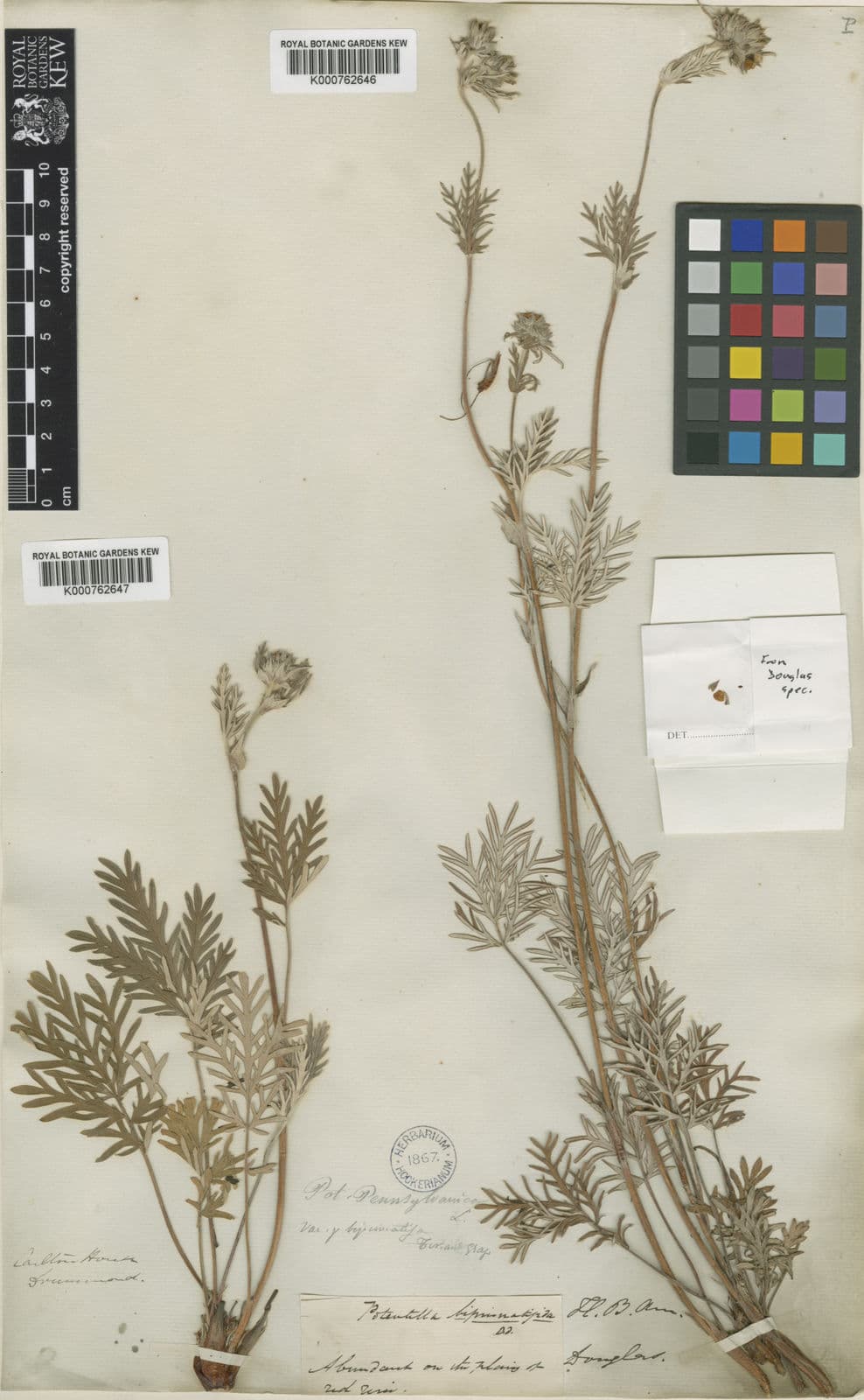
Potentilla bipinnatifida creates dense mats of fine-textured, silver-green foliage. The leaves are compound and deeply divided in a feathery pattern, with numerous small leaflets arranged along central rachis. In early season they appear almost silvery; as the plant matures, the foliage can take on more greenish tones.
Flowers appear from June through August (or until hard frost) and are the plant's main ornamental feature. The blooms are small, typically three-quarters to one-and-one-half inches in diameter, pale yellow to soft pink, arranged in loose, much-branched inflorescences well above the foliage. Though individually tiny, they appear in profusion and create a lovely cumulative effect over the plant's extended bloom period.
Following bloom, inconspicuous achenes develop and eventually drop, allowing the plant to self-sow modestly. Fall color is subtle but attractive: silver-green foliage fades gracefully into winter.
Ideal Location
Tansy cinquefoil demands full sun: at least six to eight hours of direct sunlight daily. In cooler climates, even more sun is beneficial. Avoid placing this plant in dense shade or under trees with dense foliage. The plant tolerates light dappled shade from deciduous trees but performs best with unobstructed light.
South and southeast-facing exposures are ideal, especially in cooler zones. Heat and wind tolerance are excellent. This plant works beautifully in alpine rock gardens, along pathways, between paving stones, in scree gardens, on sunny slopes, and in containers (with excellent drainage).
Consider placement on berms, in raised beds, or atop rock outcrops where drainage is naturally excellent and cold air drains away on frosty nights.
Soil
Soil must be exceptionally well-draining. Heavy clay, waterlogged conditions, and persistent moisture lead to root rot and plant death. Ideal soil composition: sandy loam to gravelly loam with excellent drainage. Incorporate coarse sand, gravel, or grit to ensure rapid water movement.
PH tolerance ranges from slightly acidic to neutral (6.0-7.5). If your garden features heavy clay, create a raised bed or mound using 40% horticultural sand, 30% coarse grit/gravel, and 30% garden soil or loam. Avoid water-retentive amendments like peat moss or coir. The soil should be moderately fertile but not rich; over-fertile soil produces excessive foliage at the expense of flowers.
No regular fertilization is needed or desired. Once-yearly light fertilization with balanced formula in spring is sufficient.
Watering
Once established (four to six weeks after planting), tansy cinquefoil requires minimal watering. During normal rainfall, no supplemental water is necessary. Only during extended drought (more than four weeks without precipitation) should you water deeply.
In container culture, monitor moisture carefully: water only when the top inch of soil becomes dry. Never allow water to stand around the plant; ensure swift drainage. In summer heat, containers may need more frequent watering.
The key principle: less water is better. This plant evolved in semi-arid environments and prefers life on the dry side.
Free design
Want to see Potentilla bipinnatifida: complete guide in your garden? Make a free design now.
Pruning
Potentilla bipinnatifida requires virtually no pruning. Old flower heads may be removed for neatness, but this is entirely optional and not necessary for plant health. If stems sprawl beyond desired boundaries, prune lightly in early spring (March-April) before growth begins.
In fall, you may use a stiff brush or broom to comb away dead foliage and improve air circulation. This helps prevent fungal issues and tidies the plant's appearance for winter.
Because the plant grows compactly and mounding, regular pruning is rarely needed. Deadheading is optional.
Maintenance Calendar
January-February: Monitor for freeze-thaw damage. After thaws, check foliage for frost scorch.
March-April: Remove dead foliage with a stiff brush. Begin the growing season; ensure soil isn't completely dry if spring drought begins.
May-June: Blooming intensifies. Ensure soil receives occasional deep watering if no rain appears.
July-August: Peak bloom period. Monitor for heat stress or desiccation.
September-October: Blooming decreases; plant prepares for dormancy.
November-December: Plant enters dormancy. No watering or feeding needed. Light mulch provides protection in severe climates.
Winter Hardiness
Potentilla bipinnatifida is exceptionally cold-hardy, tolerating temperatures to -35°C (-31°F) without protection. Native across subarctic and alpine regions of North America, it thrives in USDA zones 3-4 and colder. Snow cover actually provides beneficial insulation.
The main winter threat is waterlogging beneath ice, which can cause root rot. Ensure excellent site drainage to prevent this.
Companion Plants
Tansy cinquefoil makes a stunning combination with:
- Other alpine groundcovers: Dianthus arenarius, Silene acaulis, Androsace sempervivoides
- Ornamental grasses: Festuca ovina, Stipa varieties
- Low-growing conifers: Juniperus horizontalis, J. communis 'Compressa'
- Creeping thyme and other low herbs
- Stonecrop (Sedum) varieties
- Ornamental rock and gravel as contrast
Propagation
Potentilla bipinnatifida can be propagated in two ways: by dividing established clumps or by seed. Division is best done in early spring (March-April), just before new growth begins. Carefully dig up the plant, split the root mass into sections at least 5 to 8 centimeters across with adequate roots attached, and replant immediately in the desired location.
Seed is collected once the small fruits ripen, typically in August or September. Because this alpine species evolved in cold mountain regions, seed germinates more reliably after a period of cold stratification: mix the seed with moist sand and store it in the refrigerator for four to six weeks before sowing into a free-draining seed mix. Germination usually follows within three to five weeks at 15 to 18 degrees Celsius.
Because few named cultivars of this wild species exist, the straight botanical species is almost always what's sold through specialist rock garden nurseries; larger chains may carry a more limited selection, so it's worth asking specifically for alpine perennials or ordering from a specialist grower.
Closing
If you seek a beautiful, maintenance-free alpine plant that thrives on neglect, Potentilla bipinnatifida delivers. This tansy cinquefoil asks little but rewards generously with years of reliable performance and abundant bloom. Perfect for rock gardens, dry borders, and anyone seeking authentic mountain character.
Find young plants at major garden centers. For regional care advice and personalized recommendations, visit gardenworld.app where experts help optimize this beauty for your specific climate - gardenworld.app also offers design consultations if you need inspiration for incorporating this plant into your garden. Trust us: tansy cinquefoil will become a longtime favorite.
Want to see Potentilla bipinnatifida: complete guide in your garden? Make a free design now.
Upload a photo, pick a style, and get a photorealistic design with plant list in under a minute.
10,000+ gardens designed already
No credit card required


Similar plants
Potentilla effusa: complete guide
Potentilla effusa
The branched cinquefoil is an elegant, versatile groundcover from North America. Learn cultivation and care essentials.
Potentilla hookeriana: complete guide
Potentilla hookeriana
Hooker's cinquefoil is a compact alpine plant perfect for rock gardens. Learn cultivation of this specialist mountain beauty.
Potentilla ovina: complete guide
Potentilla ovina
The sheep cinquefoil is a robust alpine perennial from mountain meadows. Learn its culture and care essentials.