
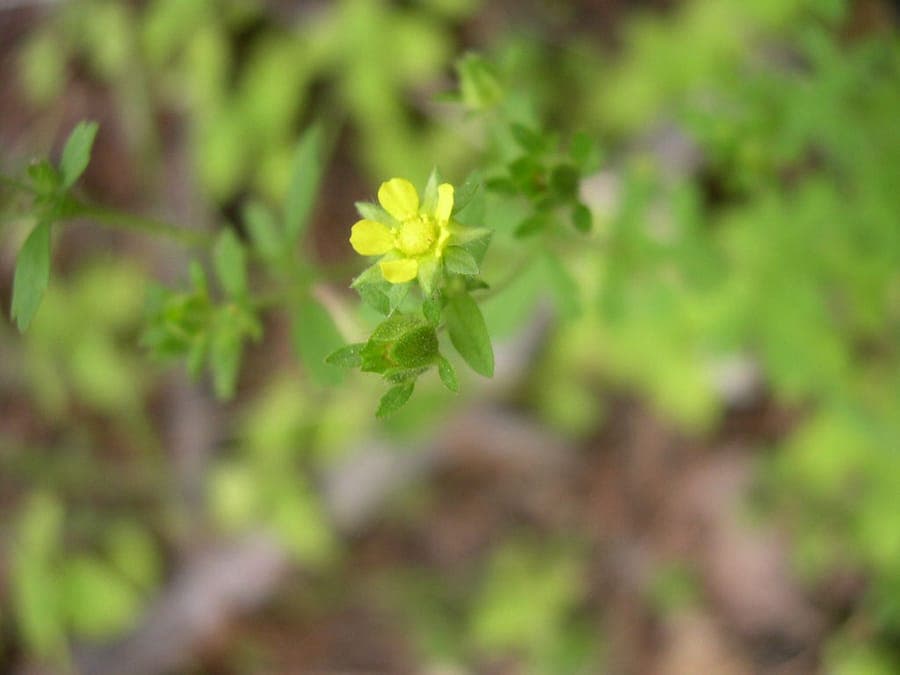
Thayne Tuason / CC BY-SA 4.0, via Wikimedia Commons
Potentilla biennis: complete guide
Potentilla biennis
Want to see Potentilla biennis: complete guide in your garden?
1 minute, no credit card
Overview
Potentilla biennis, known as Biennial Cinquefoil or Greene's Cinquefoil, is a North American wildflower native to dry regions of California, Oregon, and the southwestern US to Mexico. This modest plant grows as a biennial herb, forming a rosette of fine-fingered foliage in its first year and producing flowering stems in the second season. With its yellow flowers and delicately divided foliage, Potentilla biennis is ideal for dry, sunny garden corners. For true wildflower enthusiasts and nature lovers, this is a treasure.
Appearance and Bloom
This herb appears in the first year as a low rosette of finely-fingered, greenish-grey leaves. In the second year it grows to stems 30-60 cm tall with delicate foliage and small yellow flowers. Blooming extends from June through September. After flowering and seed set, the plant dies back, which is normal for biennials. Flowers are small but numerous, together forming a beautiful yellow display in a sunny setting. The plant attracts pollinators and provides seed for future years.
Ideal Location
Potentilla biennis loves full sun and dry to moderately dry conditions. At least 6-8 hours of direct sunlight daily is ideal. This plant grows best on slopes, rock gardens, stone gardens and other dry sites. It's extremely tolerant of poor soil, low nutrients and drought. Don't place it in shade or very moist conditions; it won't thrive. This is a perfect choice for xeriscaping (drought-tolerant gardening) and for remote, barren corners of your garden.
Soil
Potentilla biennis grows in almost any well-draining soil. Poor, rocky, sandy soils are actually preferred. A mix of garden soil (30%), coarse sand (50%) and small stones (20%) is ideal. No extra feeding needed; excess nutrients promote vegetative growth at the expense of flowering. Soil pH can range 5.5-7.5. For sowing, direct seed into dry areas and let the plant grow naturally.
Watering
Once established (after several weeks), water rarely. This is an extremely drought-tolerant plant needing almost no supplemental water. In very dry, extremely hot summers you may water occasionally, but generally rainwater is sufficient. Avoid overwatering; this plant values dryness. This makes it ideal for water-restricted areas and climate-change-adapted gardens.
Free design
Want to see Potentilla biennis: complete guide in your garden? Make a free design now.
Pruning
No pruning is needed for this plant. After blooming, you can remove seed heads to prevent spreading, unless you want to harvest seeds for future years. The plant naturally forms a casual, unforced pattern. No artificial shaping needed; let nature do its work.
Maintenance Calendar
Spring (March-April): direct sow seeds in garden in dry location. May-June: young plants grow, minimal water needed. June-September: blooming, no maintenance required. Autumn (October-November): seed set, seed drops and self-sows. Winter: plant dies back after seed set, next year new plants from seed.
Winter Hardiness
Potentilla biennis is very frost-hardy and grows in regions where winters are severe. Seeds survive frost well. In years with winter, seeds can remain dormant and germinate in spring. This is a plant for cold climates, from Canada to Mexico. No protection needed.
Companion Plants
Combine Potentilla biennis with other drought-tolerant wildflowers:
- Echinacea purpurea (Purple Coneflower) - purple flowers, similar moisture needs
- Sedum species (Stonecrop) - succulents, drought-tolerant
- Helichrysum bracteatum (Everlasting Flower) - yellow flowers
- Verbena officinalis (Vervain) - purple flowers, dry-tolerant
- Achillea millefolium (Yarrow) - white-pink flowers
Conclusion
Potentilla biennis is a modest but enchanting plant for the wildflower-loving gardener. With its yellow flowers, delicate foliage and biennial life pattern, it combines ecological responsibility with natural beauty. Sow seeds in dry, sunny spots and let nature take its course. Next year you'll be delighted by the shower of yellow blooms. This is a plant for patience and acceptance of nature's cycle of growth, flowering and seed production. Available through wildflower seed sources and ecological garden centers.
When you see this plant thriving in your driest corner, you'll understand that even humble plants can bring great beauty.
Want to see Potentilla biennis: complete guide in your garden? Make a free design now.
Upload a photo, pick a style, and get a photorealistic design with plant list in under a minute.
No credit card required

