
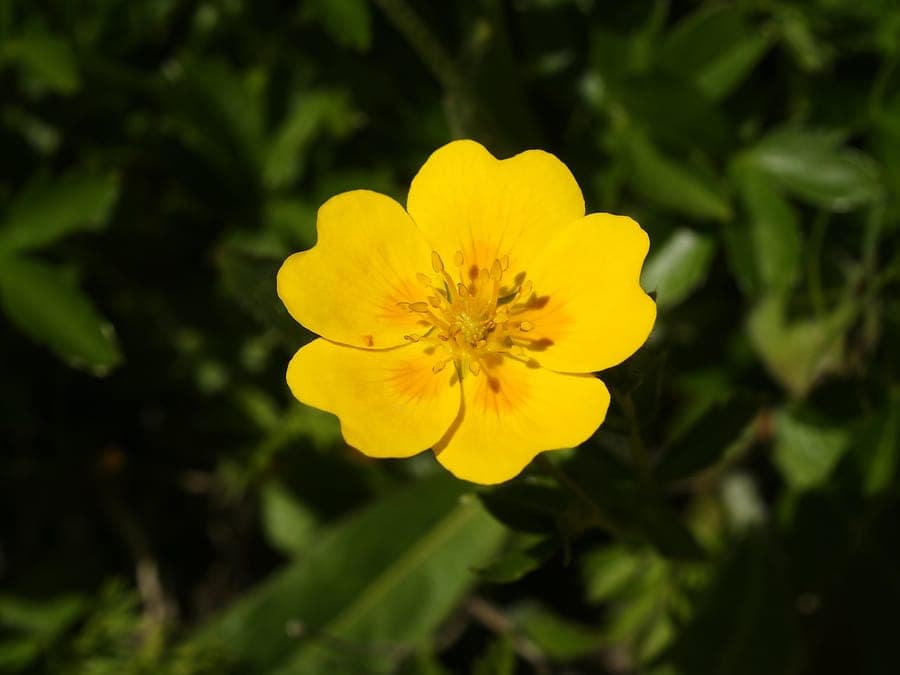
Hans Hillewaert / CC BY-SA 3.0, via Wikimedia Commons
Golden cinquefoil: complete guide
Potentilla aurea
Want to see Golden cinquefoil: complete guide in your garden?
1 minute, no credit card
Overview
Golden cinquefoil (Potentilla aurea) is a compact, herbaceous perennial that brings cheerful, long-lasting color to sunny gardens. Native to mountainous regions across Central and Southern Europe - from Austria and Germany to Greece and Bulgaria - this hardy plant thrives in rocky, well-drained soils with minimal nutrients. It's a go-to choice for rock gardens, dry borders, or as a low ground cover where water retention is poor. In the UK and North America, it performs well in USDA zones 5 to 8, where it reliably returns each spring without fuss. Its resilience and tidy growth make it ideal for gardeners who prefer practical beauty over high-maintenance displays.
On gardenworld.app you can design a garden layout that perfectly suits Golden cinquefoil, factoring in light exposure and neighboring plants.
Appearance & bloom cycle
Golden cinquefoil typically grows 15–25 cm tall and spreads up to 30 cm wide, forming dense, low mounds. The foliage is dark green, deeply divided, and palmate - resembling small fingers, which explains its German common name, Gold-Fingerkraut. From June through August, bright yellow, five-petaled flowers appear, each about 2 cm in diameter. Blooms are abundant and appear continuously, especially when deadheaded. Unlike some Potentilla species, this one doesn't self-seed aggressively, making it a tidy, predictable addition to garden beds.
Ideal location
This plant demands full sun - an 8 out of 10 on the light scale - meaning at least 6 hours of direct sunlight daily. South- or southwest-facing slopes, gravel beds, or dry retaining walls are ideal. Avoid shaded areas, as too little light leads to leggy growth and sparse flowering. It's excellent between paving stones or along pathways where soil dries quickly. Also works in containers, provided the pot has excellent drainage. In urban gardens, it's a reliable performer in hot, exposed spots.
Soil requirements
Golden cinquefoil prefers poor to average soils with excellent drainage. The optimal pH range is 4.5–5.0, leaning toward acidic. It grows well in sandy or gravelly loam but fails in heavy clay or water-retentive soils. When planting, skip compost or rich organic matter - overly fertile soil encourages leafy growth at the expense of blooms. A mix of sand and grit improves drainage, especially in damp climates. A top dressing of fine gravel helps reflect sunlight and keeps the crown dry.
Free design
Want to see Golden cinquefoil: complete guide in your garden? Make a free design now.
Watering
Once established, Golden cinquefoil is highly drought tolerant. During the first growing season (May to July), water weekly if rainfall is below 2.5 cm. Use rainwater when possible, as tap water with high lime content can alter soil pH over time. After the first year, natural rainfall is usually sufficient. Avoid overwatering - root rot is the biggest risk in poorly drained soils. Check the top 5 cm of soil; if dry, water deeply but infrequently.
Pruning
Pruning is minimal. In early spring (March to April), cut back old stems to about 5 cm above ground level. This promotes bushy, compact growth and reduces fungal issues. During summer, deadhead spent flowers to extend blooming. If left unpruned, the plant remains neat but may become slightly woody at the base over time. Never cut into old wood - this species regenerates from the crown.
Maintenance calendar
- Jan: Check for damaged stems, clear debris
- Feb: Prepare tools for spring cutback
- Mar: Cut back old growth, refresh mulch if needed
- Apr: Monitor for new shoots, protect from late frost
- May: Water young plants during dry spells
- Jun-Aug: Peak bloom; deadhead regularly
- Sep: Reduce watering, stop fertilizing
- Oct: Leave fallen foliage for light winter insulation
- Nov: Check soil drainage, improve if waterlogged
- Dec: Fully dormant; no action needed
Winter hardiness
Golden cinquefoil is hardy down to -20°C (USDA zone 5). It survives cold winters without protection in most temperate climates. In areas with wet, heavy snow, a light mulch of pine needles or gravel around the base can prevent crown rot by improving air circulation. In containers, elevate pots to prevent waterlogging and freeze-thaw cycles. Avoid organic mulches that retain moisture - they can suffocate the crown.
Companion plants
Pair Golden cinquefoil with other sun-loving, drought-tolerant perennials. Good matches include Artemisia schmidtiana, creeping thyme (Thymus serpyllum), Sedum 'Matrona', or dwarf lavender. For contrast, try purple blooms like Salvia nemorosa or Stachys byzantina. Avoid invasive spreaders like mint or ground ivy. Use gardenworld.app to visualize how Golden cinquefoil fits with your current garden scheme, both in form and color.
Closing
Golden cinquefoil isn't flashy, but it's dependable. It delivers steady color, supports pollinators, and asks for little in return. Plant in groups of 3–5 for visual impact, or use as a filler in rock gardens. It's available at most garden centres - look for healthy root balls without signs of rot. A smart, sustainable pick for low-effort, high-reward gardening.
Want to see Golden cinquefoil: complete guide in your garden? Make a free design now.
Upload a photo, pick a style, and get a photorealistic design with plant list in under a minute.
No credit card required


Similar plants
Siberian crab apple: complete guide
Malus x robusta
Complete guide to the Siberian crab apple (Malus x robusta): location, soil, pruning, winter hardiness and the best companion plants for your garden.
Chinese flowering crabapple (Malus x spectabilis): complete guide
Malus x spectabilis
Meet the Chinese flowering crabapple (Malus x spectabilis): a classic spring bloomer with carmine buds and pink blossom.
Potentilla crassinervia: complete guide
Potentilla crassinervia
Potentilla crassinervia, the Corsican cinquefoil, grows wild on Corsica and Sardinia's peaks. Discover how to grow this hardy alpine rock garden gem.