
Wikimedia Commons / CC BY 2.5, via Wikimedia Commons
Western balsam poplar: complete guide
Populus trichocarpa
Want to see Western balsam poplar: complete guide in your garden?
1 minute, no credit card
Overview
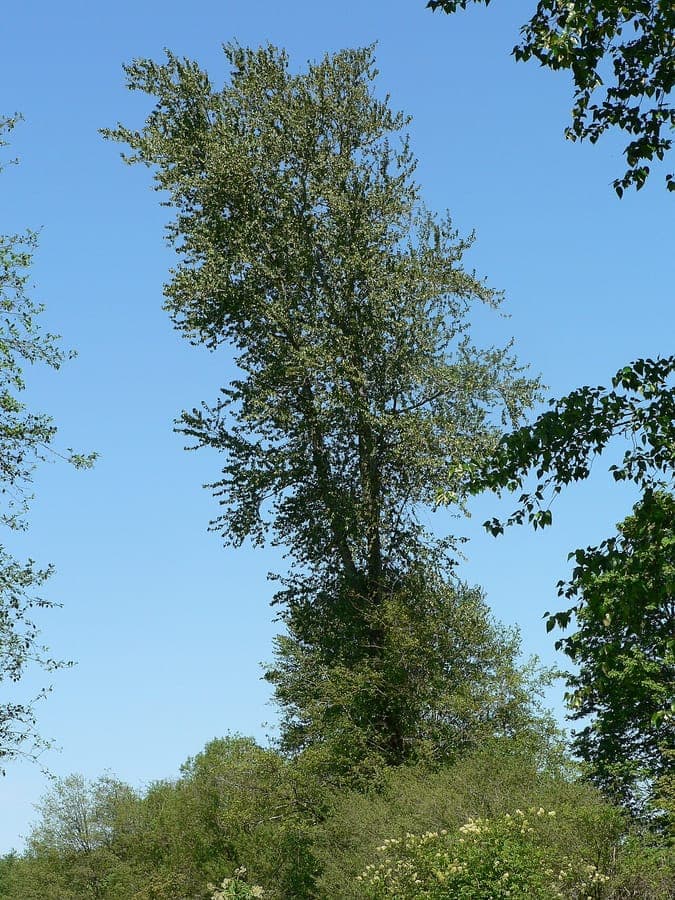
Populus trichocarpa, commonly known as Western balsam poplar, is a fast-growing, majestic deciduous tree native to northwestern North America. It's not a common sight in suburban backyards - and for good reason. This tree can reach 20 to 30 meters in height with a spread of 10 to 15 meters, making it better suited for parks, riparian zones, or large country estates. If you've got space, though, it's a standout performer, especially in damp areas where other trees struggle.
What sets this poplar apart is its rapid growth rate - often adding 1 to 1.5 meters per year under ideal conditions. That makes it one of the fastest-growing hardwoods in the northern hemisphere. It's also tough, adaptable, and excellent for stabilising riverbanks thanks to its extensive, fibrous root system. On gardenworld.app, you can design a landscape plan that integrates this tree's vigorous growth and moisture needs into your property's natural drainage patterns.
Appearance & bloom cycle
The Western balsam poplar has a straight trunk and a narrow, pyramidal crown when young, becoming more open and rounded with age. The bark on mature trees is greyish and deeply fissured, while younger stems are dark brown to nearly black and covered in a sticky, balsam-scented resin. Crush a bud in spring and you'll catch a whiff of pine or fir - a delightful surprise.
Leaves are broadly ovate to heart-shaped, 5 to 10 cm across, with fine serrations and a glossy green upper surface. The petioles are flattened, causing the leaves to flutter dramatically in even the lightest breeze. In autumn, they turn a bright, clear yellow, sometimes with golden-orange highlights, before dropping in late September to mid-October.
This species is dioecious: male and female flowers grow on separate trees. Blooming happens in March to April, before leaf-out. Male catkins are rich red-brown and 3–5 cm long; female ones are greenish and shorter. If you have a female tree, you'll see fluffy seed cotton drifting through the air in May and June - charming for some, a nuisance for others.
Ideal location
Full sun is best - aim for at least 6 hours of direct light daily. While it tolerates light shade, growth becomes spindly and the crown thins out. Give this tree plenty of room: minimum 8 meters from buildings, driveways, or underground utilities. Its roots are aggressive and shallow, capable of lifting paving and infiltrating drains.
It thrives in moist, open areas - along streams, in low-lying fields, or at woodland edges. Avoid planting it in small urban gardens unless you're prepared for the long-term commitment. On gardenworld.app, you can visualise how this tree will cast shade and affect root zones over time, helping you make a smart planting decision.
Soil requirements
It prefers deep, moist, fertile loams or silty clays with a pH from 5.5 to 7.0. While it can handle temporary flooding, it doesn't like prolonged drought, especially when young. Sandy soils will need heavy amendment with compost and regular mulching to retain moisture. A thick layer (7–10 cm) of wood chips or leaf litter around the base helps suppress weeds and keeps roots cool.
Avoid compacted or heavily trafficked soils. This tree doesn't compete well with lawn grass right up to the trunk. Keep a grass-free circle of at least 1.5 meters in diameter to reduce competition and mechanical damage from mowers.
Free design
Want to see Western balsam poplar: complete guide in your garden? Make a free design now.
Watering
Young trees need consistent moisture. Water deeply once a week during the first two growing seasons - about 20–30 litres per session. Use a soaker hose or tree watering bag to deliver water slowly to the root zone. Once established, it's fairly drought-tolerant, but performance drops in dry summers. Watch for early leaf drop or curling - signs it's thirsty.
Avoid overhead watering once the canopy fills in, as this can encourage fungal diseases in humid conditions.
Pruning
Pruning is rarely needed. Remove broken or crossing branches in late summer to early autumn (July to September). Never prune in late winter or early spring - the sap is running, and the tree will 'bleed' heavily. If you must shape a young tree, do so in its first few years to encourage a single central leader. Avoid topping or heavy crown reduction - it leads to weak, brittle regrowth.
Maintenance calendar
- January: Inspect for storm damage and structural weakness.
- February: Dormant period; no action needed.
- March: Buds swell and release balsam scent; avoid pruning.
- April: Watch for aphids on new growth; treat if necessary.
- May: Seed cotton appears on female trees; full leaf-out complete.
- June: Monitor soil moisture; water during dry spells.
- July: Light pruning of dead wood if needed.
- August: Check for leaf spot or powdery mildew in humid areas.
- September: Begin preparing for leaf drop; leave fallen leaves as natural mulch.
- October: Clean up seed fluff if it's a nuisance.
- November: No action required.
- December: Final check for stability and rodent damage.
Winter hardiness
Hardy in USDA zones 4 to 8 (-34°C to -12°C). Young trees may suffer sunscald or frost cracks on thin bark. Wrap the trunk with a tree guard for the first 2–3 winters in exposed sites. Mature trees handle cold well but may lose terminal buds in extreme freezes.
Companion plants
Pair with moisture-loving species: red osier dogwood (Cornus sericea), willows (Salix spp.), cardinal flower (Lobelia cardinalis), or sedges (Carex spp.). Understory plants like wild ginger (Asarum canadense) or Virginia bluebells (Mertensia virginica) do well in dappled shade. Avoid plants with invasive roots or high nutrient demands.
Closing
The Western balsam poplar isn't for every garden, but if you've got space and a wet spot to fill, it's a powerhouse. It grows fast, supports wildlife, and adds vertical drama to any landscape. Buy young trees from reputable garden centres - look for 1.5-meter bare-root or container-grown stock. Opt for male clones to avoid seed fluff. With the right site and care, this tree can live 80 to 100 years. Use gardenworld.app to plan your layout and ensure it complements your property's scale and drainage.
Want to see Western balsam poplar: complete guide in your garden? Make a free design now.
Upload a photo, pick a style, and get a photorealistic design with plant list in under a minute.
No credit card required


Similar plants
Grey poplar: complete guide
Populus x canescens
Everything about Populus x canescens - a fast-growing hybrid poplar with silver-grey foliage, ideal as a windbreak or specimen tree in large gardens.
Populus adenopoda: complete guide
Populus adenopoda
Chinese aspen: a fast-growing tree for large gardens. Cultivation tips, pruning, and use as windbreak or shade tree.
Populus fremontii: complete guide
Populus fremontii
Fremont's cottonwood is a majestic American tree with rapid growth and drought tolerance. Read our guide for cultivation tips and garden integration.