
Šarūnas Šimkus / CC BY-SA 3.0, via Wikimedia Commons
European aspen: complete guide
Populus tremula
Want to see European aspen: complete guide in your garden?
1 minute, no credit card
Overview
The European aspen (Populus tremula) is a striking deciduous tree known for its fluttering foliage and upright, slender form. Native across Europe and parts of Asia, it thrives in open woodlands and sandy plains. Reaching 15 to 25 meters at maturity, it's best suited for large gardens, estates, or naturalised landscapes. With a growth rate of 50–80 cm per year in its early years, it establishes quickly, especially in full sun. It's a long-lived species, commonly reaching 80 to 100 years, and sometimes more under ideal conditions.
One of its most notable traits is vegetative reproduction through root suckers. New shoots often emerge several meters from the parent tree, creating small colonies over time. This makes site selection crucial - you'll want to avoid planting near foundations, paved areas, or septic systems. On gardenworld.app, you can visualise how root spread might affect your layout and plan accordingly.
Appearance & bloom cycle
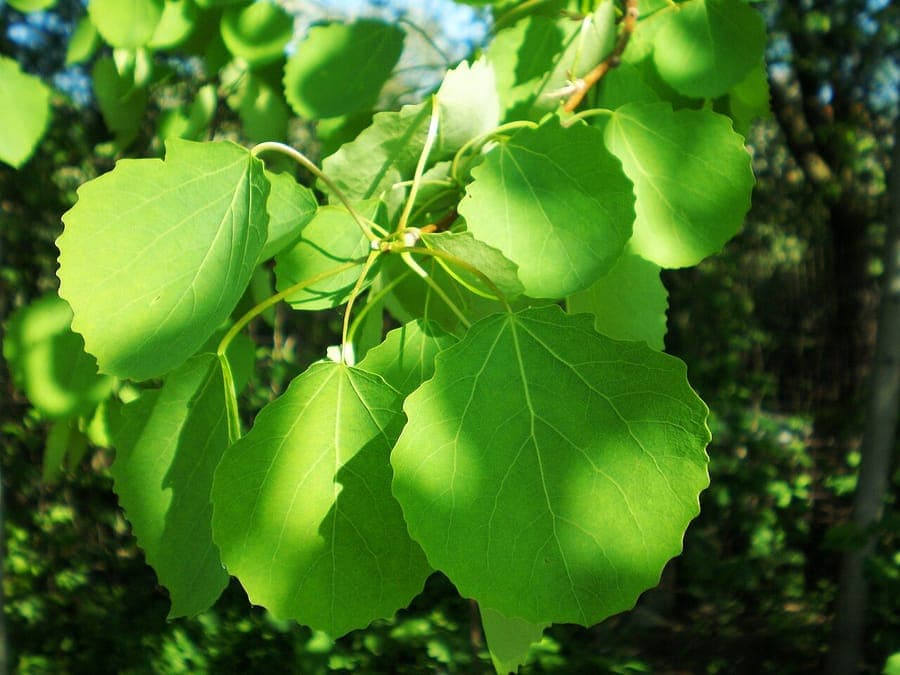
The leaves are round to heart-shaped, 3–7 cm wide, with finely toothed margins. What sets this tree apart is the flattened petiole (leaf stem), which causes the leaves to tremble dramatically in even the lightest breeze - hence the name "tremula." In autumn, from late September to mid-October, the foliage turns a brilliant golden yellow, sometimes with amber undertones, creating a luminous effect in the landscape.
Flowering occurs in March or April, before leaf emergence. European aspen is dioecious, meaning male and female flowers grow on separate trees. The flowers are catkins: males are reddish-purple, females greenish. After pollination, female trees release cottony seeds in May, which can create a 'cotton snow' effect. While not messy in the traditional sense, this can be a minor nuisance near patios or pools.
Ideal location
This tree needs full sun to light shade - aim for a light rating of 8 or higher. It performs best in open, unshaded areas where it can develop a balanced crown. Avoid dense shade, which leads to weak, leggy growth. Due to its aggressive root system and tendency to sucker, keep it at least 8–10 meters from buildings, driveways, or underground utilities.
European aspen works well as a specimen tree in large lawns, woodland edges, or windbreaks. It's not recommended for small urban gardens unless you're prepared to manage suckers regularly. Before planting, use gardenworld.app to simulate spacing, canopy spread, and seasonal light patterns.
Soil requirements
It prefers moist, well-drained sandy loam but tolerates a range of soil types, including clay loam, as long as drainage is adequate. The ideal pH is slightly acidic, between 5.0 and 5.5. While it can withstand short dry spells once established, prolonged drought stresses young trees. Avoid waterlogged soils - they increase the risk of root rot, especially in compacted or heavy clay.
When planting, amend the hole with organic matter like compost or leaf mould, but avoid over-enriching. Excessive nitrogen promotes weak, sappy growth prone to breakage. Backfill with native soil and water thoroughly.
Free design
Want to see European aspen: complete guide in your garden? Make a free design now.
Watering
Water deeply once a week during the first two growing seasons, providing 10–15 litres per session in dry periods. After that, the tree is generally self-sufficient unless drought persists for several weeks. Mulch with 5–8 cm of wood chips to retain moisture and suppress weeds, keeping the mulch a few centimetres from the trunk to prevent rot.
Pruning
Minimal pruning is needed. Remove dead, damaged, or crossing branches in late winter (January–February) using clean, sharp tools. Avoid heavy pruning - it triggers vigorous water sprouts that ruin the tree's natural form. Suckers from the roots can be mowed or cut with a spade, ideally in spring or autumn before they become woody.
Maintenance calendar
- January: Inspect for storm damage, light pruning if needed
- February: Final pruning window before bud break
- March: Watch for catkins; monitor male/female ratio if seed control matters
- April: Remove basal suckers; check for pest activity
- May: Seeds disperse; watch for new suckers in lawn or borders
- June: Monitor soil moisture during dry spells
- July: Deep water established trees if drought continues
- August: Continue irrigation during heatwaves
- September: Observe autumn colour development
- October: Rake fallen leaves if necessary
- November: Assess root sucker spread; consider containment
- December: Final winter inspection
Winter hardiness
European aspen is extremely cold-hardy, thriving in USDA zones 2 to 7. It tolerates temperatures down to -40°C. The bark is smooth and pale grey-green on young trees, becoming fissured with age. In winter, the tree is dormant and leafless, but the trembling branches add subtle movement to the bare landscape. Young bark may be vulnerable to rabbit or deer browsing - use tree guards for protection in rural areas.
Companion plants
Under a mature aspen, shade and root competition make planting difficult. Stick to shade-tolerant, drought-resistant perennials like Epimedium spp., Pachysandra terminalis, or barrenwort. Ferns such as Dryopteris filix-mas also do well. Avoid moisture-hungry plants, as the aspen's roots will outcompete them. Grass often struggles - consider groundcovers like Carex divulsa or native wildflowers at the drip line.
For visual contrast, plant low shrubs like Spiraea nipponica or dwarf willows at the edge of the root zone.
Closing
The European aspen brings movement, light, and seasonal drama to the garden. Its shimmering leaves and golden autumn display are unmatched. But it demands space and forethought. Manage suckers, respect its root spread, and enjoy its elegance. It's low-maintenance once established, but not for the faint-hearted. Buy young trees (100–150 cm) from trusted garden centres like those in the UK, where quality stock is often available. With the right planning, Populus tremula becomes a living sculpture in your landscape. Use gardenworld.app to design a planting scheme that balances beauty and practicality.
Want to see European aspen: complete guide in your garden? Make a free design now.
Upload a photo, pick a style, and get a photorealistic design with plant list in under a minute.
No credit card required


Similar plants
Grey poplar: complete guide
Populus x canescens
Everything about Populus x canescens - a fast-growing hybrid poplar with silver-grey foliage, ideal as a windbreak or specimen tree in large gardens.
Populus adenopoda: complete guide
Populus adenopoda
Chinese aspen: a fast-growing tree for large gardens. Cultivation tips, pruning, and use as windbreak or shade tree.
Populus fremontii: complete guide
Populus fremontii
Fremont's cottonwood is a majestic American tree with rapid growth and drought tolerance. Read our guide for cultivation tips and garden integration.